


Are you looking for hidden gems and unique things to do in London? From secret tunnels and floating hot tubs to eccentric museums and hidden gardens, the capital is full of unusual experiences waiting to be discovered.
Step beyond the tourist trail with our guide to London’s quirkiest hidden gems, from historic alleys and Victorian engineering landmarks to lesser-known museums run by passionate volunteers.
The team at Visit London has handpicked a selection of the capital’s top quirky experiences to try on your next visit, alongside insider tips and practical advice gathered after personally testing each of the activities featured below.
Read on for our curated guide to London’s most unusual, mysterious, and truly unforgettable experiences.
Unique things not to miss when in London
🎭The Viktor Wynd Museum of Curiosities – Best for bizarre and eccentric collections
🚃Mail Rail at the Postal Museum – Best for a dive through London’s disused underground tunnels
🕯️Dennis Severs’ House – Best for immersive storytelling in a unique, atmospheric setting
⛪St Dunstan in the East Church – Best tucked-away spot for a moment away from hustle and bustle
🖼️Leighton House Museum – Best for unusual and ornate interiors you won’t find anywhere else
How we chose the best unique things to do in London
London may attract more than 20 million international visitors every year (Visit Britain 2025 report), but there is far more to the British capital than its famous royal landmarks and the busy streets of Covent Garden and Piccadilly Circus. The team at Visit London is always on the lookout for the city’s hidden gems and offbeat attractions, which remain a key part of London’s character and appeal.
Our selection of activities, museums, and experiences is curated across the team and based on shared feedback and first-hand experiences from our London-based specialists, attraction experts and travel writers reporting back from recent visits. Recommendations are regularly reviewed and updated to keep the guide fresh and relevant.
Unique things to do in London:
Unusual historical spots
Temple Church – Best for medieval history and Templar lore
Who hasn’t watched The Da Vinci Code and wondered whether that dramatic final setting was even a real place? Temple Church is one of the city’s most fascinating historic buildings, combining Romanesque and Gothic architectural styles. Inside, the stone effigies of medieval knights lying across the floor making for a striking sight. Some were preserved through 19th-century casts, with originals now held at the V&A Museum.
Temple is divided between the Inner Temple and the Middle Temple, two of the four Inns of Court. The easiest way to tell them apart is by the buildings: Inner Temple’s window frames are white, while Middle Temple’s are cream. Look out for symbols including the Inner Temple’s Pegasus and the Middle Temple’s coat of arms with a golden lamb and the cross of St George.
Wander the cobbled streets and colonnaded walkways, leading into hidden courtyards and peaceful gardens. Some open only during events such as the Open Garden Squares Weekend or the Open House Festival, though Inner Temple Garden is generally open weekdays from 12.30pm to 3pm via Crown Office Row.
Best for: History lovers, architecture enthusiasts, and anyone drawn to secret stories.
Good to know: The gallery above the Round Church offers a closer view of the Templar effigies. Check ahead for talks, guided tours, and special events often included with admission.
Strawberry Hill House & Gardens – Best for gothic architecture

Strawberry Hill House features on many London bucket lists, and for good reason. This unique west London residence near Twickenham, with its sparkling white exterior often compared to a Disney fairytale castle, feels unlike anywhere else in the capital. Created by writer Horace Walpole in the 18th century, the house and gardens blend medieval and Gothic influences drawn from his European travels, with every room revealing a new layer of theatrical design.
The Crimson and Gold Gallery are one of the most striking spaces, with deep crimson walls, gilded mirrors and a dramatic fan-vaulted ceiling inspired by Westminster Abbey’s Henry VII Chapel. The library is equally atmospheric, with pointed-arch bookshelves and a painted ceiling filled with mythical creatures.
The romantic gardens stretch across five acres and are free to visit, offering panoramic views of the villa and plenty of picturesque corners. Look out for the Shell Seat, inspired by a design Walpole discovered in Europe and said to be wide enough for “three duchesses’ side by side”.
Best for: Gothic architecture enthusiasts, literature fans, and anyone drawn to extravagant interiors and fairytale-style interiors.
Good to know: Seasonal events bring the house to life, from the September flower festival with floral installations inspired by folklore, to Halloween openings featuring candlelit tours and storytelling.
The Old Operating Theatre Museum – Best for medical history enthusiasts
Hidden inside the attic of an old Georgian church near London Bridge, this museum is one of the strangest sites we visited in London. Access is via a narrow, creaking spiral staircase with 52 steps, leading to a room believed to have been used for some of the earliest surgical procedures, long before the advent of anaesthetics and antiseptics.
The wooden operating theatre sits within what was once part of the Old St Thomas’ Hospital and the Herb Garret. Today, the Garret houses cabinets of plants once used to create remedies, alongside surgical instruments that often resemble torture devices– especially when you remember patients underwent procedures fully conscious. Keep an eye out for the infamous poison cabinet, never opened to the public, with bottles fitted with bells so that dangerous substances could be identified by sound.
The operating theatre is the highlight of the visit. At its centre sits the wooden table where patients were strapped down while surgeons worked in front of audiences of up to 150 students, doctors and observers seated on tiered benches around the room. The museum offers a fascinating, if at times gruesome, insight into 19th-century medicine, telling the story of surgery, care and survival at Old St Thomas’ Hospital.
Best for: Medical history enthusiasts, curious minds, and anyone fascinated by Victorian surgery and early medicine.
Good to know: Access is via a narrow 52-step spiral staircase, so it is not suitable for all visitors. The space is small, and Sundays or weekday visits tend to be quieter.
Crossness Pumphouse – Best for fans of unusual Victorian engineering
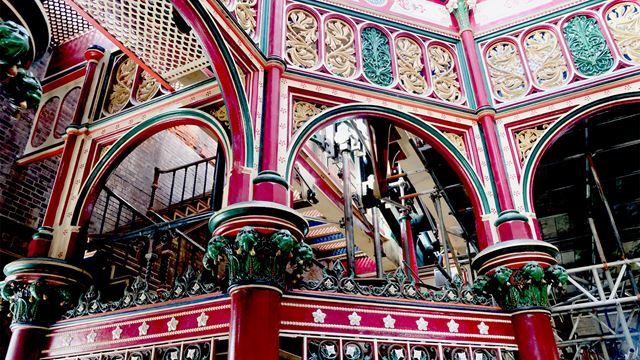
As soon as you arrive near Crossness, be prepared for the unmistakable smell of sewage lingering in the air. Once inside, prepare to be met with one of the most unexpected sights in London. Complete with richly decorated Victorian cast iron beams and enormous engines once used to process millions of gallons of sewage.
The Beam Engine House is the crown jewel of Crossness and the highlight of the tour. The richly painted red, green and gold ironwork is astonishingly decorative, making it even harder to believe the building’s sole purpose was to process London’s waste. It is home to four giant beam engines, including the fully restored “Prince Consort”, believed to be the largest operating beam engine in the world. Climbing the spiral staircase to the upper viewing platform gives a dramatic view over the machinery below, while special steaming days bring the engines back to life, recreating the atmosphere of its Victorian heyday.
One unexpected highlight is the Royal Arsenal Narrow Gauge Railway, also known as the “Bazalgette”, restored by volunteers on site. Inside Crossness, you’ll find exhibitions, archive material and videos retracing London’s sewer system, alongside Victorian sanitation facts and early alternatives to toilet paper, from corn cobs to lace.
Best for: Industrial history enthusiasts, engineering fans, and anyone curious about London’s strangest hidden landmarks.
Good to know: Steaming days usually take place monthly, and a vintage Routemaster bus often runs between Abbey Wood Station and Crossness, adding a nostalgic touch to the visit.
Kirkaldy Testing Works Museum – Best for Victorian engineering and industrial history
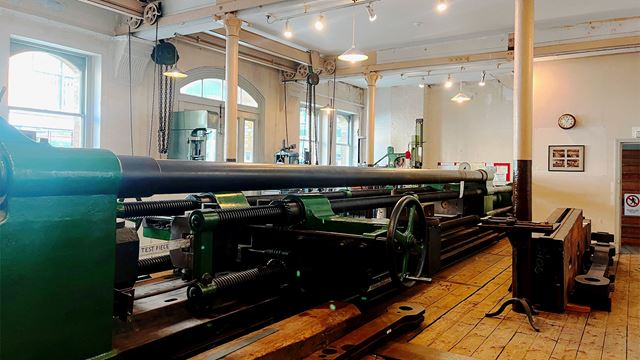
Once we step inside the Kirkaldy Testing Works Museum, it’s clear we’re looking at one of London’s great engineering legacies. The highlight is the enormous hydraulic testing machine, designed to measure the strength of materials. This is possibly the only museum in London where you’re actively encouraged to try break things by the use of their machinery.
The Kirkaldy machine dominates the space, stretching the full length of the room and still fully working today. Connected to a hydraulic cylinder, it can be seen in action during premium tours, with live demonstrations held on the first Sunday and fourth Saturday of each month.
Kirkaldy built a thriving business testing materials, from timber to brick, and cast iron, including those used for Blackfriars Railway Bridge and even the original Wembley Stadium. Today, the workshop still feels like a working space, with machines used to compress, bend and crush materials. Alongside the main testing machine, highlights include the Avery machine, used to test parachute cord strength, and the cement testing machine producing small “dog-bone” samples still displayed in the basement.
Best for: Engineering enthusiasts, history buffs, and anyone curious about how materials were tested in the industrial age.
Good to know: Book in advance, tours are limited to 24 people on premium tours and 15 on standard tours, with live demonstrations only on selected open days.
Dennis Severs' House – Best for atmospheric and candlelit tours
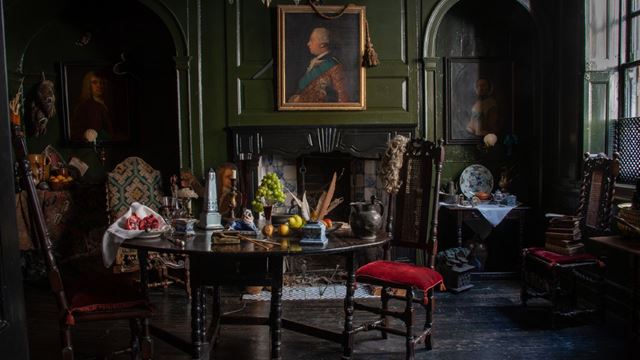
Dennis Severs’ House invites visitors into the imagined world of a family of Huguenot silk weavers created entirely from Severs’ imagination. Every room feels as though time has stopped, as if the inhabitants have only just stepped out and could return at any moment.
Each room transports visitors through different periods from the 18th century to Victorian London, layered with sounds and smells that fully immerse you in another world. In the dining room, half-eaten meals sit on the table, and wine spills across the surface, creating the sense that life has simply paused mid-moment. Muddy footprints, unfinished letters and other staged clues reveal fragments of the fictional family’s story, turning visitors into quiet observers and detectives at once.
No visit to Spitalfields feels complete without exploring the surrounding streets. Huguenot houses still line Folgate and Fournier Street, with independent bookshops like Libreria and Spitalfields Antiques Market nearby. For a classic East End stop, head to E. Pellicci, the family-run café loved by locals. For a final touch, visit Angela Flanders in Artillery Passage, whose handcrafted perfumes include a bespoke fragrance inspired by the house, blending spice, candle wax and wood polish.
Best for: Lovers of immersive experiences, atmospheric interiors, and theatrical storytelling that blurs history and imagination.
Good to know: The candlelit “Silent Night” evenings are the most atmospheric way to experience the house, with rooms lit only by candlelight.
The Barbican Conservatory – Best for nature lovers

Everyone has heard of Kew Gardens, but another botanical spot worth adding to your list is the Barbican Conservatory. Hidden within the Barbican’s striking Brutalist complex, this tropical oasis feels completely unexpected in the middle of the city. Home to more than 1,500 species of plants, trees and exotic flora introduced in the 1980s, it is the second-largest conservatory in London. It’s free to visit on selected dates throughout the year, though booking opens around a month in advance and often sells out quickly.
Take time wandering through lush greenery and relaxing beside ponds filled with Japanese koi carp and terrapins. The contrast between dense tropical planting and raw concrete architecture creates a striking atmosphere – part urban jungle, part hidden greenhouse retreat. In the Tropical House beneath the vast glass roof, towering palms, banana plants and dense foliage make it feel as though nature is reclaiming the space.
Walk along elevated pathways for views over the layered canopy, one of the Conservatory’s highlights. Another is the staircase into the Arid House, where giant cacti and sculptural succulents rise dramatically towards the ceiling, some appearing almost too large for the space.
Best for: Architecture enthusiasts, plant lovers, and anyone seeking a hidden tropical escape in the city.
Good to know: The Conservatory is on Level 4 and accessed via lifts inside the Barbican Centre. Large bags are not permitted, though cloakroom facilities are available.
Offbeat art, museums and culture
The Postal Museum – Best for interactive storytelling
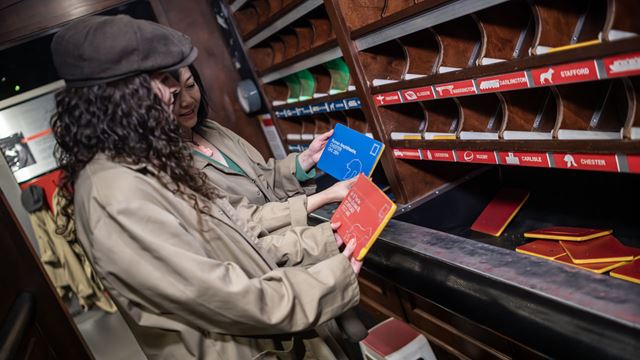
In a world where pen pals have become a thing of the past – for most of us at least, although we still enjoy the occasional postcard – visiting The Postal Museum had long been on our bucket list. We explored the evolution of British postal services from early days to modern times, uncovering over 500 years of communication history.
One of the highlights of our visit was riding the Mail Rail, included with your ticket. Board a miniature train once used to deliver mail across London through underground tunnels 70 feet below street level. It’s recommended not to bring large bags (although lockers are available), as the train is quite narrow. The Mail Rail operated from Paddington to Whitechapel, helping postal services bypass London’s traffic for 76 years.
The museum is split into five galleries exploring British mail history, with key exhibits including the world’s first postage stamp alongside wartime letters, the first British postcard, as well as an interactive exhibits include a replica mail sorting office inside a moving train carriage, challenging you to sort post in record time.
It’s also a great family visit, with “Sorted”, a play area for children aged one to eight, designed as a mini town with its own post office (booking required in advance).
Best for: History lovers and anyone curious about the evolution of mail and underground railways.
Good to know: Your time slot matches your Mail Rail ride, so arrive early to reach the departure platform.
Lightroom – Best for large-scale cinematographic experiences
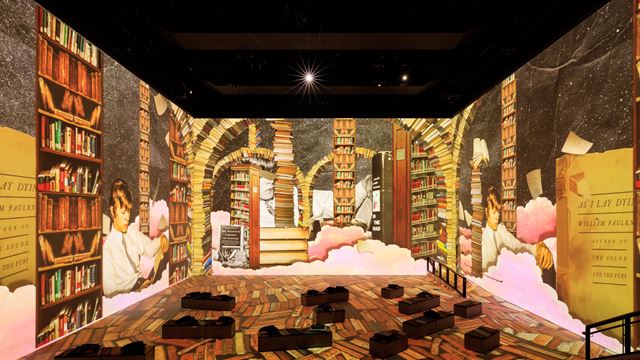
Uncover cutting-edge artworks at immersive gallery Lightroom, a venue that has redefined what immersive exhibitions can be. Recent shows have explored everything from art, music and film to science, fashion and beyond. The films run on a loop, so you can stay longer if you wish, and unlike traditional screenings, visitors are encouraged to move around for different angles or sit on the floor surrounded by the projections.
Currently showing is David Bowie: You’re Not Alone (until 10 Oct), transporting visitors through Bowie’s creative universe and key moments of his career. Using footage from iconic performances and rare interviews, the exhibition explores what made him such a groundbreaking artist. We were especially hypnotised by the 360-degree screens surrounding the space, making it feel as though we were standing among buzzing fans at his concerts or sitting in the studio during his Berlin years.
Returning on 18 July is Prehistoric Planet, a spectacular journey back to the age of dinosaurs. Using footage from the Emmy-nominated series with an original score by Hans Zimmer, projections surround the room with life-sized dinosaurs including a towering Tyrannosaurus Rex.
Before or after your visit, explore Coal Drops Yard with its independent shops and design stores, or head to Regent’s Canal where you’ll find Word on the Water, London’s only floating bookshop on a converted barge.
Best for: Contemporary art fans and anyone seeking immersive digital exhibitions.
Good to know: Book ahead and avoid weekends or school holidays for a more comfortable, less crowded experience.
Leighton House – Best for art lovers with a taste for travel
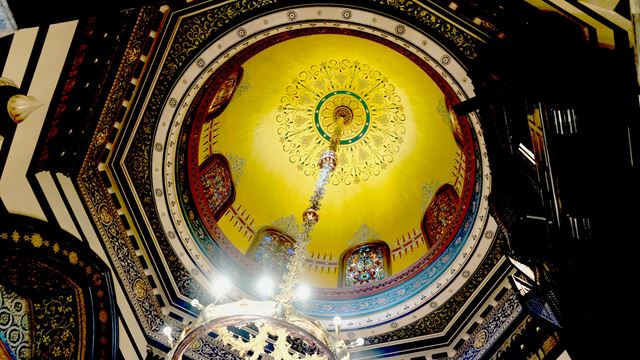
Once the home and studio of Sir Frederic Leighton, the only British painter ever knighted, Leighton House is far more than a traditional museum. The house itself is a masterpiece, with every wall, ceiling and floor transformed into an ode to art. Rather than heading straight to the introductory screening, it’s worth immersing yourself in the house first and letting it unfold room by room.
Leighton’s travels across Europe, North Africa and the Middle East shaped much of the interior, bringing a sense of escapism into Victorian London. Originally both a home and working studio, the house evolved continuously and is best embodied in its most spectacular space. Stepping into the Arab Hall is one of those moments where it becomes impossible not to stop in awe. Blue and gold Islamic tiles, marble columns, intricate mosaics and a golden dome create a dreamlike atmosphere, with a small fountain at its centre adding to the calm.
Another highlight is the Grand Staircase linking the hall to Leighton’s upstairs studio, lined with vibrant tiles and large-scale paintings. The studio itself once hosted visitors, gatherings, and grand parties, reflecting Leighton’s vision of the home as a living gallery and inspiring the wider Holland Park Circle of artists.
Best for: Art and design enthusiasts, lovers of ornate interiors, and anyone drawn to Victorian creativity and decorative excess.
Good to know: Visit in the afternoon when light through the Arab Hall brings the tiles and mosaics to life – it’s where most visitors linger longest.
Eel Pie Island Museum – Best for rock ‘n’ roll history and counterculture
Now home to artists’ studios and some of the last working boatyards on the Thames, Eel Pie Island is packed with fascinating stories. The island played a major role in Britain’s blues and rock explosion, hosting early gigs from The Rolling Stones, Rod Stewart, Eric Clapton and Pink Floyd. While the island itself is private, the museum is open to the public and filled with memorabilia, original gig posters, photographs and stories spanning from Victorian pleasure resort to the rebellious spirit of the 1960s music scene.
The island evolved into a roaring music hotspot, attracting crowds of young Londoners to the hotel’s rundown ballroom and famously bouncy dance floor. Many consider it the birthplace of British rhythm and blues, with its anything-goes atmosphere helping launch a generation of groundbreaking musicians.
To our surprise, the island’s story doesn’t stop there. After the ballroom closed and the hotel fell into dereliction, artists, musicians and hippie communes moved into the abandoned building before it was destroyed by fire in 1971. Today, although the original hotel is long gone, the island’s creative spirit still thrives.
One of the highlights of our visit was chatting with the passionate volunteers, many of whom remember the island’s heyday and happily share stories and hidden details you won’t find on the displays alone.
Best for: Music history fans and anyone fascinated by London’s rock ’n’ roll heritage.
Good to know: Keep an eye out for the recreated mural backdrop from old gig photographs, which makes a great photo spot.
Bow Street Museum of Crime and Justice – Best for exploring London’s criminal justice history

Located just a few steps from the Royal Opera House, the Bow Street Police Museum of Crime and Justice explores the origins of modern policing in London from within the city’s original Bow Street police station. While it’s fascinating to learn about landmark court cases and early policing, it’s the chance to step inside the original prison cells that makes this museum stand out.
Walk the narrow passageways and immerse yourself in the stories of the people who paced through these corridors, where suspects once waited to face court hearings. The famous prisoners include Oscar Wilde, Emmeline Pankhurst, the Kray twins and even Augusto Pinochet, with their cases brought to life through detailed displays and archival material.
Bow Street Police once known as the Bow Street Runners, is often described as London’s first detective force. The museum reveals how policing worked before modern forensic science, with film and audio recordings from former officers recalling unusual arrests and landmark cases. Preserved artefacts from the station’s operational years include the original dock from Court No. 2, where defendants once stood trial.
Best for: True crime enthusiasts and anyone interested in London’s policing and courtroom history.
Good to know: The museum operates timed entry tickets to ensure a smoother, less crowded visit throughout the day.
St Bride Foundation – Best for printing press history enthusiasts

Before entering the St Bride Foundation, take time to walk along Fleet Street, once the heart of Britain’s publishing industry. You can spot ghost signs from former papers, including the DC Thomson Building once home to The Sunday Post.
St Bride Foundation is home to an outstanding archive of books, prints and historic printing presses, with a visit split into two parts. It begins with a talk in the reading room and library, led by a volunteer who worked in Fleet Street, followed by a visit to the print workshop to explore the machinery behind the printing industry.
For the first part of the visit, our guide retraces the fascinating history of London’s printworks, passing around some of the foundation’s most prized items for us to view up close, including papyrus dating back to 1200BC and original London Underground signage designs.
We then head into the atmospheric workshop, a rare chance to see printing presses from the 18th to 20th century. We are talked through the technical process as we handle individual type cases and see how letters were cast in reverse and assembled by hand before printing. It feels less like design history and more like engineering in motion.
Best for: History enthusiasts and anyone intrigued by Fleet Street’s publishing heritage.
Good to know: Tours include a hands-on printing workshop, but spaces are limited so advance booking is strongly recommended.
Sir John Soane Museum – Best for curious minds and art enthusiasts
Sir John Soane Museum is one of the most atmospheric museums you can visit in London, preserved exactly as it was when Sir John Soane died in 1837. As you navigate the rooms, it’s worth not only looking at the walls where paintings and objects are displayed, but also looking up, as artefacts can be found above your head, with every surface revealing hidden treasures.
The highlight of our visit is the Picture Room, where Soane’s ingenious system of hidden panels is revealed at set times. Make sure to time your visit when walls reveal layers of paintings, including works by Hogarth and Turner, as well as drawings by Piranesi and Canaletto.
Perhaps the most dramatic sight is the sarcophagus of Egyptian Pharaoh Seti I, over 3,000 years old and covered in hieroglyphs. Soane was so proud of it that he hosted a three-day evening reception to celebrate its arrival.
As we navigate the museum, it feels like a theatrical puzzle, with every inch of space filled with artefacts and paintings displayed from floor to ceiling. Don’t miss the Monk’s Parlour in the basement, where the ceiling from Soane’s original Bank of England can still be seen.
Best for: Art and history aficionados, and anyone fascinated by interiors packed with antiquities.
Good to know: Weekday mornings and late afternoons are quietest. Entry is controlled due to limited space, so queues are normal but move quickly. Booking a Highlight Tour helps guarantee access to key rooms at set times.
Grant Museum of Zoology – Best for natural history enthusiasts
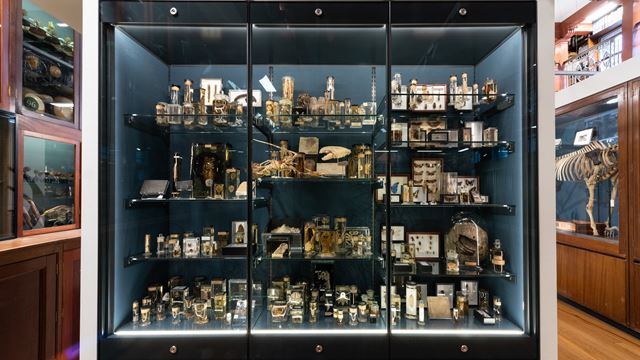
The Grant Museum of Zoology is home to around 100,000 specimens; a fascinating collection used for teaching and research since 1828. Not for the faint-hearted, it feels like stepping into a Victorian scientist’s archive cabinet.
It’s one of the strangest museums in London, with skeletons, preserved animals and jars of specimens filling nearly every surface. One of the most famous exhibits is the jar of moles, which has become something of a mascot in its own right, even receiving fan mail.
With so much to take in, it’s worth asking volunteers for their favourite objects and stories. You can also use the audio guide or QR codes, which highlight key displays and offer insight into the collection’s academic history. Look closely and you’ll spot handwritten labels and pull-out drawers beneath the cases, revealing insects and skeletal fragments up close.
Highlights include one of only seven quagga skeletons in the world, displayed in the endangered section near the entrance. Another standout is the Micrarium, a darkened room filled with microscopic specimens projected from wall to ceiling, best viewed looking up into the mirrored ceiling.
Best for: Anyone fascinated by rare specimens, skeletons, and the stranger side of the natural world.
Good to know: The museum operates a one-in, one-out system when busy, so short queues can form (usually 5–10 minutes outside school holidays). Visit weekday mornings or late afternoons for a quieter experience.
Fun and playful quirks around the city
The Ghost Bus Tour – Best for exploring London’s haunted history
London’s history is full of quirks, with plenty of gruesome moments for thrill seekers to explore. We hop aboard The Ghost Bus Tour where we’re greeted by a morbidly funny conductor before stepping into a creaky, gothic-style interior that sets the tone for what’s to come.
With theatrical effects and the occasional jump scare, the experience blends horror with humour as you pass landmarks like St Paul’s Cathedral and the Tower of London, leaving you laughing and slightly questioning what you’ve just witnessed. The former “funeral bus” whizzes through the capital’s streets on its way towards East London and Whitechapel, stopping by a historic pub tied to Wapping’s smuggling past before heading back to central London.
If you want to go further, head to The Prospect of Whitby, London’s oldest riverside pub, once nicknamed the “Devil’s Tavern” thanks to its proximity to Execution Dock, where pirates and thieves were hanged at low tide. For those keen to sharpen their detective instincts, Whitechapel’s Jack the Ripper walking tours offer another deep dive into one of London’s most infamous unsolved cases, tracing the footsteps of the victims through the very streets where the mystery unfolded.
Best for: Anyone looking for unusual city tours or a deeper dive into London’s darker side.
Good to know: Arrive at least 15 minutes before departure, as seats are allocated on a first-come, first-served basis and cannot be reserved. In summer, it’s worth booking a later evening slot so the tour runs after dark for a more atmospheric experience.
The Lost Estate – Best for immersive and theatrical dining experiences
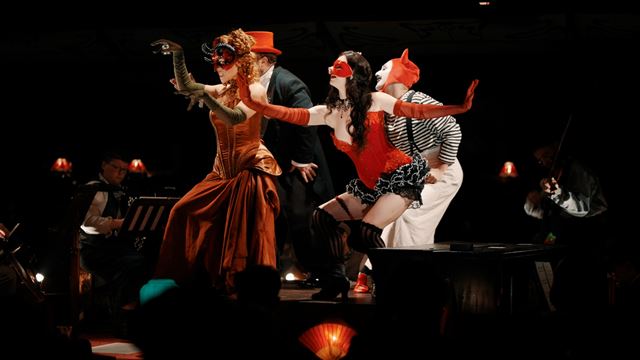
The Lost Estate has built quite the reputation for creating immersive worlds blending showstopping performances with live music, a full band and a carefully curated menu, so we can dive into the action as it unfolds all around us.
58th Street transports us to 1930s New York and the Harlem jazz scene, where we meet club owner Belle Livingstone and are taken through an evening of glamour and decadence inside a smoky jazz club. A live jazz band takes centre stage while Belle tells her story, surrounded by cabaret and burlesque performances, all unfolding as we enjoy an opulent multi-course meal making for an electrifying experience.
The Lost Estate’s latest immersive dining experience, CHAT NOIR!, takes us to 1890s bohemian Paris and the Montmartre club. We meet impresario Rodolphe Salis, who introduces La Chat Noir’s most daring performances, from opera singing to mime, magic and dance, all delivered with a touch of chaos. The atmosphere is complete with Belle Époque-inspired cocktails – a personal favourite being the Punch Exotique, with pineapple rum and banana liqueur. A three-course French-inspired banquet is served, with a vegetarian option that feels just as considered, including a vegan pâté and a rich truffle vegetable farce we couldn’t get enough of.
Best for: Immersive experience fans and theatre lovers.
Good to know: Both experiences encourage guests to dress for the era, so put on your most glamourous attires. Booking in advance is recommended, as these are among London’s most in-demand immersive shows.
The Crystal Maze experience – Best for adventurous problem solvers

We took part in the ultimate team challenge at The Crystal Maze LIVE Experience, putting our skills to the test in the exact same conditions as the legendary TV show. The 60-minute experience takes us across different themed zones, from medieval to futuristic settings, underground bunkers and scientist dens. The Goal? Aiming to collect enough crystals to unlock the final challenge inside the iconic Crystal Dome.
This fast-paced adventure is all about teamwork, combining mental, technical and physical challenges under pressure. We loved braving the toughest challenges, from climbing rock walls and dodging spikes to crawling through sand mazes. We also entered a giant naval battle setup, and even took on a surgeon role in a life-sized operating table challenge, alongside a few more mentally demanding tasks that pushed us to calculate answers before time ran out.
While the original maze master Richard O’Brien isn’t there to guide you, each team is guided by their own maze master throughout. Ours felt like a cross between an adventure guide and an Indiana Jones-style host, making the experience even more entertaining than expected.
Best for: Fans of the Crystal Maze TV show, thrill seekers and problem solvers.
Good to know: The experience is designed for teams of up to eight players, so smaller groups may be joined with others. Arrive at least 15 minutes early to complete a safety briefing. Comfortable clothing and shoes are essential, and lockers are available for belongings.
Mr Fogg’s Apothecary Experience – Best for immersive cocktail making

Step into Mr Fogg’s Apothecary, a Victorian-inspired hideaway filled with tonics, remedies and experimental potions, all reimagined as inventive cocktails. We recommend booking a Saturday afternoon slot for Mr Fogg’s Cocktail Experiment, where a slightly eccentric Victorian “mad scientist” and his team of apprentice pharmacists set out to “cure” guests with a series of unexpected concoctions.
From the moment we arrive, a gothic-looking black building hints at an old apothecary, with a staircase leading down into the basement Elixir Room. From the get-go, we are taken under the wing of the pharmacists, who assess our “ailments” before guiding us through selecting ingredients and building our own personalised antidote.
Under the guidance of the head pharmacist, we dive into the art of immersive mixology, witnessing all sorts of chemical-style reactions, from colour-changing elixirs to smoky infusions. It’s a hands-on experience where we experiment, mix and craft our own one-of-a-kind drink, with plenty of playful storytelling woven throughout.
Best for: Cocktail enthusiasts and anyone drawn to whimsical and eccentric theatrical experiences.
Good to know: Pre-booking is essential, as the experience runs in set sessions where cocktails and storytelling are blended together rather than a traditional walk-in bar. Please note bookings are for guests aged 21 and over.
Charlie and the Chocolate Factory Afternoon Tea – Best for those with a sweet tooth

As soon as we step into Aldwych 1, it feels like we’ve entered Roald Dahl’s whimsical world of Charlie and the Chocolate Factory, complete with a counter that could belong in Wonka’s own factory. If, like us, you’ve always wanted to step inside Wonka’s factory and taste its surreal creations, this is the moment.
We start with a savoury selection, with vegan and vegetarian options are just as good as the standard options. Highlights include the cauliflower coronation finger sandwich and the horseradish and beetroot “hot ice cream for cold days”, which looks like a pink ice cream but tastes entirely different – a clever trick of the senses.
Before moving on to sweets, we cleanse the palate with Wonka’s ever-changing cooling tea, shifting from blue to purple and gold. Then comes the main event: warm scones with “snozzberry” jam and “all the creams”, a playful “Goodbye Violet” macaron, and our personal favourite, the “hair toffee” mousse layered with tropical fruit compote. To finish, a towering pink candy floss and caramel chocolate milkshake complete the experience.
Before leaving, don’t miss the bathroom, where framed Charlie and the Chocolate Factory illustrations and original editions add a final touch of detail. For more Roald Dahl magic, Matilda the Musical at the nearby Cambridge Theatre is just a short walk away.
Best for: Roald Dahl fans and anyone who enjoys immersive, playful dining experiences.
Good to know: The savoury course is refillable, so you can always ask for seconds.
Ruins St Dunstan in the East – Best for a quiet escape
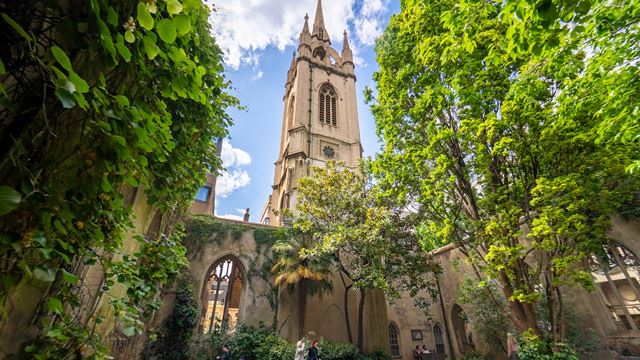
London can seem like a high-paced, never-stopping city, but step into a quiet side street and you might just stumble upon a hidden gem.
Originally a parish church with medieval roots, St Dunstan in the East was rebuilt after the Great Fire of London by Sir Christopher Wren, most recognisable for its Gothic tower. Then came the Second World War, when it was heavily damaged during the Blitz and never rebuilt. Instead, the ruins were left to nature, and today ivy, trees and climbing plants weave through the stone walls, turning the shell of the church into a living memorial that feels more powerful than any reconstruction. It’s the kind of quiet beauty loved by history enthusiasts, photographers, and anyone needing a pause from the bustling city life.
Nearby, the ruins of Christchurch Greyfriars Church Garden offer another striking example of London’s layered history. Once a Franciscan monastery and later a casualty of both the Great Fire of 1666 and the Blitz, it now survives as a peaceful rose garden. Its remaining walls frame the space, while planted beds and stone markers trace the footprint of the original church, creating a calm, reflective setting in the heart of the city.
Best for: Photography enthusiasts, history lovers, and anyone seeking peaceful hidden gardens.
Good to know: Visit early in the morning for the quietest experience, and take time to explore the surrounding lanes, which lead to some of the city’s historic alleyways.
Phantom Peak – Best for immersive storytelling and mystery solvers
Head to Phantom Peak, an immersive experience set inside a mysterious mining town inhabited by quirky characters, from Mayor Pocket to the sinister (and slightly unhinged) Dr Winter and Jonas, inventor and founder of JONACO. On arrival, we find ourselves in a Wild West-style town and are quickly sent on a series of quests, uncovering secrets through clues gathered after meeting townsfolk and piecing together the next stage of the story, all in pursuit of a collectable trail card.
Once completed, you receive a collectible card marking your progress — and with each new trail, the collection quickly builds into a personal archive of your adventures. Between missions, there’s time to refuel, and the mac and cheese (with its famously addictive crunchy topping) is a must-order.
Phantom Peak evolves each season, with new mysteries unfolding every few months, giving the experience the feel of a live-action series. While the original Canada Water site is currently closed ahead of a major relaunch, the experience is set to return in a larger new venue at Westfield Stratford.
Best for: Immersive experience fans and escape-room-style storytelling lovers.
Good to know: Currently closed for relocation, with a return planned in a larger venue. In the meantime, you can join The Guild for digital access to the JONACO archive.
The Last Tuesday’s Society – Best for curious visitors and fans of weird art collections

The Last Tuesday’s Society, also known as Viktor Wynd’s Museum of Curiosities, is a must-visit for anyone seeking weird things to do in London. Tucked away in a small basement, the museum is packed from floor to ceiling with a chaotic collection, with little effort to categorise it in any way.
The collection immediately strikes attention, from a two-headed kitten skeleton and an eight-legged lamb to the leg bone of an Irish giant. Shelves are filled with taxidermy, skulls and folklore objects, often layered with humour and provocation, so it’s worth slowing down and take it all in.
Alongside natural history curiosities, one of the strangest exhibits is a preserved mouse in an olive martini glass, a fitting introduction to the upstairs absinthe parlour. Here, the atmosphere shifts into a dimly lit space dedicated to absinthe tasting, once known as the “green fairy” and famously associated with figures like Oscar Wilde. We are guided through a traditional preparation ritual: sugar placed over a glass, ice water slowly dripping in, transforming the spirit into a cloudy herbal drink that was later banned for nearly a century.
And just a short bus ride away, you can also visit Hoxton Street Monster Supplies, a quirky shop selling “goods for the living, dead and undead,” with profits supporting a creative writing charity for young people.
Best for: Anyone curious about London’s strangest collections and immersive curiosities.
Good to know: Absinthe tastings and bar seating are limited, so booking in advance is strongly recommended.
Unique outdoor adventures
Thames Rocket speedboat ride – Best for thrill seekers and lovers of speed
London has plenty of boat experiences along the Thames, but if you’re looking for high-speed thrills, nothing beats the Thames Rockets tour, whizzing you across the water at up to 55 km per hour. So, buckle up, as you’re about to board one of London’s most adrenaline-filled tours, creating epic memories along the way.
Boarding near the London Eye, you can’t miss the bright red Thames Rockets speedboats. On arrival, you’re welcomed by the crew and kitted out with safety jackets before a short introduction and safety briefing, after which you’re ready to board. As London weather can change quickly, on colder days you’ll also be offered a blanket, as the ride can get surprisingly windy once you’re out on the river.
The Ultimate London Adventure, one of the most popular tours, combines iconic views of London’s landmarks with pure adrenaline and laugh-out-loud commentary from a professional actor-guide on board. The commentary kicks off as you pass major riverside sights, from Big Ben and the Houses of Parliament to Shakespeare’s Globe and The Shard. Brace yourself, as once you go under Tower Bridge, the engines are pushed to full power for a high-speed blast through the Docklands. For something even longer and faster, the Thames Barrier Explorer tour continues past Canary Wharf all the way to the Thames Barrier, in a mission-like experience that feels straight out of a film chase scene.
Best for: Thrill seekers and anyone looking for a high paced alternative to London’s traditional sightseeing tours.
Good to know: Dress warmly as it can feel very windy even in summer and request a blanket in colder months. Arrive early as boarding is on a first-come, first-served basis.
The Dare Skywalk – Best for jaw-dropping views and adrenaline seekers

Football stadiums are no longer just for die-hard fans, and Tottenham Hotspur Stadium is a real standout, not only hosting concerts, but also offering one of London’s most adrenaline-filled experiences: the Dare Skywalk. The climb takes visitors along a narrow glass walkway suspended to reach the iconic golden cockerel at the summit. Standing 46.8 metres above the pitch, with a dramatic look straight down into the stadium below, making for a thrilling experience.
As we arrived at the Spurs stadium, qualified staff guided us through a safety briefing before fitting harnesses clipped onto a secure rope system. Once geared up, we made our way along the roof structure, with rails always within reach for reassurance while taking in the views. For extra adventurous spirits, the Edge experience adds another level of thrill, lowering participants 42 metres over the edge of the stadium above pitch level in a controlled descent. And if nerves suddenly kick in, guides are on hand throughout to reassure climbers or escort them back down.
Tottenham Hotspur Stadium is also home to one of London’s most immersive F1 driving experience beneath the South Stand. Visitors can race bespoke F1-inspired karts while tracking lap times and performance stats on digital leaderboards, complete with radio messages from a virtual race engineer.
Best for: Thrill seekers, adventurers and football fans, and anyone seeking jaw dropping views.
Good to know: Arrive at least 20 minutes early for check-in and equipment fitting. Matchday climbs are also available depending on availability.
Ally Pally Rooftop Adventure – Best for thrill seekers and adventurers
London has its fair share of rooftop climbs attracting the city’s thrill seekers, with the latest one topping them all: Alexandra Palace Summit, a historic venue offering breathtaking views over the capital from a 130-metre summit. The experience begins on the outside balcony beneath the rose window, where we were fitted with harnesses. From there, our guide led us along metal walkways and up a series of steps towards the summit, sharing over 150 years of the building’s history along the way.
We got a close-up look at the building’s Victorian architecture before reaching the viewing platform, standing beside the Angel of Plenty statue. On a clear day, the panorama is exceptional and makes for a fun challenge to pick out London’s landmarks, from St Paul’s Cathedral to Canary Wharf and beyond. Climbs run during the day, at sunset, and after dark, with evening sessions especially striking as the skyline lights up. You’ll typically spend around 10–15 minutes at the top. Note that phone access requires a pre-booked secured pouch, as cameras aren’t otherwise permitted on the climb.
For other high-adrenaline viewpoints, Up at The O2 in Greenwich Peninsula provides another guided roof-top walk across one of London’s most iconic venues.
Best for: Adventurous visitors and anyone wanting panoramic city views beyond standard observation decks.
Good to know: Wear warm, comfortable layers as wind exposure is significant at height, especially in winter. Lockers are available, but space is limited, so bring minimal belongings.
Lee Valley White Water Centre – Best for those with Olympic dreams

Did you know you can actually go down rapids on a rafting course in London? Luckily for us, when London hosted the 2012 Olympic Games, several high-performance facilities were built to last, meaning we can still try sports we might never have considered before at Lee Valley White Water Centre.
Alongside rafting, the centre offers plenty of adrenaline-fuelled activities to test friends and family. You can tackle kayak courses of varying difficulty, including the Olympic 300m white water course and the 160m slalom course, or take things at a slower pace with paddleboarding or open water swimming sessions, available year-round on a 250m triangular loop (with wetsuits recommended in colder months and available to hire).
Kids will be thrilled to join Lee Valley’s water wipeout obstacle course, made up entirely of water inflatables, a guaranteed splashing family challenge as they race each other to complete it in record time, jumping over obstacles and whizzing down slides for a thrilling finish. And speaking of exhilarating activities, hydrospeeding is one of the most adrenaline-packed water sports at Lee Valley, taking us straight into the rapids and letting us surf the waves armed with a bodyboard and flippers.
Best for: Water sport enthusiasts and thrill seekers.
Good to know: Booking in advance is strongly recommended, and arrival times are strict, as all participants must attend a safety briefing before taking part and be properly fitted with equipment.
London Fields Lido – Best for outdoor swimming
Outdoor swimming has become a firm favourite in London, especially in summer when there’s no better feeling than having a splash at one of the capital’s many lidos.
We’ve been on many occasions to the London Fields Lido, a 50-metre pool in the heart of Hackney, open through the warmer months but also in winter, when swimmers can dive into a 25-degree heated pool. Winter sessions are atmospheric, with steam rising as you surface to breathe. Adult learning sessions, including Swim Doctor lessons, are also available for those looking to improve their technique. The pool caters for all levels, with lanes ranging from “swim for all” to slow, medium and fast lanes, making each session run smoothly.
After a swim, refuel nearby at some of Hackney’s best spots, from Pophams’ pastries to Pub on the Park’s barbecue-heavy menu. On weekends, Broadway Market is also worth a stop, with street food stalls, cafés and restaurants lining the streets, including El Ganso Café.
If you’re looking for a spot of wild swimming at the heart of London, Hampstead Heath Ponds offer the closest thing to natural swimming in London, with three separate ponds for women, men and mixed swimming. Set within woodland, they feel like a quiet escape from the city.
Best for: Outdoor swimmers and anyone looking for a slower, more local side of London in warmer months.
Good to know: Lidos are busiest during summer holidays, so early visits are best. Hampstead Ponds operate pay-on-entry, with limited online booking in summer.
WakeUp Docklands – Best for adrenaline and adventure seekers
There’s far more to East London than Canary Wharf’s financial towers and Shoreditch’s street art. When we heard about the Royal Docks water sports centre, we knew we had to visit – especially for the chance to finally try wakeboarding. WakeUp Docklands offers sessions for all experience levels, from complete beginners to more advanced riders, with one-to-one guidance from experienced instructors.
As soon as we arrived, we were kitted out with everything needed, including wetsuits, helmets and lifejackets, before heading into a safety briefing covering water entry, riding position and the basics of balancing on the board. As keen water sports enthusiasts, wakeboarding felt like the natural next step, combining the thrill of surfing with speed across the water.
Our instructor quickly explained that balance and positioning are everything: knees bent, weight centred, and taking your time standing up rather than rushing it. It definitely took us a few attempts before finding our rhythm, but once up, gliding across the docks felt incredibly rewarding. Before long, we were gaining speed, carving across the water and even attempting a few small jumps – already planning to come back and try hydro foiling next time.
Best for: Adventure enthusiasts, water sports beginners and experienced riders alike.
Good to know: Arrive at least 30 minutes early for equipment fitting and your safety briefing. Beginner sessions include equipment hire and instruction, so no previous experience is needed.
Skuna Hot tubs – Best for fun group outings

Imagine relaxing in a bubbling hot tub right in the heart of London, only this time cruising through Canary Wharf’s canals aboard a Skuna hot tub boat. Surrounded by towering skyscrapers, all you have to do is sit back, unwind and soak it all in as you glide through the Docklands enjoying a surprisingly peaceful escape from the city. The wood-fired Skuna hot tubs are heated to a blissful 38 degrees, making for an especially cosy experience in colder months, while temperatures are lowered slightly in summer to keep things comfortable.
One of the best parts of the experience is that the boats are self-driven, meaning no pilot joins you onboard. Instead, one person from your group becomes captain for the journey, with captain hats available to purchase if you really want to embrace the role. Just remember the designated captain must remain sober, so it’s best to decide who’s steering before climbing aboard.
Skuna also offers other quirky experiences on the water, including mouthwatering cheese and chocolate fondue cruises aboard heated igloo boats. The après-ski-inspired experience begins with a short, guided cruise around the canals before returning to the quay for a cosy dining session complete with bubbling fondue and skyline views.
Best for: Unusual things to do in London for adults, celebrations and laid-back sightseeing.
Good to know: Shared changing rooms and lockers are available onsite, and arriving in swimwear makes boarding much easier. All drinks consumed onboard must be purchased onsite.
More ways to experience London’s quirky gems
Discover even more unusual top spots in London and offbeat activities to dive into – from immersive experiences and hidden museums to tucked-away secret gardens, underground tours and inventive dining spots across the city. Whether you’re planning a date and looking to impress, challenging friends with a group activity, or simply keen to see a different side of London, there’s no shortage of options to explore.
Explore some of the capital’s most distinctive neighbourhoods, unusual places to stay, lesser-known attractions and creative food and drink experiences, with our guides helping you plan the perfect day out in London.