
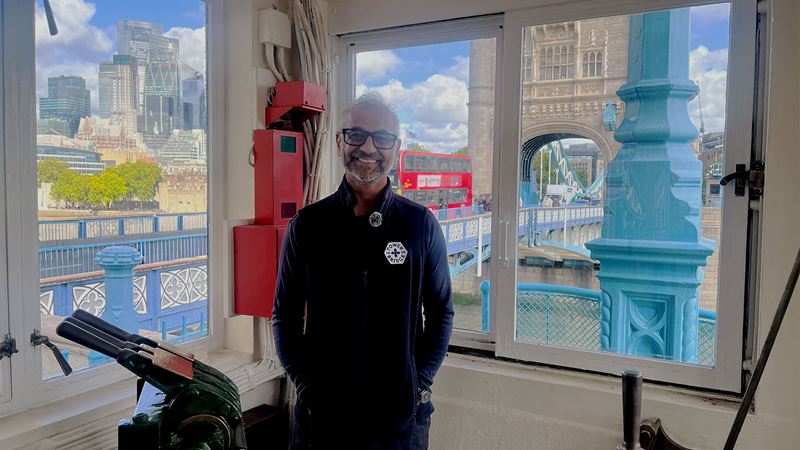
First things first: what even is a Bridge Driver? That's exactly the question I had when I came across what turns out to be one of London's most unusual jobs. So, when the opportunity came along to step behind the scenes at Tower Bridge and meet one of the engineers responsible for lifting it, I couldn't say no.
Tower Bridge is easily one of London's most famous monuments. Featured in countless films and photographs, it's become one of the capital's most memorable landmarks. But beyond its impressive towers and iconic appearance, it's also a working piece of engineering, playing an important role in keeping traffic moving both on the road and along the River Thames.
So, who are the people responsible for operating it, how do you actually lift a bridge of this size, and what does the job involve when there are no boats waiting to pass through? Follow along as I meet Vijay, one of Tower Bridge's bridge drivers, and discover more about the people, machinery and fascinating stories behind this remarkable London landmark.
Everything you need to know to plan your visit to Tower Bridge
- 📍 Where: Tower Bridge Road, London SE1 2UP
- 🚇 Nearest Tube: London Bridge (Jubilee and Northern lines)
- 📅 Opening times: Open daily, 9.30am–6pm (last entry 5pm)
- 🎟️ Tickets: From £16 – book your Tower Bridge tickets with Visit London
- ⏱️ Visit duration: Around 60–90 minutes
- 👥 Best for: History buffs, engineering enthusiasts and anyone keen to discover one of London's most famous landmarks.
- 🔍 Behind-the-scenes tours: Want to discover what happens beyond the usual visitor areas? Book a Behind-the-Scenes Tour for exclusive access to hidden areas of Tower Bridge, including the Control Cabin, Machinery Room and Bascule Chambers. Tours take place on selected dates, so check the official Tower Bridge website for availability.
Tower Bridge: a Victorian engineering marvel

Designed by architect Sir Horace Jones and engineer John Wolfe Barry, Tower Bridge was built to ease road traffic congestion while allowing tall ships to continue navigating the River Thames towards the Pool of London.
There was actually a competition to design the bridge, attracting around 50 different proposals before the bascule design was selected. Rather than opting for a traditional drawbridge, the designers settled on a bascule bridge, a type of moving bridge that opens by lifting two sections of the roadway, known as bascules. The design was particularly clever, as each section works like a giant seesaw, balancing its weight and requiring less energy to open without placing additional pressure on the towers.
When Tower Bridge first opened in 1894, it was operated by a steam-powered hydraulic system, with power generated by three large boilers connected to enormous steam pumping engines. These worked around the clock, with the bridge manned day and night to ensure it could be raised whenever a vessel needed to pass through.
And there was certainly plenty of work to keep them busy! When the bridge was built, central London was still a bustling port, with ships and vessels continuously coming and going along the Thames. The Pool of London, the stretch of the river around the Tower of London, was once the busiest port in the world during the Victorian era, welcoming cargo ships from across the globe to unload their goods at the warehouses lining the banks of the Thames, all the way from London Bridge to East London.
Tower Bridge enters the modern era
Fast forward to today, and things look rather different. With larger ports developing further down the Thames, fewer vessels needed to travel into central London, meaning the bridge was opening considerably less than in its golden years. By the late 1960s, the number of annual lifts had fallen to just a few hundred, compared with more than 6000 in its first year of operation. In 1976, the original steam-powered system was replaced by an electro-hydraulic system, making the operation more efficient and economical while reducing carbon emissions. You can still visit the Engine Rooms today, where the original Victorian steam engines that once powered the bridge lifts have been preserved, and learn more about the people who operated them.
Nowadays, the team of Bridge Drivers oversees around 800 bridge lifts a year, compared with more than 6000 in 1894. Any vessel taller than nine metres can request a bridge lift, provided at least 24 hours' notice is given. And here's another interesting detail: passage is completely free of charge and has remained so since 1894, with the Tower Bridge Act of 1885 giving river traffic priority over road traffic.
✨The Tower Bridge story you wouldn't believe
The bus that jumped Tower Bridge: In December 1952, London bus driver Albert Gunter was crossing Tower Bridge when he suddenly realised the north bascule was beginning to rise. With little time to react, he accelerated and managed to jump the gap, landing on the other side.
Meet Vijay, one of Tower Bridge's drivers

After picking up my access badge, I headed towards Tower Bridge, a sight that never gets old, dominating the River Thames with its two iconic towers and impressive bascules. I met Vijay in one of the historic control cabins, where bridge drivers have operated the bridge for generations. Back in the Victorian era, two drivers would work in tandem, one on the north side and the other on the south, coordinating the mechanisms to unlock and raise the two sections of the bridge.
I've done my fair share of behind-the-scenes tours and met some fascinating individuals around London, but there's something particularly intriguing about meeting someone with the responsibility of bringing traffic to a standstill and lifting an entire section of one of the capital's busiest river crossings.
In ten years of being in London, I've only seen Tower Bridge raised a handful of times. It's not something that happens randomly, but rather at scheduled times following requests from vessels travelling along the Thames. And while the actual lift might look relatively straightforward from the riverbank, there's quite a bit of preparation involved before those two enormous sections of roadway begin to move.
So, how do you learn to operate a bridge like this? And what does it actually take to become a Bridge Driver? Those were among the first questions I was keen to ask Vijay, as I discovered more about a role where engineering knowledge, coordination and responsibility go hand in hand.
What happens when Tower Bridge opens?

Operating Tower Bridge is no small feat. While the bridge lifts themselves are relatively short, there's a fair amount of preparation involved before the machinery even gets going. With vessels required to give at least 24 hours' notice, Bridge Drivers can plan ahead and arrange each lift. On the day, they contact the vessel's captain via VHF radio to coordinate the operation and make sure everything is ready.
One of the things Vijay explained is that each side of the bridge needs to be physically unlocked before the machinery can take over and begin raising the bascules. Depending on the vessel and the height required, the lift itself can take between 30 and 60 seconds, although the full process, from beginning to end, can take around four minutes, with a similar amount of time needed to lower the bridge again. And while lifting the bridge might sound like the most exciting part of the job, there's another responsibility that people don't necessarily think about: managing traffic on both the river and the road. With Tower Bridge being such an important crossing, Bridge Drivers have to coordinate the operation carefully, bringing road traffic to a halt while making sure vessels can pass through safely. It's a balancing act between two very different types of traffic, and one that requires plenty of precision.
Over the years, all sorts of vessels have travelled beneath the bridge, but for Vijay, it's not necessarily the large cruise ships that are the most exciting. It's the historic vessels, which offer a little glimpse into the Thames' maritime past. One particular favourite is the Waverley, one of the world's last seagoing paddle steamers still in operation, which makes its way along the Thames every year around October time. A rather special sight, especially when you consider the history of the bridge itself!
What does it take to become a Tower Bridge Driver?
So, seeing as the bridge lifts are now on a much smaller scale than during its Victorian heyday, what do the Bridge Drivers do the rest of the time, you ask?
Outside of lifting the bridge when required, Vijay and his fellow bridge driver colleagues have plenty to stay busy all through the day. The machinery responsible for operating the bridge is under constant watch, with drivers, who all have an engineering background, regularly checking the equipment to make sure everything is in working order ahead of the next bridge lift. That's one of the most important parts of the job, ensuring no issues arise when the bridge needs to open. As you can imagine, if the bascules were to get stuck halfway through a lift, both road and river traffic would come to a standstill, blocking one of London's main crossings.
Outside of the day-to-day maintenance, there's also the question of how you actually become a Bridge Driver in the first place. And I was quite surprised to hear that, to obtain your licence and qualify for the role, you need to have completed 200 bridge lifts alongside a fully qualified Bridge Driver! One of the reasons for such extensive training is simple: it allows you to experience everything that comes with the job, from handling the machinery and dealing with occasional issues to coordinating the bridge lifts themselves. But above all, it's about understanding the responsibility that comes with the role, as you're not only responsible for the bridge, but also for the people walking across it, the cars travelling over it and the vessels passing beneath it.
Being a Bridge Driver: operating a piece of London's history
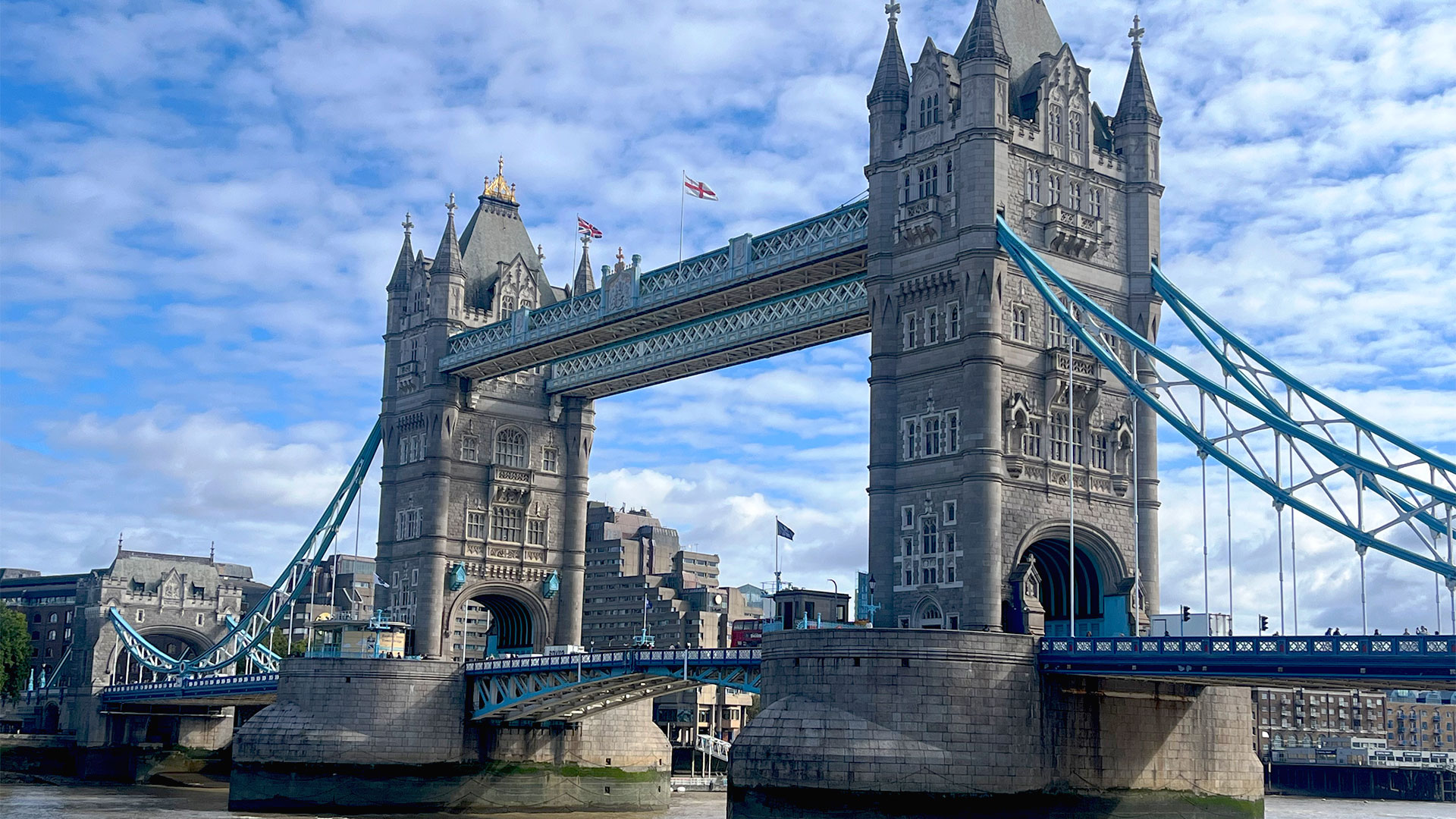
One of the first things Vijay told us when answering our many questions about his job was just how privileged he feels to be operating such an iconic piece of London's history, and carrying on a tradition that started back in 1894. And while Tower Bridge is one of London's oldest bridges, much of its operation has evolved with the times, combining its original Victorian engineering with modern-day technology.
Walking in the footsteps of the first Bridge Drivers, operating the locks and overseeing the mechanisms that raise and lower the bascules, is certainly not your everyday job. After all, there's something quite special about being responsible for a piece of London's history, particularly one that most of us simply admire from the outside without giving much thought to what goes on behind the scenes.
After meeting Vijay and discovering just how much goes into keeping Tower Bridge operational, I certainly won't look at it quite the same way again. The next time I see the bridge being lifted to allow boats to pass along the Thames, I'll know a little more about the people and machinery making it happen.