

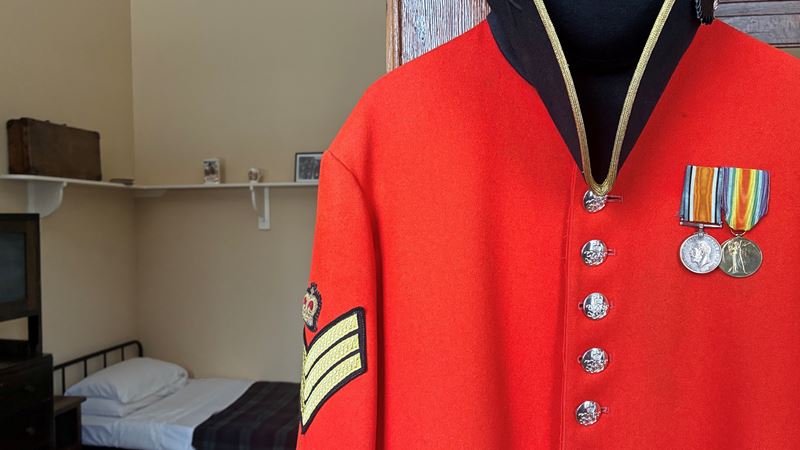
Everything you need to know about visiting Royal Hospital Chelsea
- 📍 Location: Soane Stable Yard (Chelsea Gate), Royal Hospital Chelsea, London, SW3 4SR
- 🚇 Nearest Tube: Sloane Square (Circle and District)
- 📅 When: Tue-Fri and Sun: 2pm, Sat: 10.30am
- 🎟️ Price: £30. Advance booking is essential via the Royal Hospital Chelsea website
- ⏱️ Experience duration: Tours last around 90 minutes
- 👥 Who is this for? Military and history enthusiasts or those looking to uncover hidden gems
- 👀 What to expect: A small-group tour of key parts of the Royal Hospital Chelsea, including its grounds, dining hall, chapel and accommodation, guided by a Chelsea Pensioner.
Jump to section
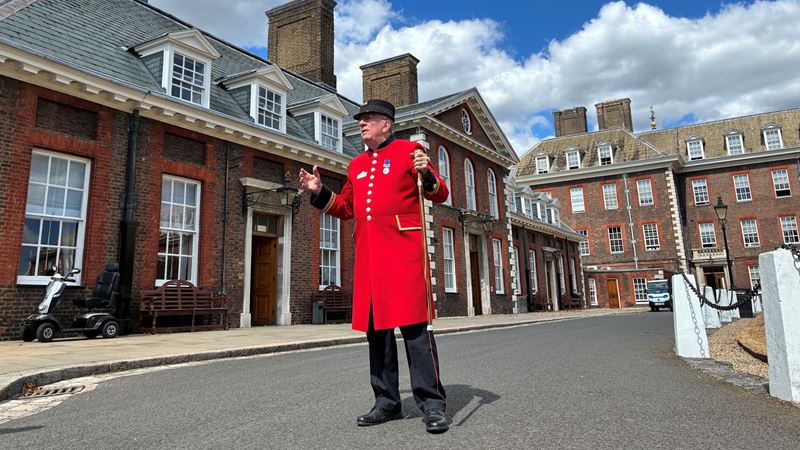
We gather in the cobbled Soane Stable Yard of the Royal Hospital Chelsea, as an impeccably turned-out man, I suspect in his late-60s, approaches. He's wearing a scarlet-red coat, perfectly pressed black trousers and a shako cap. “I'm Bill, and I'm your guide today," he says in what I immediately recognise as a Scottish twang.
But I soon realise I'm wrong… not about the accent, but his age. Bill is actually 85! Something about the Royal Hospital seems to keep these Chelsea Pensioners youthful. He tells us he skydived a few years ago, inspired by a fellow resident… one of around 20 resident ladies here who completed a wing walk in her 90s. It could be something in the water, or possibly in the beer at the on-site Chelsea Pensioner Club, which we pass as Bill strides confidently backwards, gesticulating with his arms.
Bill points to the initials on his hat… "R. H., meaning Royal Hospital”… He explains that it has never actually been a hospital, but the building's name comes from the French word "hospitalité” – a place of respite and, in effect, a retirement home. But it's clearly far from the usual retirement home.
What to see at Royal Hospital Chelsea
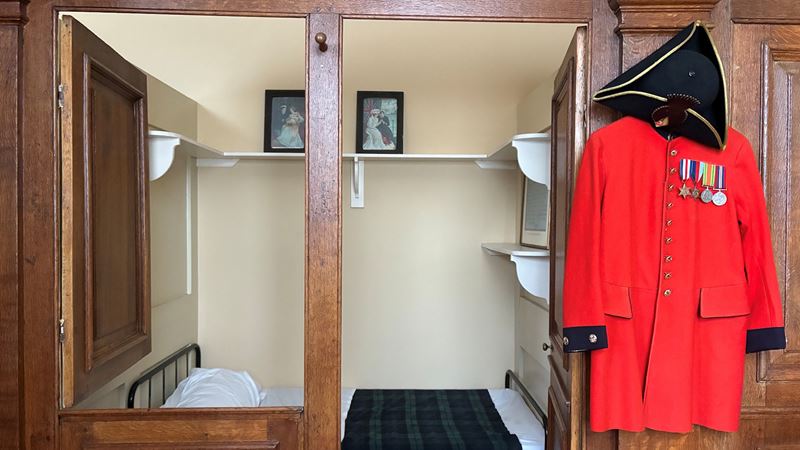
Walking from Soane Stable Yard, where horses were once kept, we head past the Chelsea Pensioner Club and set foot in original 6ft by 6ft “berths”, rooms where the original Chelsea Pensioners stayed. Clad with dark wood pilfered from a marooned French naval frigate and with the famous scarlet coats and black tricorn hats hanging by the side, the berths are snug but have everything the residents would have needed when it was first built. We hear the lodgings are much more modern today, but they offer great insight into what life was like for the first Chelsea Pensioners.
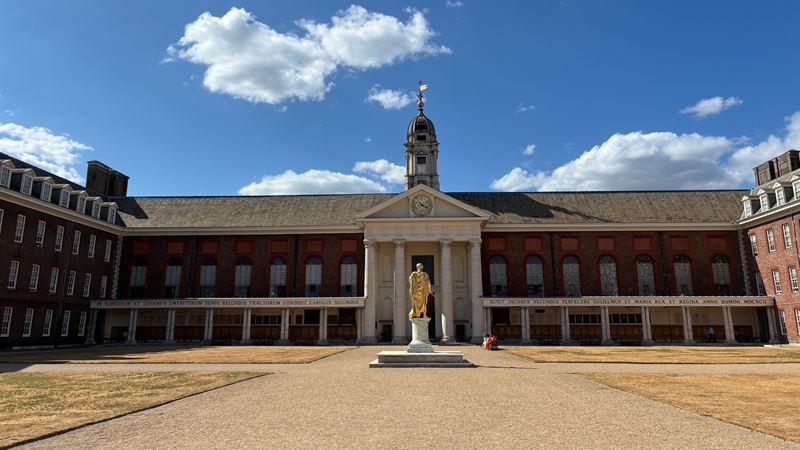
We soon stroll into the colonnaded Figure Court – a peaceful spot where the Chelsea Pensioners clearly like to sit and relax with views across the lawn and the river to Battersea Power Station. As residents pass our small group, Bill greets each by name, and they all warmly welcome us; it's clearly a friendly community.
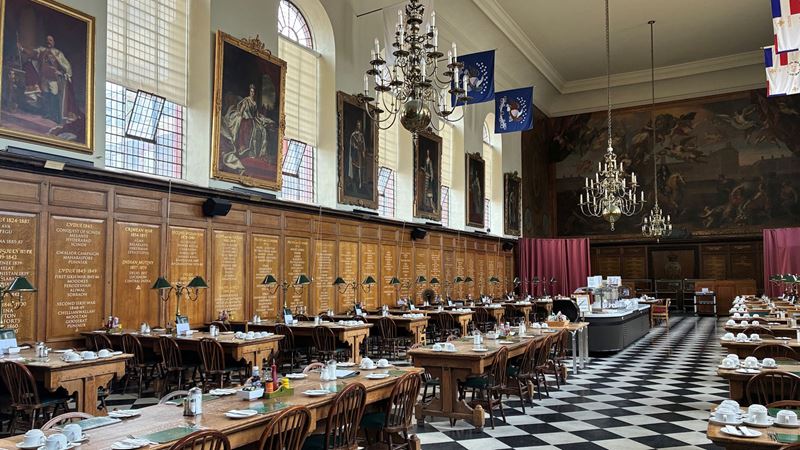
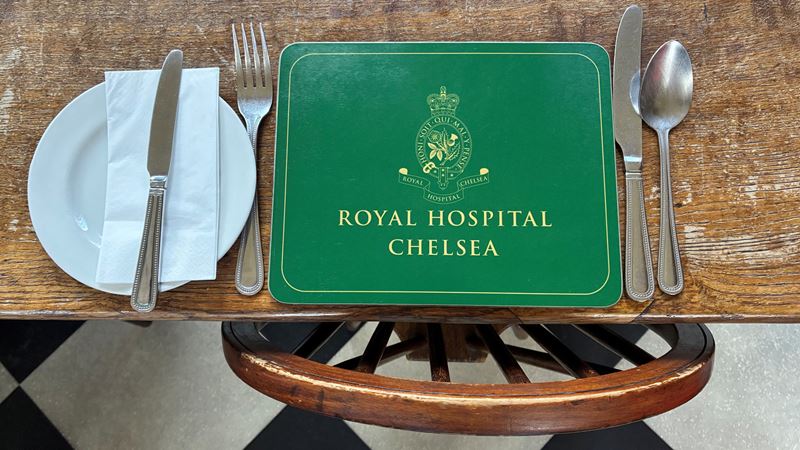
Next up, the Great Hall dining room – for me, the most impressive part of the Royal Hospital Chelsea. Its black-and-white chessboard floor tiles, wood panelling and traditional green lamps keep it frozen in time. Names and dates of military conflicts line the walls. There's even a table where the Duke of Wellington lay in state for seven days… now that's some proper history right there!
We then step inside the Wren Chapel. Bill's mood remains upbeat but more sombre as he removes his hat and explains that every resident who passes away can have a final service in this multidenominational place of worship. A book of remembrance lists those who have recently departed, nearly all in their 90s and 100s. It's a very moving place, with an impressive fresco in the half-dome of the apse.
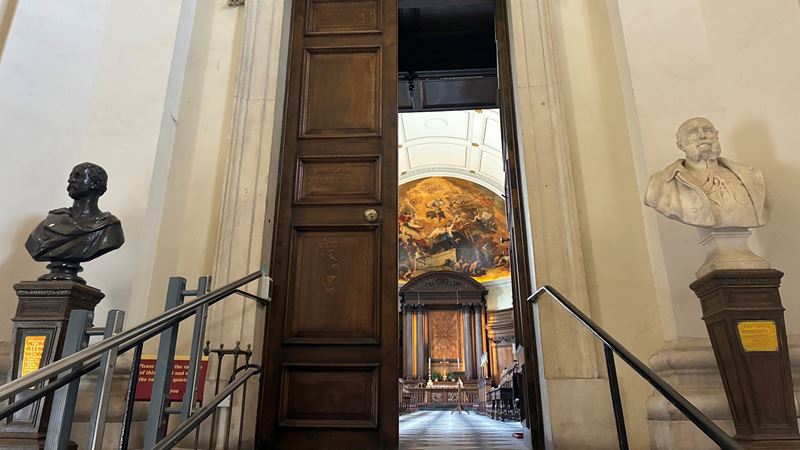
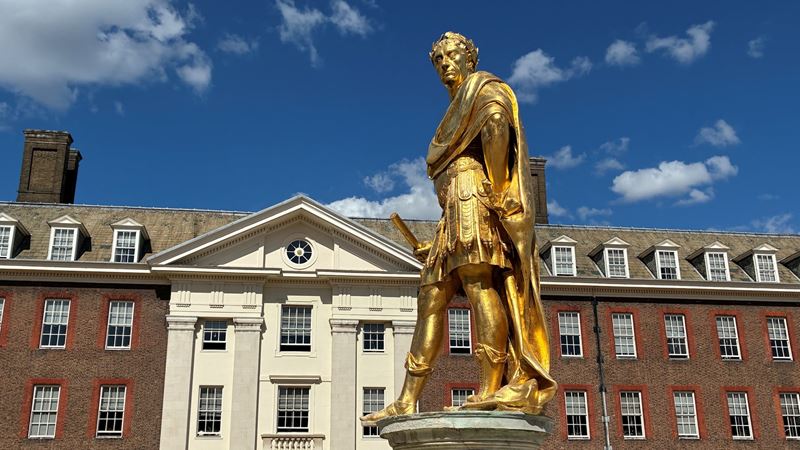
As we contemplate that most Pensioners spend their last days here, we head out into Figure Court to study a statue of Charles II in gleaming gold, before looking out onto the grounds where events take place. Bill points to a wooded area where the relatively recent addition to the calendar, Chelsea Winter Village, is held. "It’s fantastic", he says, as he explains that the Chelsea Pensioners are invited to attend all events held here across the 66-acre (27-hectare) grounds.
History of the Royal Hospital Chelsea
King Charles II – allegedly encouraged by his mistress Nell Gwyn – founded the Royal Hospital in 1681 to help injured servicemen who were "broken and aged by war" (as the Latin inscription on the building states, ably translated by Bill).
The king even commissioned acclaimed architect Sir Christopher Wren, who built St Paul’s Cathedral and many churches in the City of London, to do the job. It was completed in 1692 and today around 300 pensioners live here at any one time.
Royal Hospital Chelsea facts
- Construction was completed in 1692 by Sir Christopher Wren.
- There were 476 original residents – around 300 Chelsea Pensioners live here today.
- In 1809, Sir John Soane completed an infirmary on the site, which is today the National Army Museum.
- The Chelsea Pensioners have more than 700 medals and 5,000 years of service between them.
- The Royal Hospital Chelsea was bombed during the Second World War – on 16 April 1941 the Soane Infirmary was hit, killing 13 people; while on 3 January 1945, the North-East Wing was destroyed, with five casualties.
- The statue of Charles II in Figure Court was created by acclaimed sculptor Grinling Gibbons.
- Each year, the Chelsea Pensioners attend Founder's Day celebrations in honour of the coronation of King Charles II – many wear oak leaves in recognition of the king hiding in an oak tree to escape capture during the Battle of Worcester.
Daily life for the Chelsea Pensioners
In a short video at the start of the tour, we learn about the activities on offer for the “In-Pensioners” (those who live here), from bowls to woodwork and movie nights. When I ask Bill about his favourite thing to do outside the complex in Chelsea, he shrugs and says he has everything he needs here within the Royal Hospital Chelsea walls… there's even a gym (maybe that's the secret to their youthfulness?).
There's apparently a curry-oke night (curry plus karaoke) in the Chelsea Pensioner Club in a few days' time. Bill wouldn't divulge his karaoke song of choice, but his response to our suggestions of Vindaloo or Korma Chameleon was met with a cry of: "I'm the only one who's supposed to tell bad jokes here!" – he certainly tells plenty, adding a fun twist to the tour and plenty of banter with our small group of 10 people. In fact, he regularly tells us off for not asking enough questions!
He says, eyes lighting up, that moving here four years ago changed his life. It's not only a fantastic place to live, but also a great way to keep in touch with fellow comrades who served with him during his 15 years in the British Army.
How do Chelsea Pensioners qualify for the Royal Hospital Chelsea?
To live here, In-Pensioners must have served in the British Army and must give up their military pension. The Ministry of Defence commandeers their pension, but the government department gives the Royal Hospital a grant to keep it running. Their residency provides them accommodation, meals and healthcare… it's a fair trade-off. Funds are also generated from hosting events in the Royal Hospital grounds – the most famous being the annual Chelsea Flower Show.
Royal Hospital Chelsea tour: the verdict
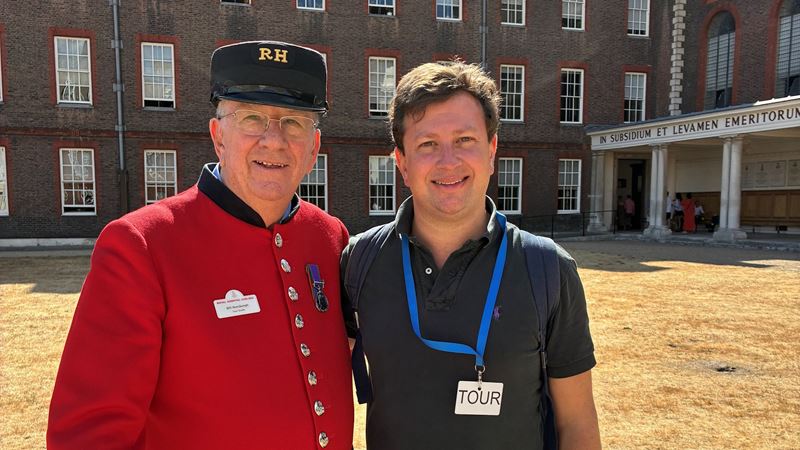
A tour of Royal Hospital Chelsea is an ideal tour for military fans, history buffs and those seeking a more unique London experience rooted in tradition.
Our estimated 90-minute tour lasts two hours – we clearly asked enough questions after all! It's a leisurely tour, but full of information, and we cover the main parts of the hospital site, giving a flavour of the hospital's history and importance, as well as its impact on the Pensioners who live here.
Royal Hospital Chelsea FAQs
How much is the tour?
The Royal Hospital Chelsea tour is £30 for adults and £17.50 for children.
When does the tour run?
Timings vary per day but tours generally take place at 2pm from Tuesdays to Fridays and on Sundays, and at 10.30pm on Saturdays. Tours do not generally run on Mondays.How long is the tour?
Tours typically last 90 minutes, but can last longer depending on questions.
Is the tour accessible?
The tour is fully wheelchair accessible – a wheelchair is also available to borrow for those who need one.
What is the Royal Hospital Chelsea?
The Royal Hospital is a retirement home where the Chelsea Pensioners live. It was built by Sir Christopher Wren on the command of King Charles II, and it was completed in 1692.
Who are the Chelsea Pensioners?
The Chelsea Pensioners are retired members of the British Army who are residents of the Royal Hospital Chelsea. To be eligible to live in the Royal Hospital Chelsea, they need to have served in the Army, reached pension age, be unburdened by financial or familial responsibilities, and have no spouse or dependents under the age of 18.Where is the Royal Hospital Chelsea?
The Royal Hospital Chelsea is on Royal Hospital Road, in Chelsea, London. Entry for the tour is via Chelsea Gate at West Road, opposite the junction with Ormonde Gate.What's good to know?
The tour always starts on time, so make sure you check in at Soane Stable Yard 15 minutes before the start.
If you have spare time, make sure you look at the free exhibition in the Chelsea Pensioners Museum within the yard (accessible without a tour ticket), browse the gift shop for Chelsea-Pensioner-themed items, or enjoy a drink or cake in the on-site Heidi Café.
Tours are limited to 25 guests, so it’s an intimate experience and gives you plenty of opportunity to ask questions. If you’re a large group, you can book a private tour for 10 people or more.
Who is the tour best for?
The Royal Hospital Chelsea tour is ideal for history lovers, those with an interest in the military and those who want unique experiences in London.
The tour is recommended for adults and children over 14 years.