

London’s parks are home to all sorts of animals, playing a key part in the capital’s green spaces, attracting Londoners and tourists alike with an interest in the city’s wildlife. We have all heard of Hyde Park’s green parakeets joyfully buzzing around walkers and keen to be on camera, as well as the majestic deer of Richmond Park. But did you know that St James’s Park is also home to a flock of pelicans?
The pelicans of St James’s Park have been making headlines lately after making history with the arrival of four new chicks, successfully hatched for the first time in 360 years. It is a historic milestone for the six adult pelicans that call the park home, named Sun, Moon, Star, Tiffany, Isla and Gargi, who have now welcomed four dark, fuzzy-feathered chicks to their flock, carefully looked after by Nick Burnham, Senior Wildlife Officer at The Royal Parks.
Upon hearing the news, we knew we had to make our way to St James’s Park to get the lowdown on how this incredible feat came about. Follow along as I discuss with their carer everything from nesting and hatching to keeping a close eye on the chicks as they grow from tiny, featherless birds into their now fuzzy, brown-feathered large birds.
Everything you need to know about the pelican chicks
- 📍 Where: St James Park, Duck Island Cottage, 69 Horse Guards Road, SW1A 2BJ
- 🚇 Nearest Tube: 11 minutes’ walk from Westminster tube station (Jubilee, Circle and District)
- 📅 When: Pelican feeding time takes place at around 2.30pm, although the pelicans can be seen throughout the day around the lake
- ⏱️ Visit duration: 30-60 minutes
- 👥 Best for: Families and any wildlife and nature lovers
A bit of history: why are there pelicans in St James’s Park?
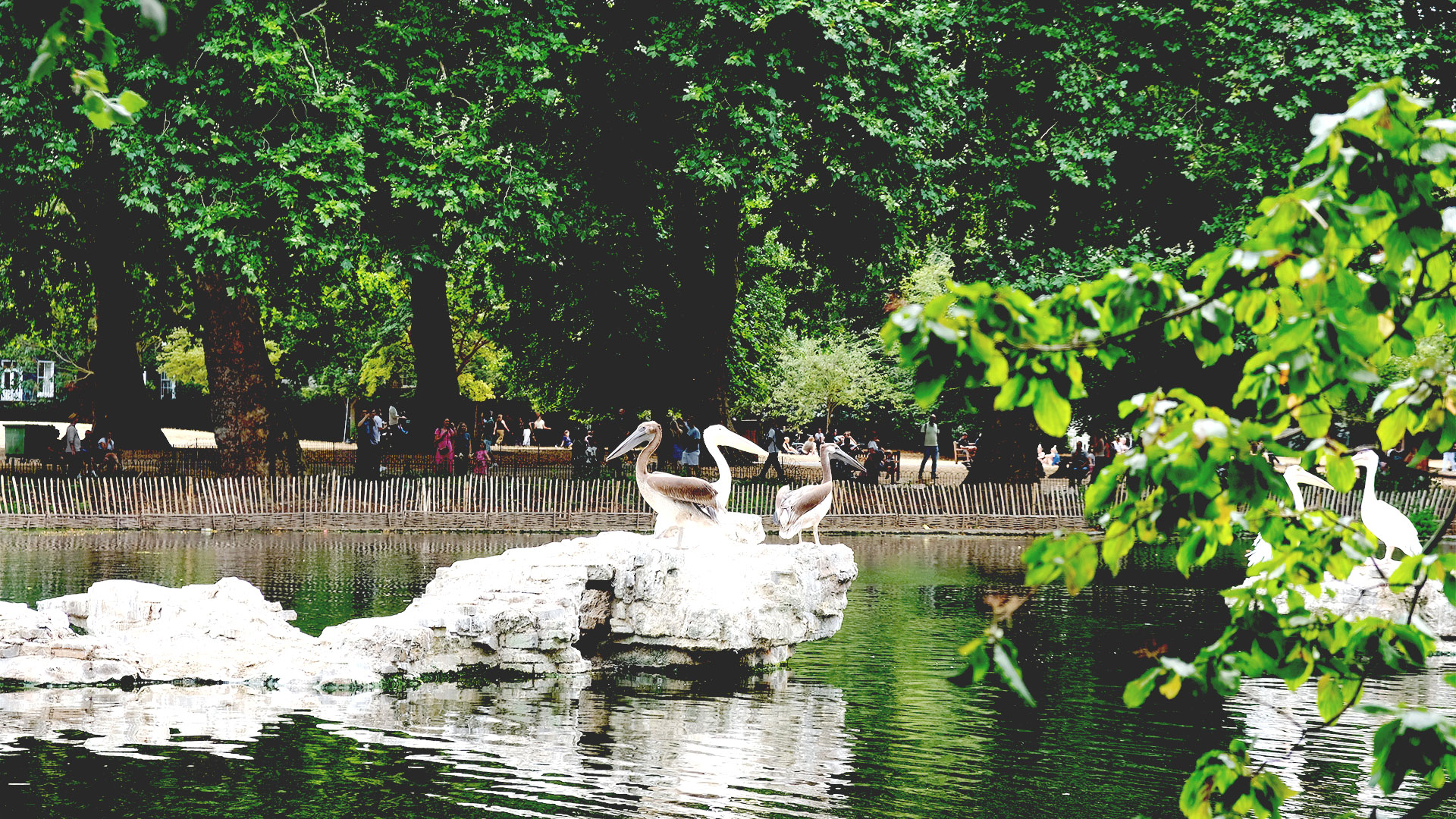
St James’s Park, at the heart of Royal London and just a short walk from Buckingham Palace, is home not only to ceremonial events and military parades on The Mall nearby, but also to a peaceful lake that has been home to a colony of much-loved pelicans.
The pelicans were first introduced to St James’s Park in 1664 as a gift to King Charles II from the Russian Ambassador at the time. They have remained part of the park’s wildlife ever since, delighting Londoners and visitors alike, with more than 40 pelicans having called the park home over the centuries. Since 1897, pelicans have been permanent residents of St James’s Park. Today, six adult great white pelicans share the park with the four chicks, which were born in mid-May and were approaching four months old when we visited.
The current pelicans, a gift from Prague Zoo, are eastern white pelicans. However, St James’s Park has welcomed different species over the years, from brown pelicans to American white pelicans, with the current breed seemingly faring particularly well. Of all the adult pelicans, Gargi is the oldest, now reaching 30 years old, and is the only fully winged pelican of the group.
🐘🐊Before the pelicans: the unusual animals of St James’s Park
St James’s Park may now be famous for its pelicans, but the park has welcomed quite a variety of animals from around the world over the centuries.
Historic records from the reign of King James I mention camels, crocodiles, an elephant and a collection of exotic birds. The exotic species you might expect to see roaming African plains and swamps are now long gone, although the pelicans certainly make for an entertaining sight, often displaying quite the cheeky behaviour.
But don’t let their playful appearance fool you. Pelicans can also display quite the predator instinct, with some even having been seen swallowing a whole pigeon!
First pelican chicks in 360 years
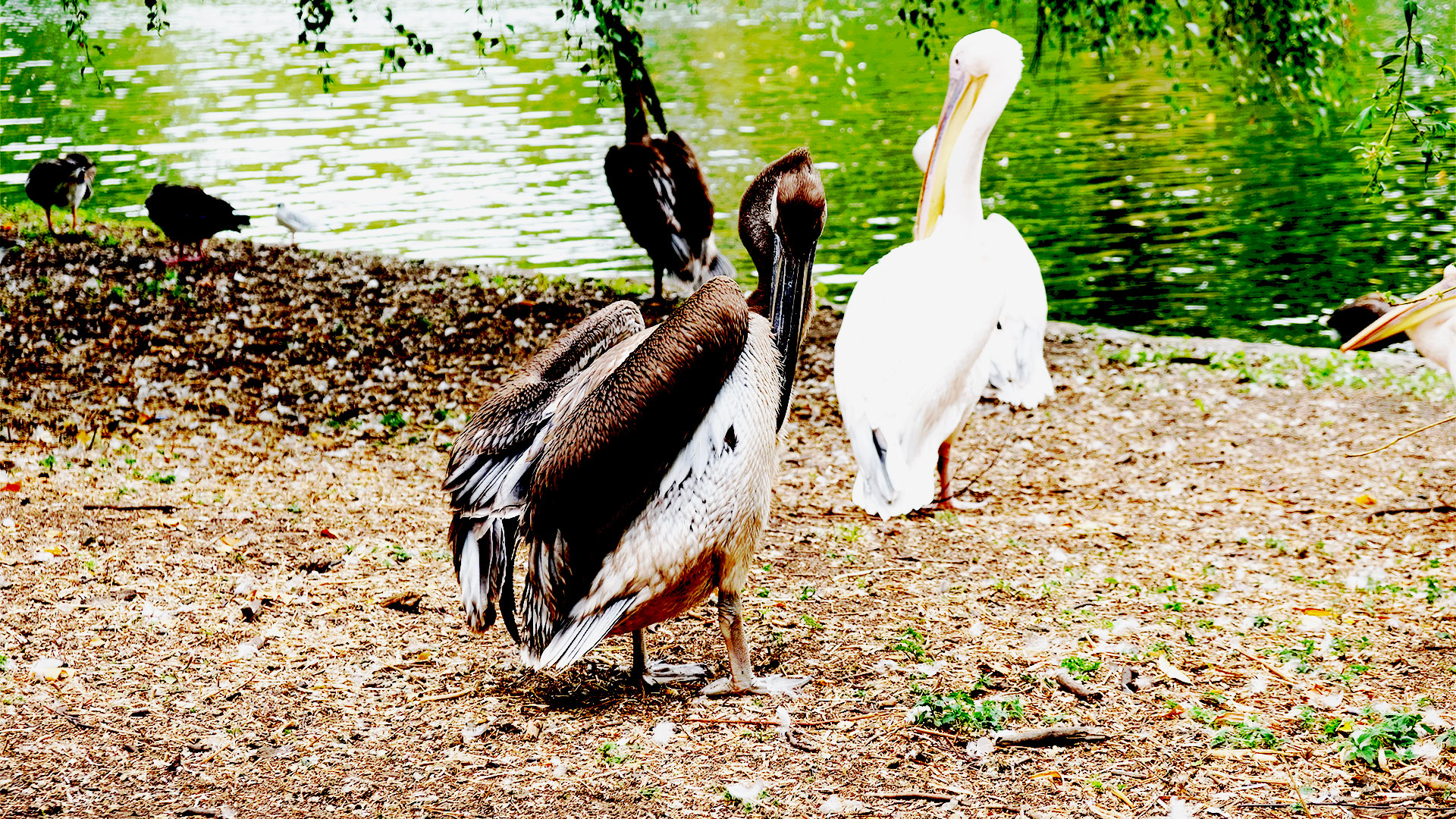
For the first time in 360 years, not just one chick but four have been successfully hatched at St James’s Park.
When I saw the news, I knew there was one thing left for me to do: arrange a meeting with the park ranger in charge of their care and, of course, get up close to the fascinating pelican chicks! We met Nick Burnham, Senior Wildlife Officer at The Royal Parks, by Duck Island Cottage, which was originally built for the park’s bird keeper. It was on this secluded island, part of St James’s Park, that the chicks spent their first few weeks under the watchful eye of both their parents and the Royal Parks rangers.
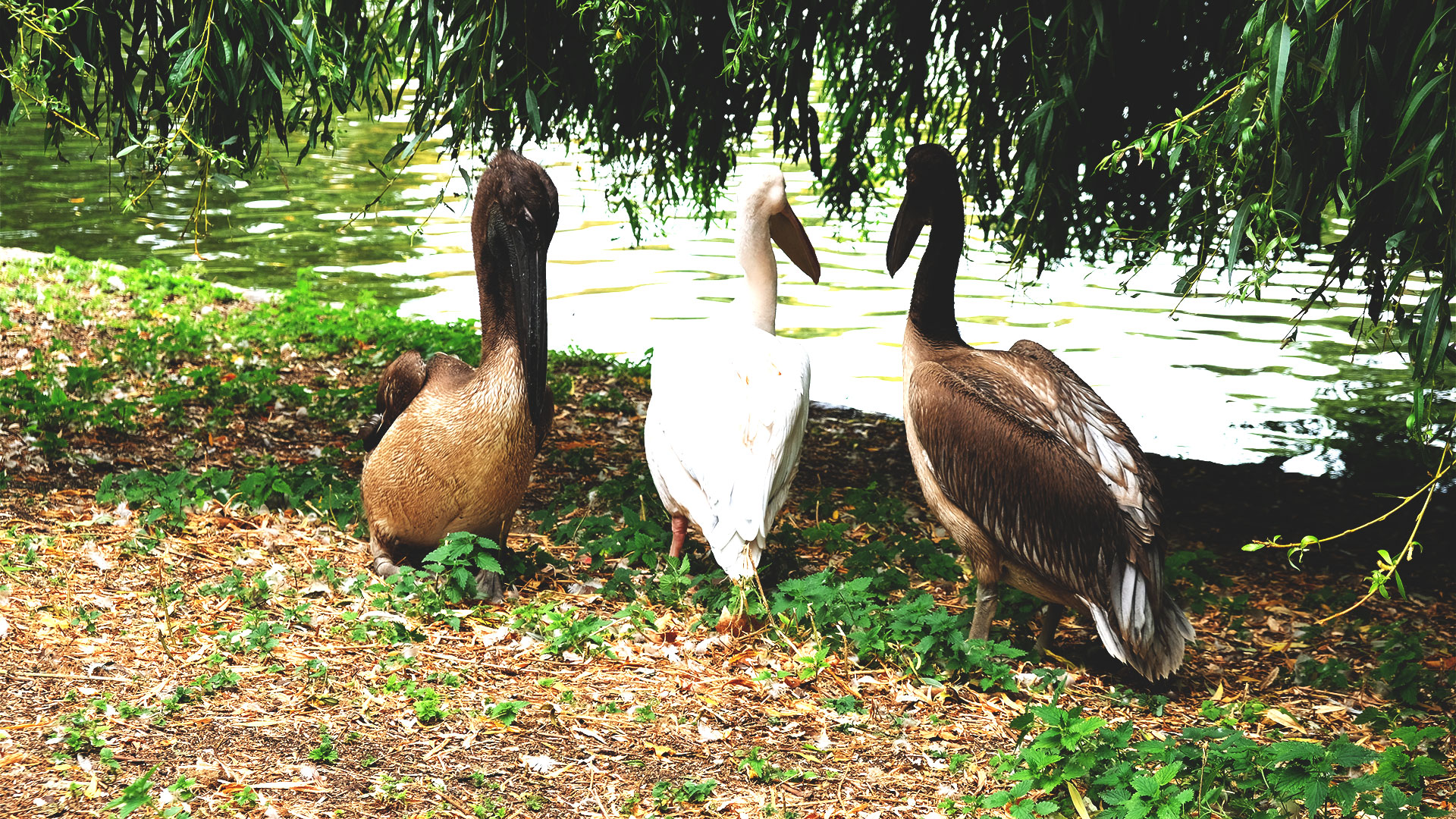
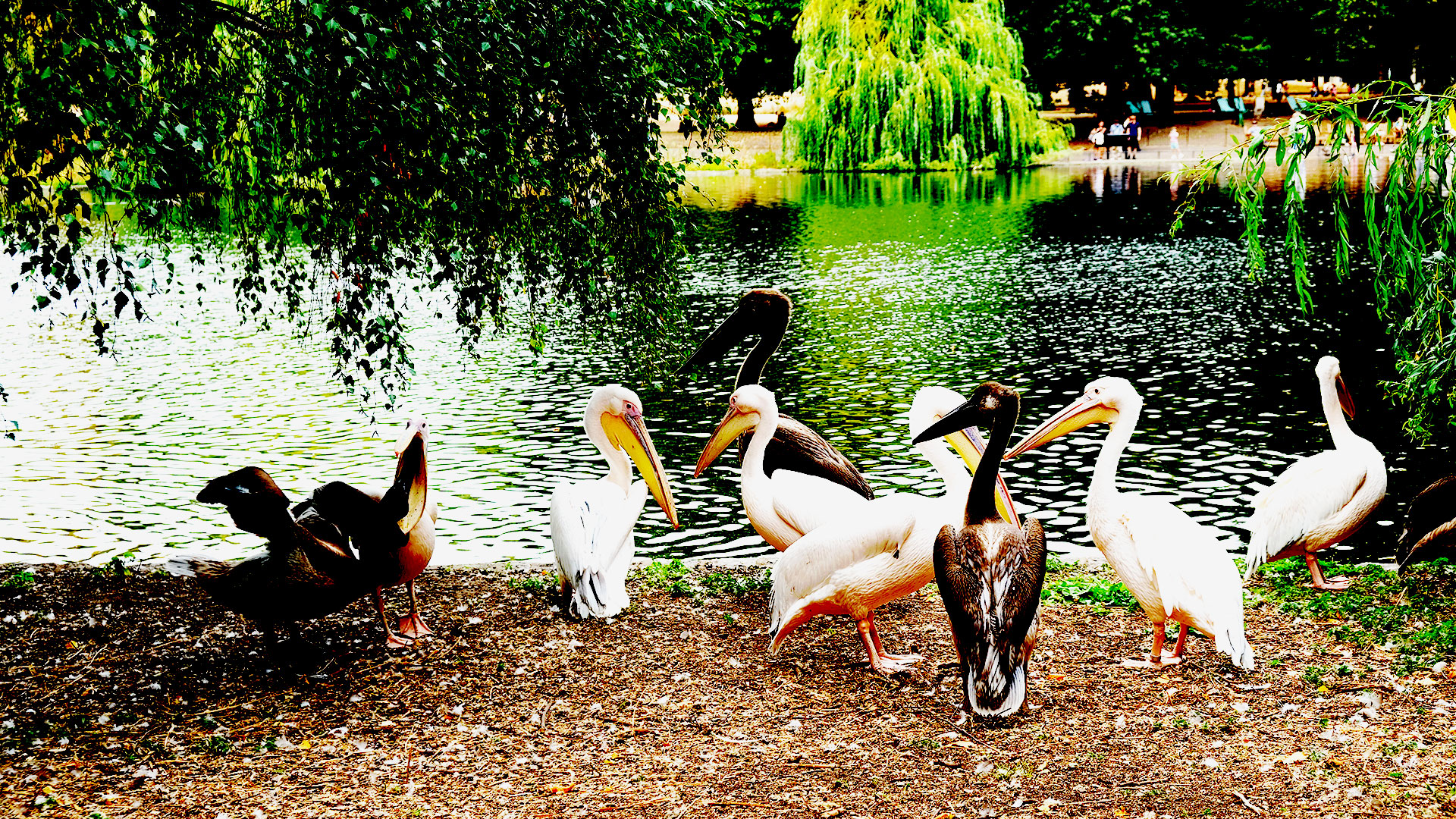
Unlike some other bird species, whose chicks become independent relatively quickly, pelican chicks rely on their parents for food for several months. They were still doing so at the time of our visit. Now four months old, the pelican chicks are thriving, sporting layers of brown and grey feathers that look very different from their parents’ glowing white feathers. They are also already about the same size as the adults.
During the first month following hatching, the chicks were kept in a secure area that was not accessible to the public. This allowed the young birds to grow and develop under the specialist care of the park rangers, while also avoiding the risks that other animals and predators could present.
Why did it take 360 years for pelican chicks to hatch successfully?
When asked this very question, Nick recalled that the team had tried to hatch chicks before but had been unsuccessful. So what changed this time?
The adult pelicans have now reached a more mature age, between seven and 13 years old, and may have become more experienced following previous unsuccessful attempts. On the park rangers’ side, the team consulted Blackpool Zoo, which has successfully bred this type of pelican. Following this, the decision was taken to increase the frequency of feeding, going from one to two feeds a day.
Surprisingly, once the four eggs were laid back in April, both the male and female pelicans took turns during the incubation period. This turns out to be a very rare behaviour, even among birds generally. The team found that by making sure the pelicans were not hungry, they were less likely to abandon their nest, helping give the four eggs the chance to successfully hatch.
What is it like to care for pelican chicks?
Naming the four new pelican chicks
At this stage, the chicks have not been named and will remain unnamed until they reach adulthood and their sex can be determined. I was surprised to learn that there is no obvious way to tell whether the chicks are male or female just by looking at them.
Males are usually heavier and have a longer beak, but the only way to determine the sex of the chicks is through feather samples and DNA testing. Once this has been established, the chicks can be given their names. Nothing is set in stone as we speak, although there will probably be a royal connotation to their names.
When asked whether it is easy to recognise each chick, Nick recalled that it became quite obvious who was who during the first few months. However, as they grow up and become more independent, it is becoming more difficult to tell them apart. The main way to identify them is by seeing which chick their parents feed, as they will only feed their own offspring.
Although one chick in particular seems to stand out. Nicknamed Hercules by the team, he is the most confident of the batch and is more likely to venture outside of the nest and explore his surroundings.
Our pelican chicks visit: watch the Reel
Where to see the pelicans in St James’s Park
The pelicans are often seen around the lake, either enjoying a swim together, resting on the rocks in the middle of the water or wandering along the grassy banks, pecking at their feathers and waiting for the park rangers to arrive with their fish at feeding time.
At the moment, you can expect to see the adults swimming across the lake around feeding time before reaching the water’s grassy edge, where Nick and the team bring a bucket of fish. And outside of mealtimes, the pelicans can easily be spotted swimming on the lake, resting on the rock in the middle of it or moving around the grassy banks. Overall, now that the chicks have grown very close to their adult size, they are very hard to miss!
What time do the pelicans get fed at St James’s Park?
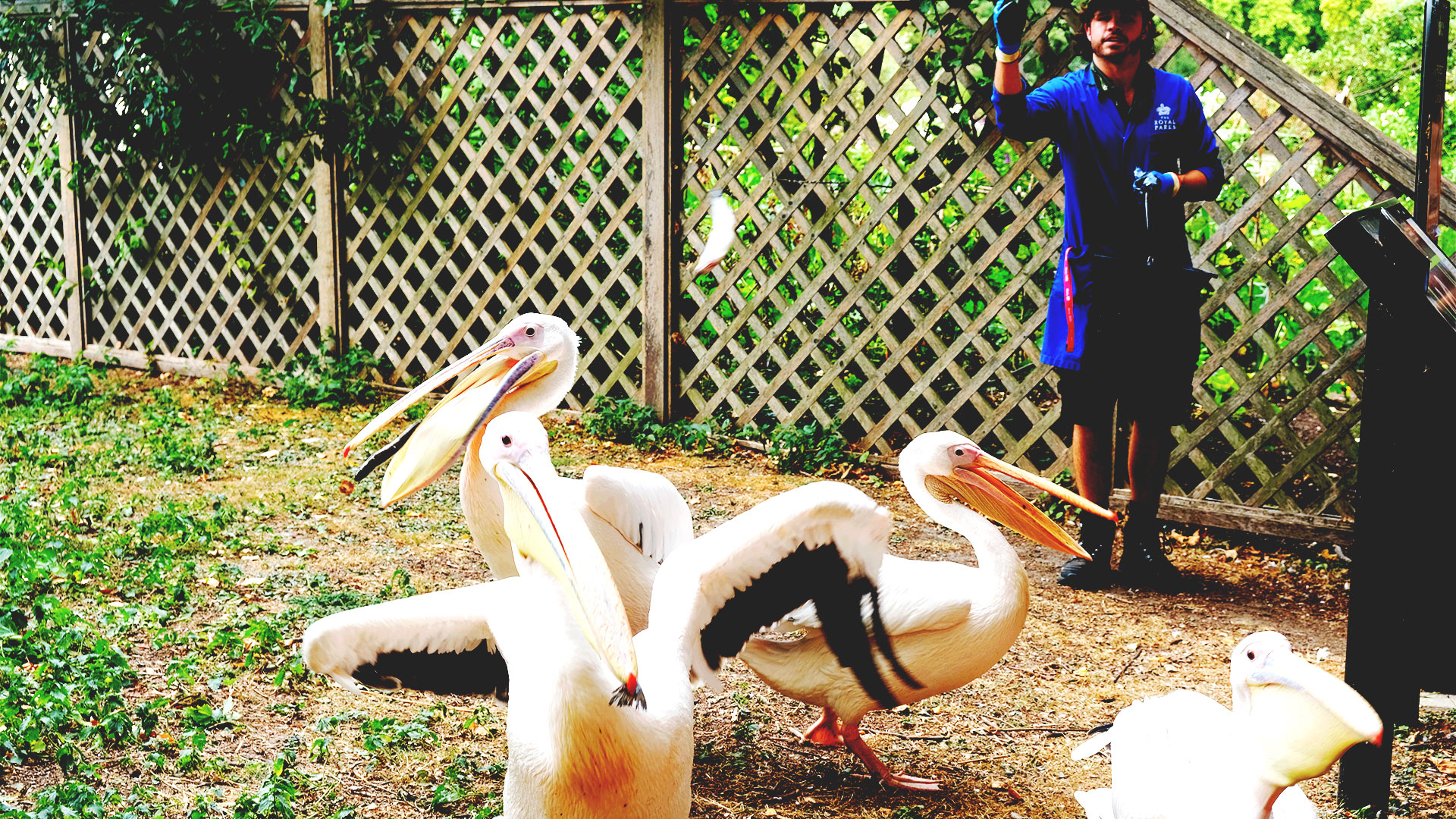
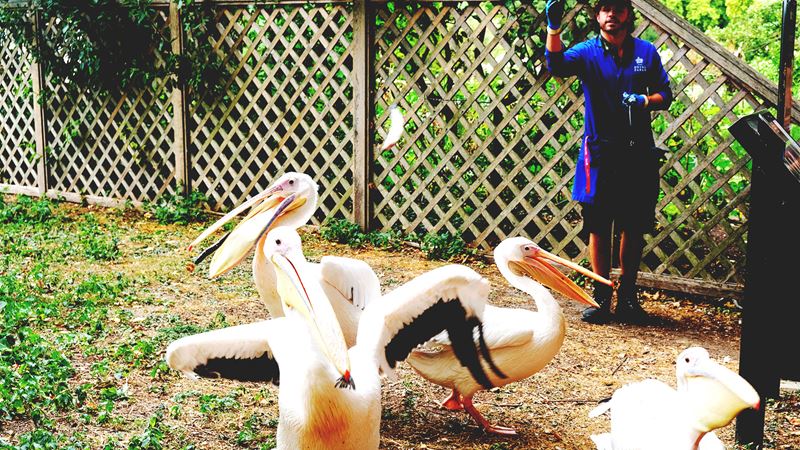
The pelicans are fed daily with a mixture of fish, including mackerel, herring, whiting and roach, by the park rangers at around 2.30pm. Around 1.5kg of fish is thrown to the pelicans each day, making for an exciting spectacle as the birds rush over to be the first to grab the fish as it is thrown into the air. We were pretty close as it happened, standing just a few feet away behind the barriers.
When I visited, we hoped the chicks might join in, but park ranger Nick explained that they rarely do so at the moment, as they are still being fed from their parents’ beaks. We were fortunate enough, however, to find the whole group, parents and chicks, together when wandering around the lake afterwards. One chick was being fed by his mother for a good five minutes, diving into his mother’s beak for what felt like a very long time.
It made for a slightly disturbing sight from the feeders’ point of view, but it was also a fascinating glimpse into how these young pelicans are still relying on their parents as they continue to grow.