

As an artist myself, I love nothing more than getting up close to famous art in London from the greatest painters. Luckily for me, many of the world’s best paintings are on display within London’s galleries – and most are available to see for free!
Asking me to choose my favourite art to see in London is like asking a parent to choose their favourite child... However, I’ve been as decisive as one of Van Gogh’s brushstrokes and have chosen the most famous paintings in London (that are on display at the time of writing).
Of course, art is subjective, but I've pulled together my selection using published highlights from galleries, plus my own choices of what I consider to be must-sees, while ensuring a mix of styles and periods.
Where to see the best art in London
Find the best paintings to see in London's major galleries and elsewhere using the links below:
Best paintings to see at Tate Britain
A Bigger Splash by David Hockney
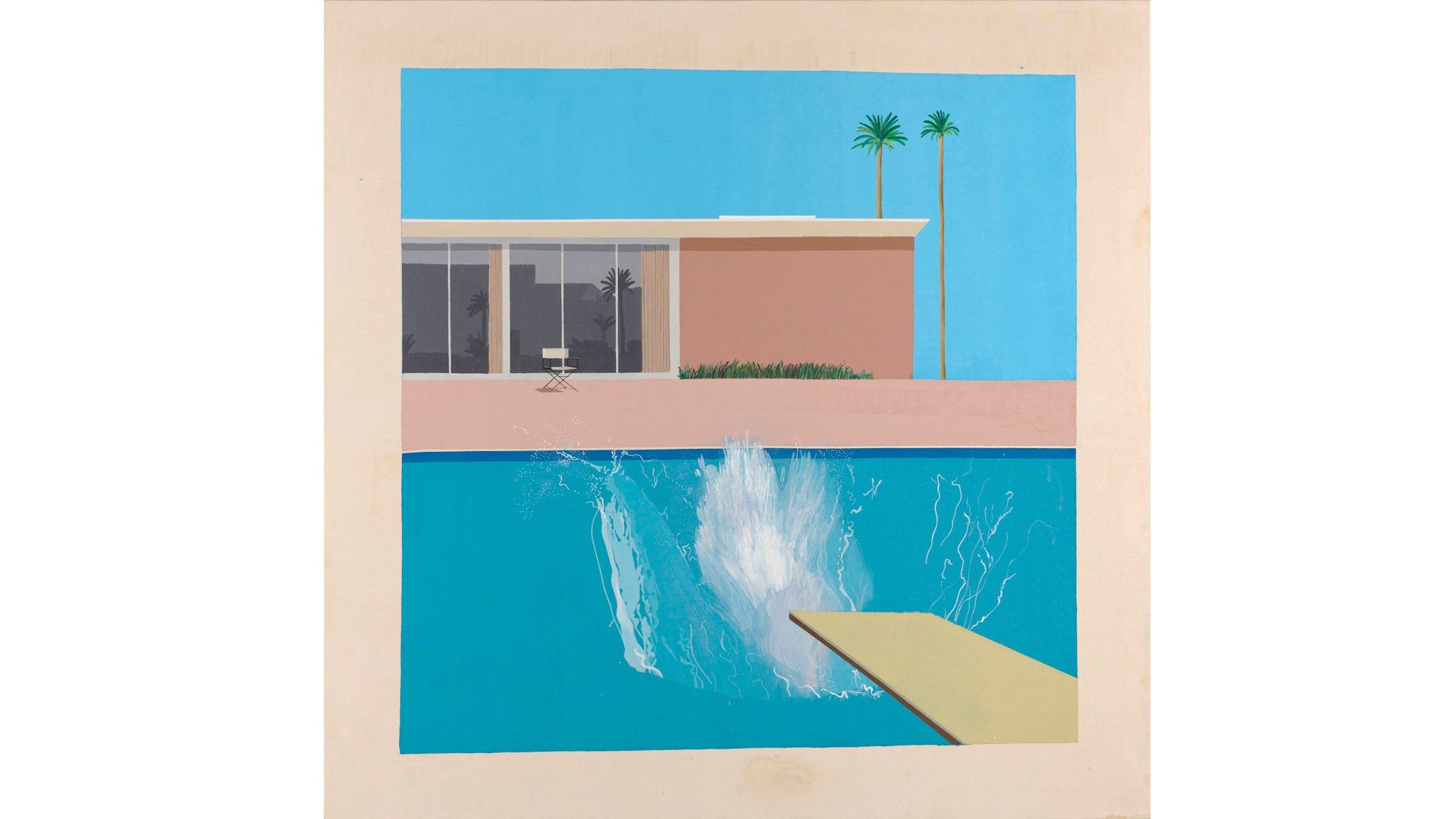
About the painting: A moment frozen in time, A Bigger Splash is one of David Hockney’s most recognisable works. With its modernist architecture, palm trees and brightness of the light, this 1967 painting just screams California – not very surprising, given he created it during his time living in Los Angeles. Of the splash itself, Hockney said he painted the splash using brushstrokes in a “slow way”, something a photograph could not capture.
What I like: Spoiler... David Hockney is my favourite artist, so there was no chance the most famous Hockney painting to see in London would not be on the list. As with most of his works, I love the seeming simplicity, but upon closer inspection the viewer can discover meticulous detail and carefully positioned marks.
Ophelia by Sir John Everett Millais
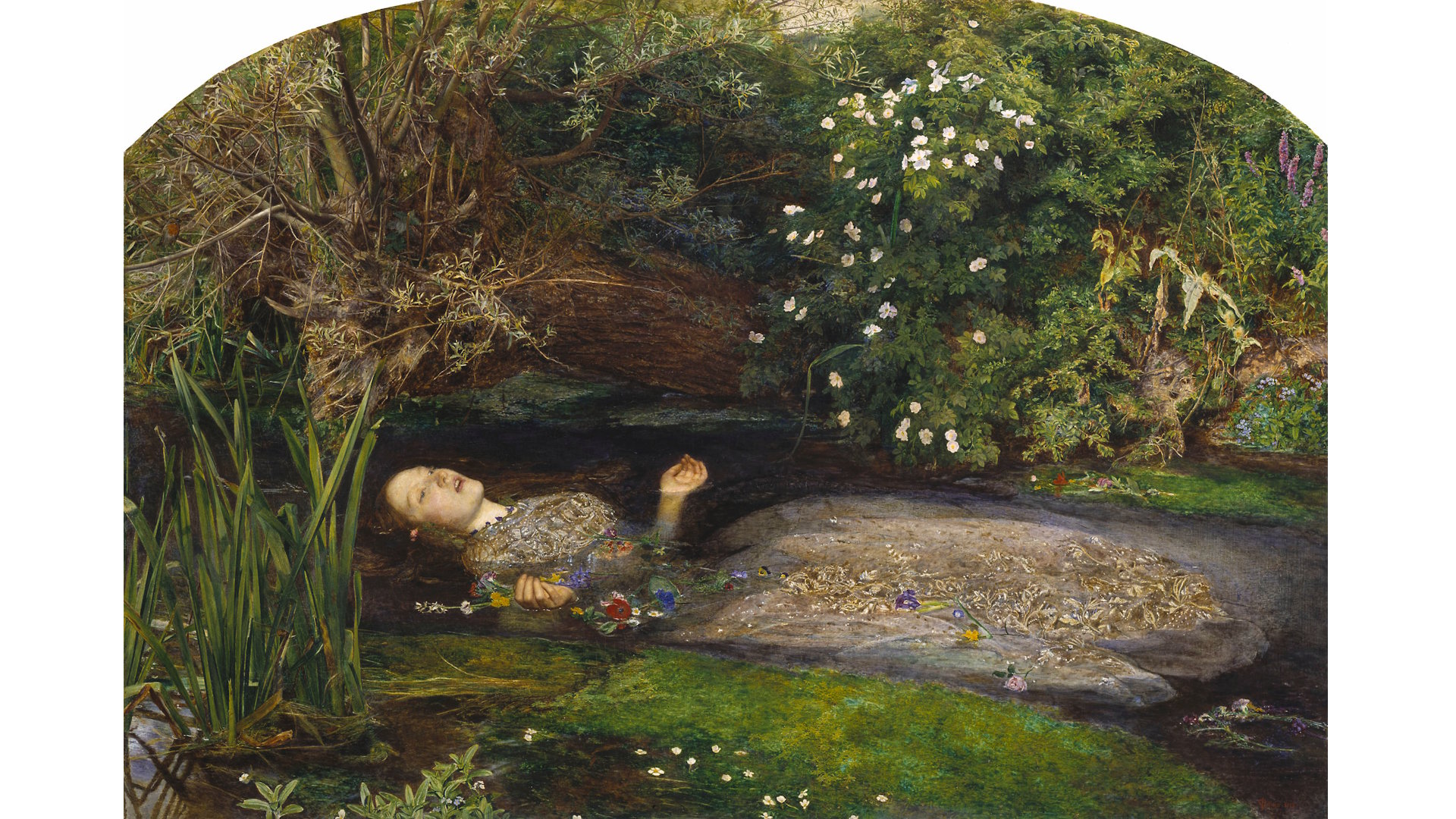
About the painting: Millais’ crowning work features the model Elizabeth Siddal (who married fellow Pre-Raphaelite Dante Gabriel Rossetti) as Ophelia, who has drowned in a stream during a scene from Shakespeare’s Hamlet. As always with Pre-Raphaelite works, nature comes to the fore – each botanical inclusion providing a symbolic meaning.
What I like: My parents were big Pre-Raphaelite fans, and we had various works on the walls at home (prints, not originals obviously… in my dreams!). I’ve always loved the treatment of the plants in this artwork, particularly the vibrant green of the river weed.
Coming Out of School by L.S. Lowry
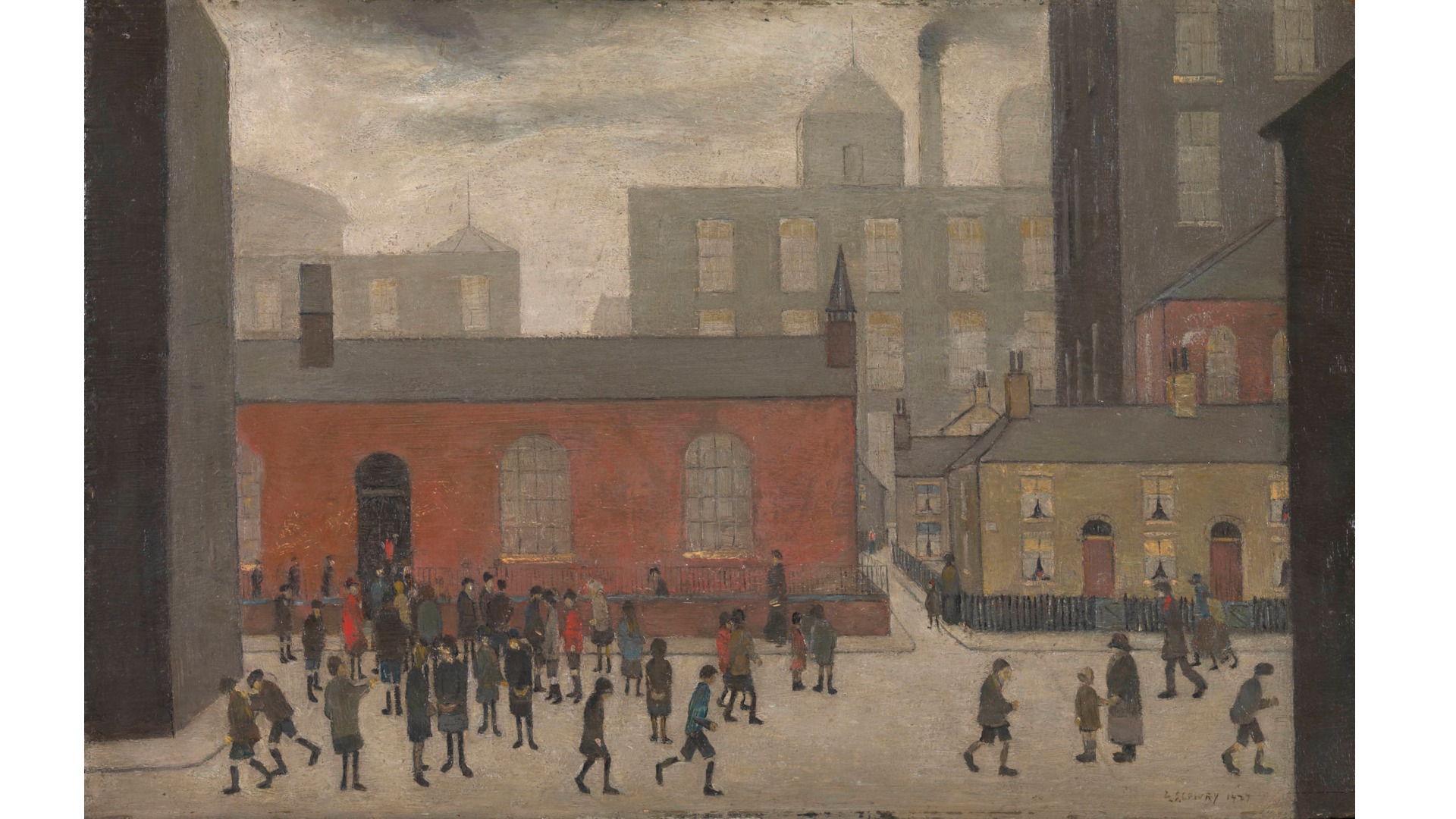
About the painting: Although not a depiction of a specific place, Lowry’s Coming Out of School is clearly a reference to his childhood area of Lancashire. Known for his “matchstalk men and matchstalk cats and dogs” – as immortalised in song by folk duo Brian and Michael – this 1927 work portrays “matchstalk” children hurriedly leaving school in shorts and long socks. In the background, a factory chimney is spewing smoke into the air.
What I like: Lowry paintings are instantly recognisable. I love the honesty and simplicity of his works. Everyday scenes of industrial Britain are depicted with all their grime and dirt intact – the viewer can almost taste the acrid smoke and feel the thickness of the air.
Carnation, Lily, Lily, Rose by John Singer Sargent
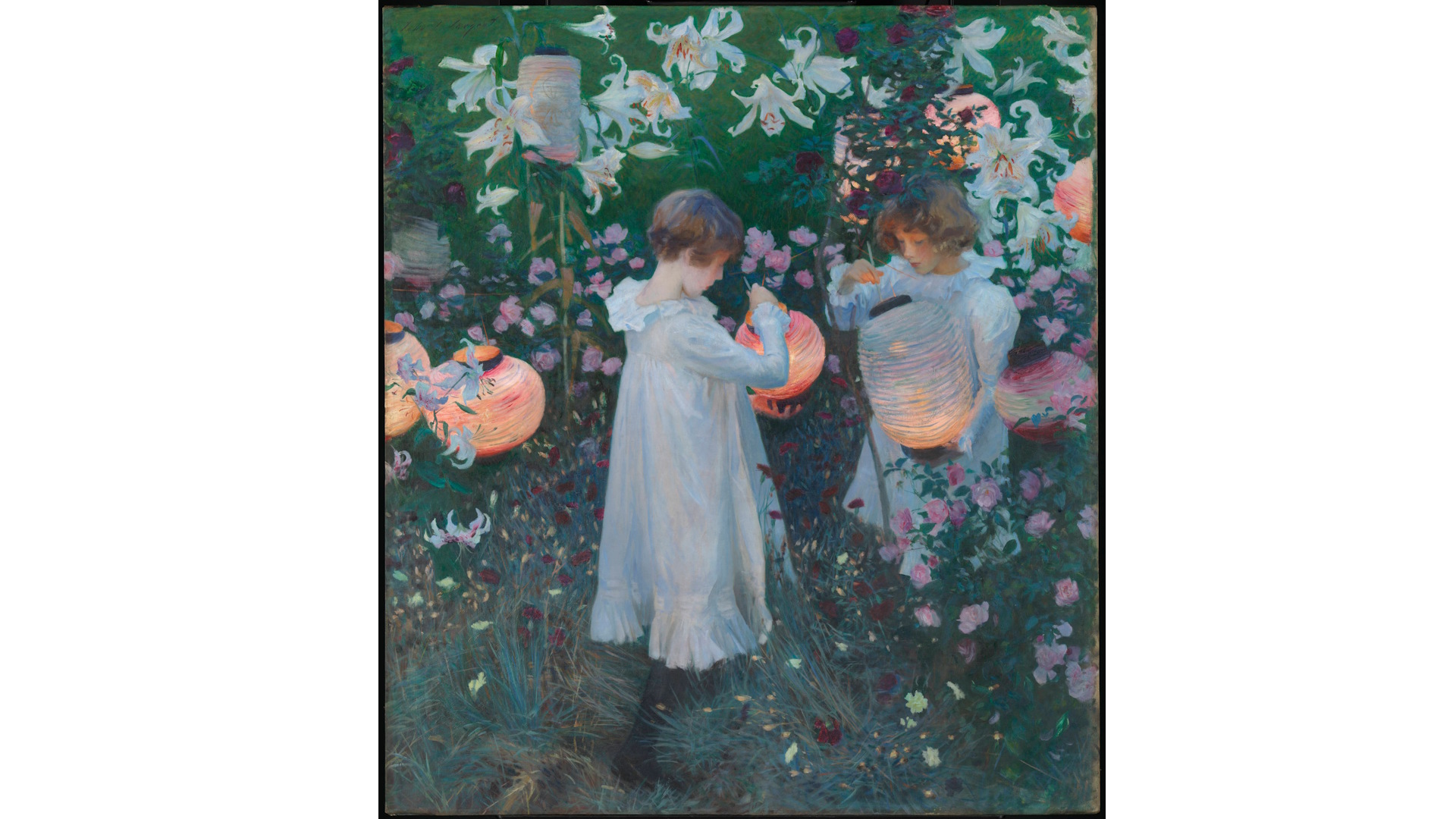
About the painting: This charming scene of two children lighting lanterns was one of the few paintings Sargent completed in the open air. The models, Dolly and Polly Barnard – the children of his friend Frederick Barnard – are dressed in white, as a sign of childhood innocence, with the early evening darkness descending on a magical garden full of blooms.
What I like: This was my favourite painting growing up – another, albeit very small, print that we had on the wall that I would always stop to stare at. I’m still captivated by the light glowing from the lanterns and the way the lilies seem to float, and even dance, in mid-air.
Three Studies for Figures at the Base of a Crucifixion by Francis Bacon
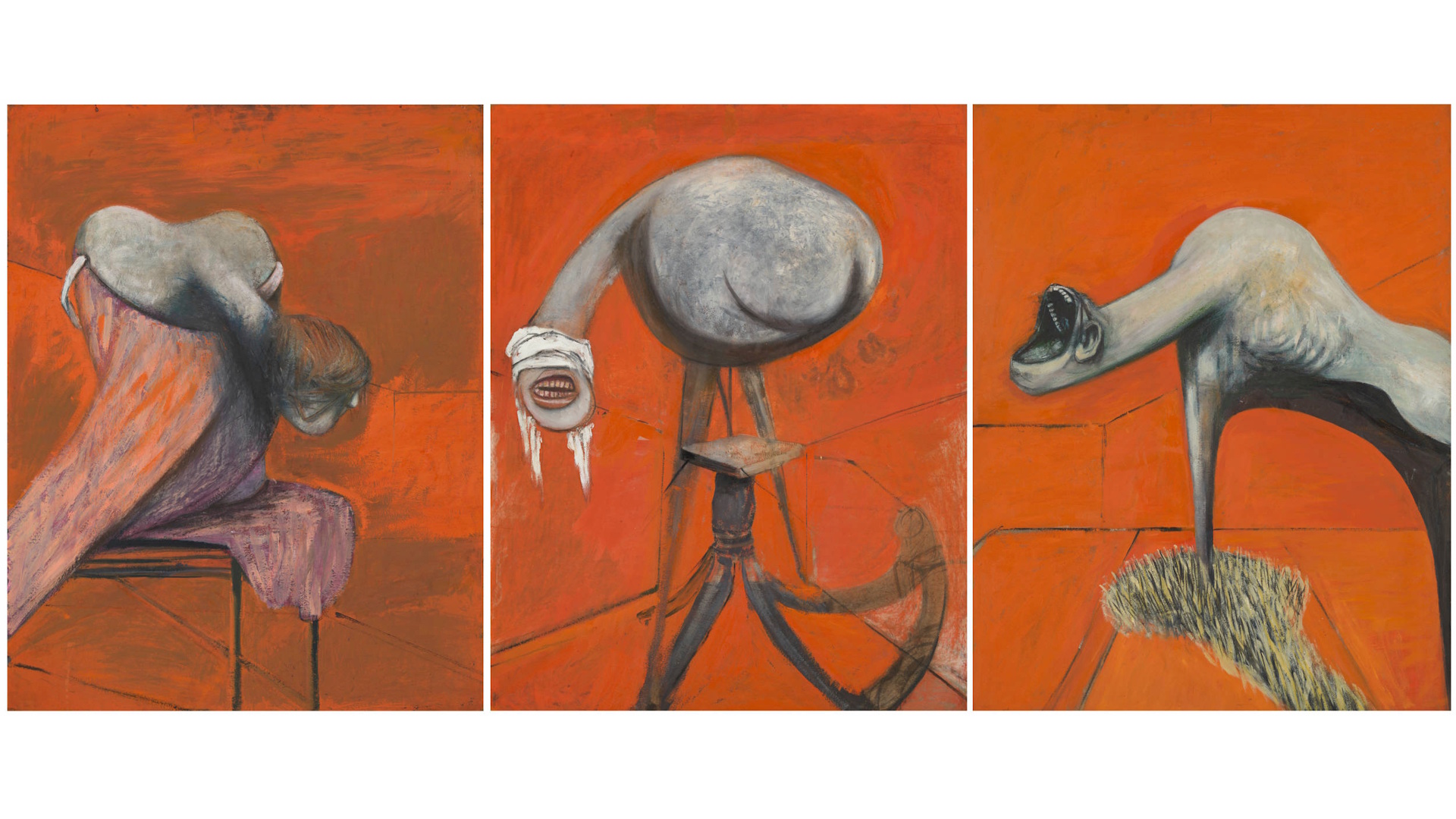
About the painting: Alluding to the vast loss and suffering of the Second World War, this 1944 triptych features three monsters writhing in agony and angst, against a bright orange background. Despite the wartime reference, Bacon stated the figures represented the Furies of Greek mythology, drawing on influences from Picasso’s biomorph works.
What I like: I must admit, I’m not the greatest fan of Bacon’s work, but I can appreciate the impact he has had on the art world. This painting is often cited as a watershed moment for the artist’s career and, in some circles, for British art as a whole – with its striking, unique form it’s easy to see why.
Farm at Watendlath by Dora Carrington
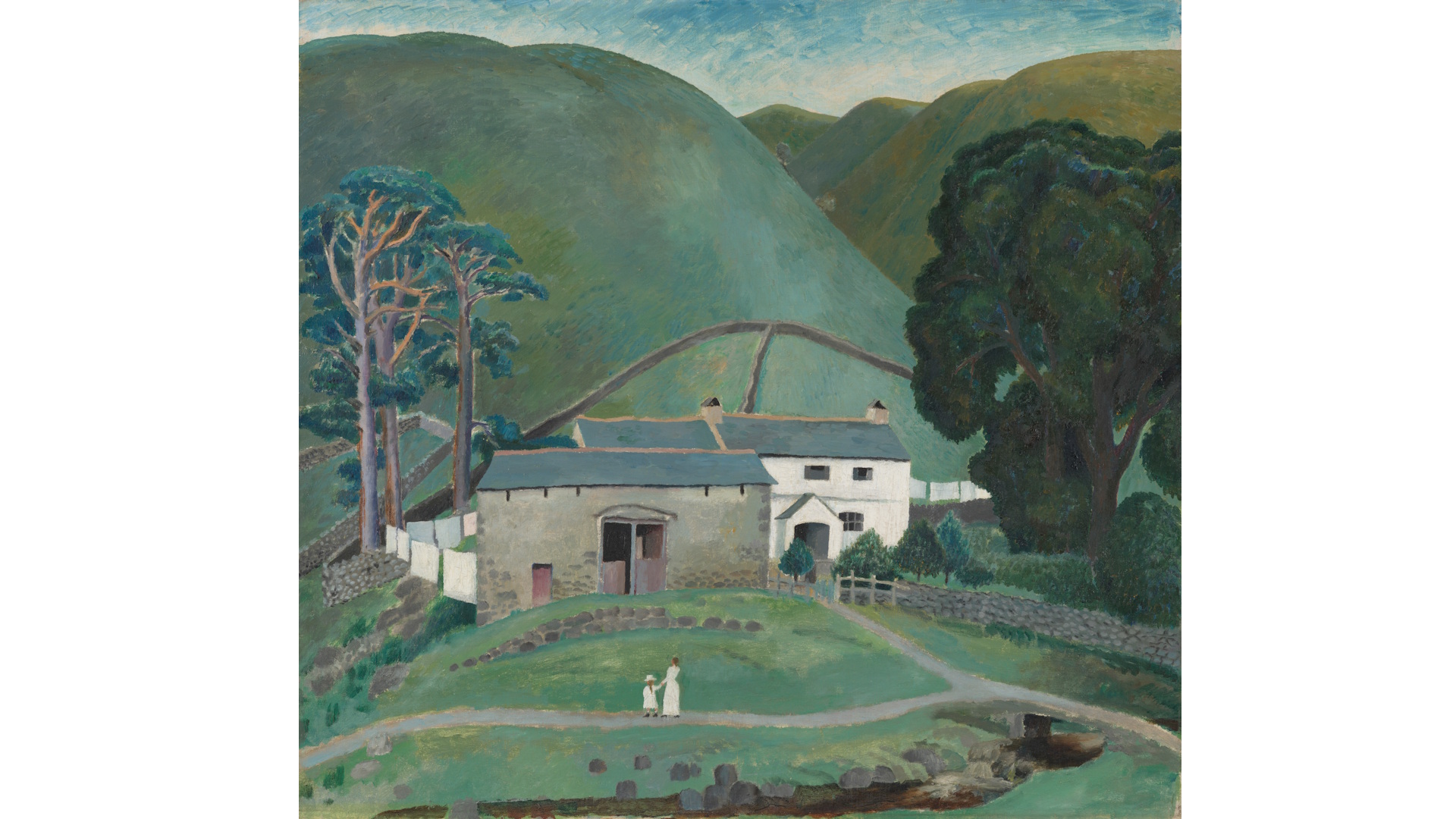
About the painting: An acquaintance of the Bloomsbury Group but not well known as a widely-celebrated painter in her own lifetime, Dora Carrington captured this rural scene while on holiday with her husband at Watendlath Farm, near Keswick, in 1921. The unique curvature of the Lake District hills is believed to mirror the female form, and the scale of the landscape dwarfs a woman and young girl in the foreground. These references are thought to relate to feelings Carrington may have had in terms of her own femininity.
What I like: The colour palette – the white and greys of the farm against the blues and greens of the hills effectively conjures up a sense of place.
Tate Britain gallery details:
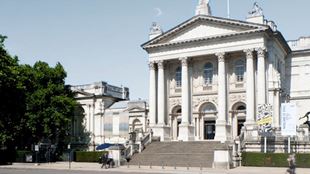
Tate Britain Discovery Tour
Learn more about key paintings from Tate Britain's collection on a 60-minute guided tour.Famous paintings at The National Gallery in London
Sunflowers by Vincent van Gogh
About the painting: This 1888 masterpiece depicting a vase of sunflowers is actually one of five Sunflower artworks Van Gogh created to decorate the walls of his house in Arles, for the arrival of his friend Paul Gaugin – not bad for some last-minute interior decorating, eh? Today it’s one of The National Gallery’s most famous paintings and is viewed by millions of visitors each year.
What I like: The way the Dutch master has used simple, yet effective, brushstrokes – something you can really spot up close, particularly in the flower heads, which are in varying stages of bloom.
The Water-Lily Pond by Claude Monet
About the painting: I think it’s fair to say Monet couldn’t get enough of painting water lilies… Full of blue and green hues and that famous bridge, The Water-Lily Pond is one of more than 250 works from a series dedicated to the subject – but this 1899 artwork is one of the most recognisable.
What I like: My favourite of all The National Gallery in London’s famous paintings, this work has always stuck in my mind from my visits to the gallery on school trips (while the other kids ran around causing havoc, I would just sit there staring!). I’ve always been drawn to the tranquillity of the subject and Monet’s distinctive mark-making.
The Hay Wain by John Constable
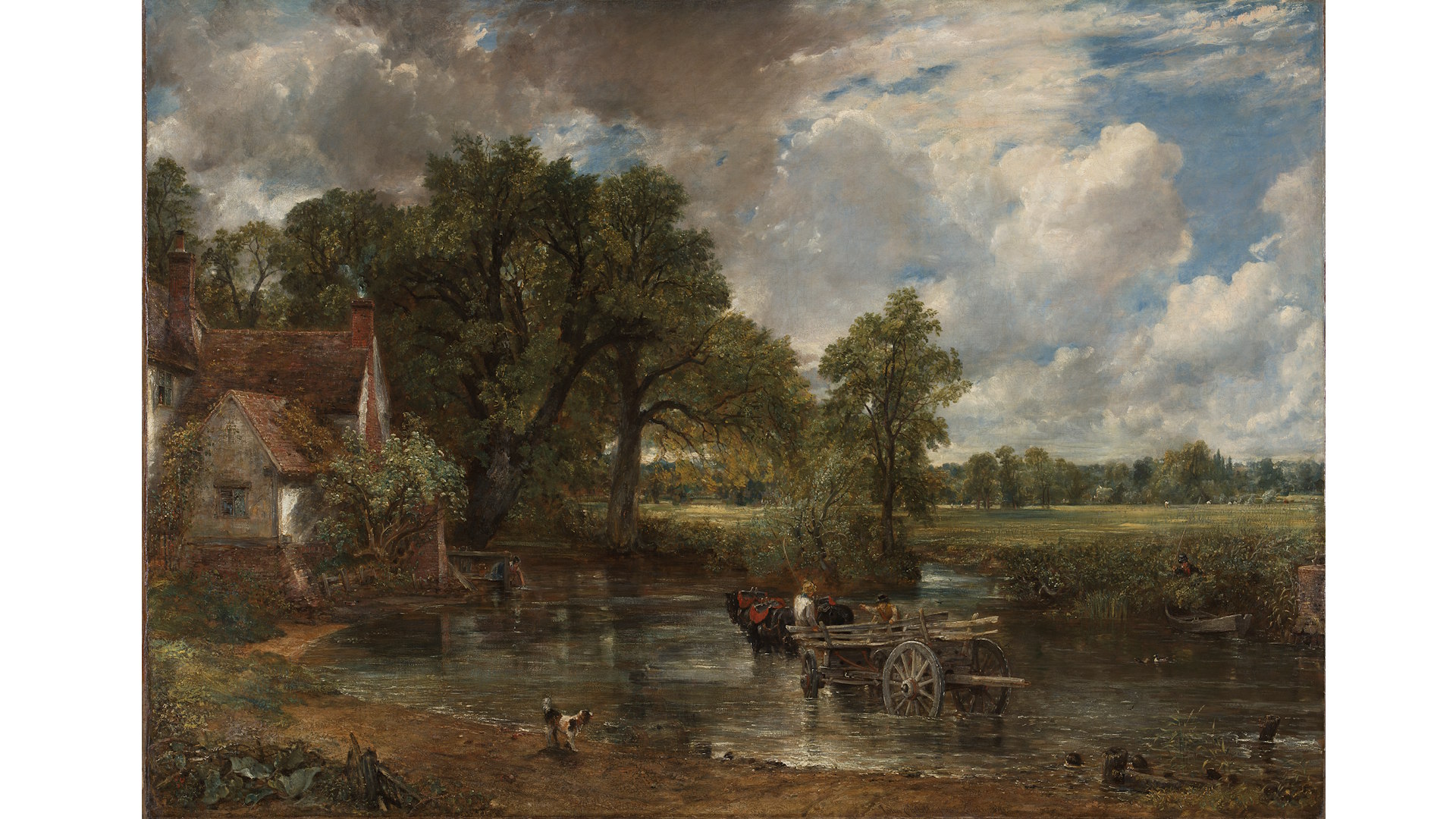
About the painting: This pretty, rural scene is of the Constable family’s Flatford Mill, in Suffolk. It shows a wain (wagon) crossing the stream to collect hay from the field opposite, and, to the left, Willy Lott’s cottage. It’s among the most famous artworks in London by a British painter.
What I like: The bucolic nature of this scene – depicting an almost lost rural life in England. I like to think if we all grew up in such a stunning setting, we’d all be able to create works like this iconic 1821 masterpiece… but maybe that’s wishful thinking!
The Fighting Temeraire by J.M.W. Turner
About the painting: Turner’s 1838 eye-catching ode to a battleship that’s about to be put on the scrapheap includes plenty of symbolism, specifically capturing the last throws of sail power as the age of steam takes over. This is emphasised by a steam-powered tug dragging the grand old dame to the Rotherhithe docks, making it one of the most famous paintings of London scenes.
What I like: As always, Turner’s skies and use of contrasting colours make for a great painting – but for me, this piece stirs up even more emotion than many of his other works. The use of a sunset and rising moon could be read as a sad metaphor, but it also gives a nod to progress and change.
The Arnolfini Portrait by Jan van Eyck
About the painting: Full of symbolism and iconography, van Eyck’s 1434 work is thought to depict an Italian merchant, Giovanni di Nicolao di Arnolfini, and his wife Costanza. It’s often cited as one of the most famous paintings in the world and it’s easy to see why, due to its intricacy and intrigue.
What I like: Not only is this portrait expertly painted with exquisite detail, but the composition challenges the viewer, raising many questions... Could this be a posthumous portrait, given Costanza died young? What does that cheeky dog symbolise? And who are the people in that fabulously painted mirror?
Mr and Mrs Andrews by Thomas Gainsborough
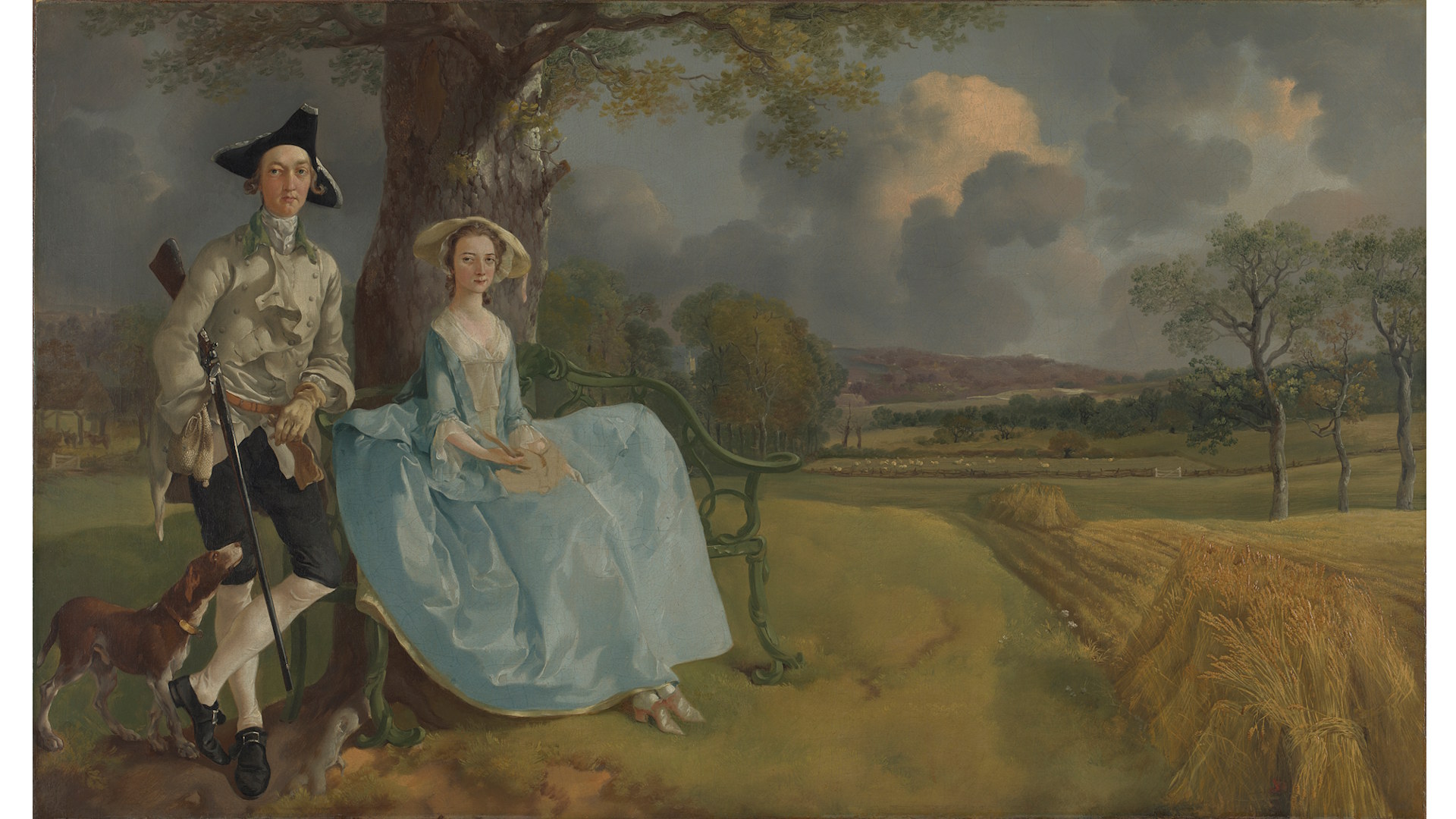
About the painting: The Suffolk-born artist’s most famous work depicts Mr Robert Andrews and Mrs Frances Andrews looking proud as punch, in front of their land within the River Stour valley in Essex.
What I like: Gainsborough’s approach to making the land as important as the figures, which was unusual in the mid-18th century. I’d have thought this came with the risk of disappointing the sitters – although who wouldn’t want to show off their many acres of land… if you’ve got it, flaunt it!
The Ambassadors by Hans Holbein the Younger
About the painting: Revered for his portraits of Tudor royalty and nobility, Hans Holbein based this 1533 work on the meeting of the French Ambassador and a Catholic bishop at Henry VIII’s court. It was a tumultuous time, to put it lightly, with the split from the Roman Catholic Church caused by Henry’s marriage to Catherine of Aragon. This upheaval is alluded to in objects within the painting.
What I like: The section in the foreground, at the men’s feet, which becomes a skull when viewed at a certain angle. I also love the detail of the textiles, a signature of Holbein’s work.
The Supper at Emmaus by Caravaggio
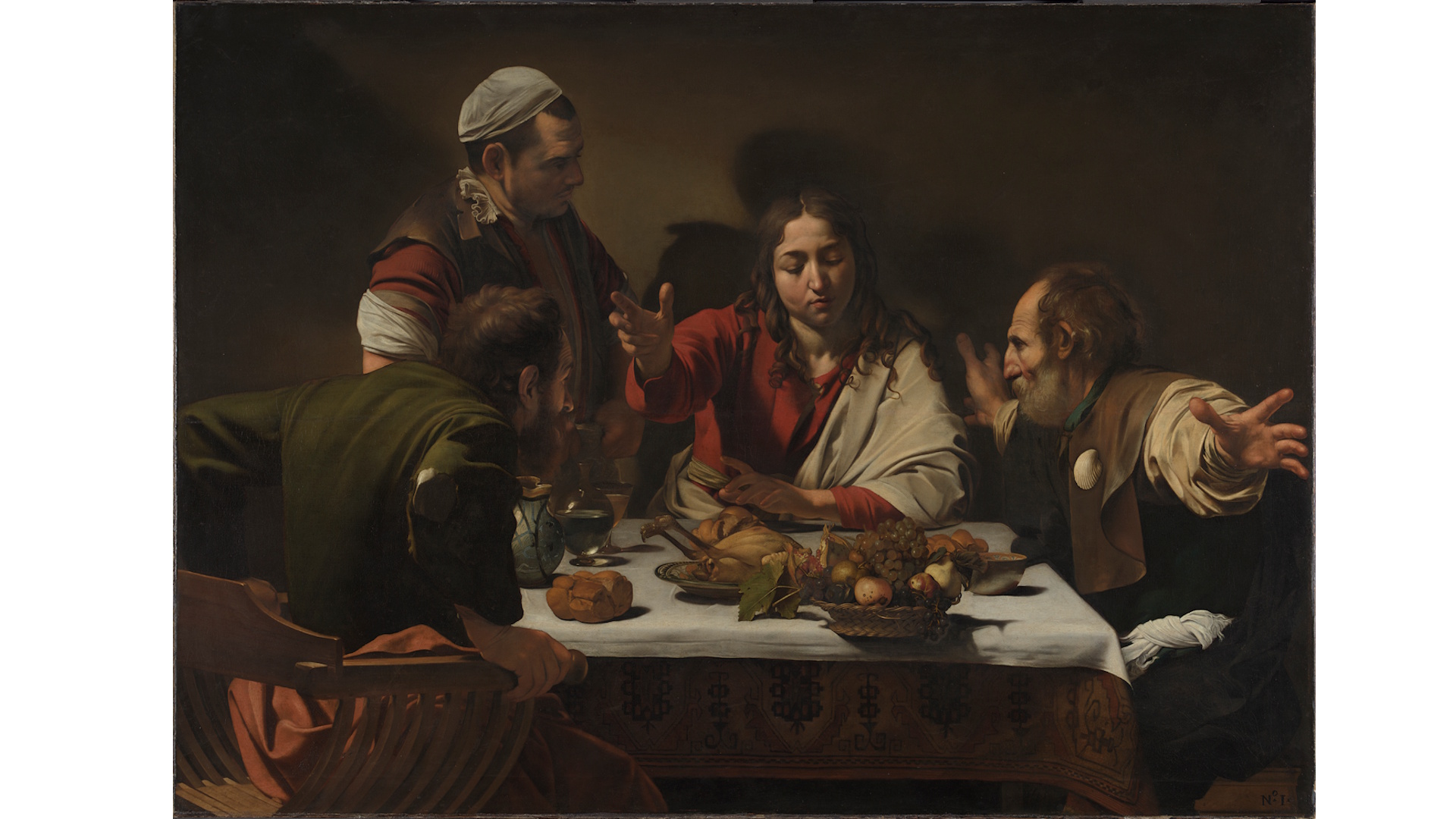
About the painting: One of Caravaggio’s most famous works, The Supper at Emmaus represents the moment as told in Luke 24: 30–31 of The Bible, when two of Jesus’s disciples suddenly realise they are dining with Jesus following his resurrection (having previously not recognised him, thinking he was dead).
What I like: The suggested movement of the figures – particularly the man in the foreground, who is so surprised by the revelation he’s about to (or is trying his best not to) jump up for joy!
Self-portrait at the age of 34 by Rembrandt van Rijn
About the painting: The techniques and composition used in this self-portrait – including the confident pose and extravagant clothing of a wealthy gentleman – are believed to pay homage to the great painters of the Renaissance period. As ever, the Old Master’s use of light and dark give this painting a unique sense of atmosphere and intrigue.
What I like: The way the elbow is thrust forwards, which adds a connection and depth to the work.
The National Gallery details:
The National Gallery Highlights Tour
See some of the world’s best paintings over one hour on The National Gallery guided tour.Best paintings to see at Tate Modern
Weeping Woman by Pablo Picasso
About the painting: Created soon after another of Picasso’s most famous artworks, Guernica – which shows the aftermath of the bombing of a small town during the Spanish Civil War – Weeping Woman is among a series of similar paintings by the prolific artist. In this version, the woman (based on artist Dora Maar) is seen holding a handkerchief in a grief-stricken pose.
What I like: How so much emotion and darkness is conveyed in a work that is so abstract and colourful – each time I look at the painting, I see different elements that combine to create this striking, harrowing image.
Marilyn Diptych by Andy Warhol
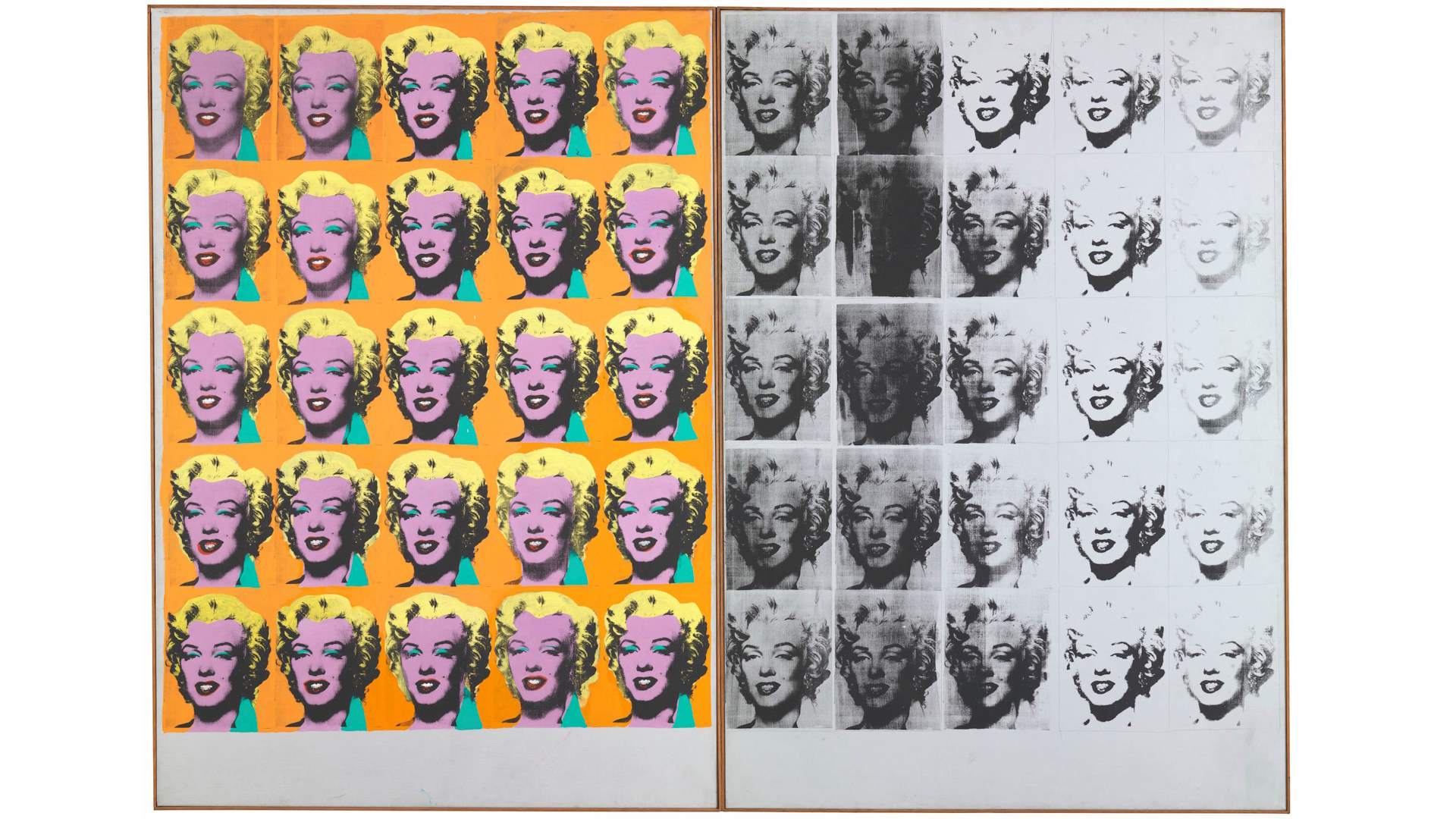
About the painting: Arguably the most iconic of pop art pieces, Andy Warhol’s tribute to Marilyn Monroe has been replicated on t-shirts, posters and mugs the world over – but you can only see the original in London. Representing the two sides of fame as well as the star’s beautiful life and tragic death, the silkscreen print was created the same year as Monroe’s passing, using a photo from her film, Niagara.
What I like: The way the simple contrast between bold colour and black and white imagery becomes a metaphor for Monroe’s life… and celebrity culture as a whole.
Whaam! By Roy Lichtenstein
About the painting: This diptych, inspired by a DC Comics cartoon strip (not George Michael’s ‘80s pop band), features a fighter plane and an explosion caused by its missiles. It’s a widely held view that this piece is a parody of war and a commentary on the act of war being juvenile – it was created during the time leading up to the Vietnam War.
What I like: When pop art comes to mind, this is the painting I visualise. Bold and in Lichenstein’s unique style, it’s instantly recognisable.
Seagram Murals by Mark Rothko
About the painting: A series of large-scale works featuring red, maroon and black squares, these large paintings were originally intended for the Seagram restaurant in New York. Instead, Rothko decided to forgo the commission and donated the series to Tate Modern… what a generous chap! Rothko’s intention is to convey human emotions, including tragedy, ecstasy and doom.
What I like: How the viewer can interpret these works in their own way, drawing their own emotional conclusions.
The Snail by Henri Matisse
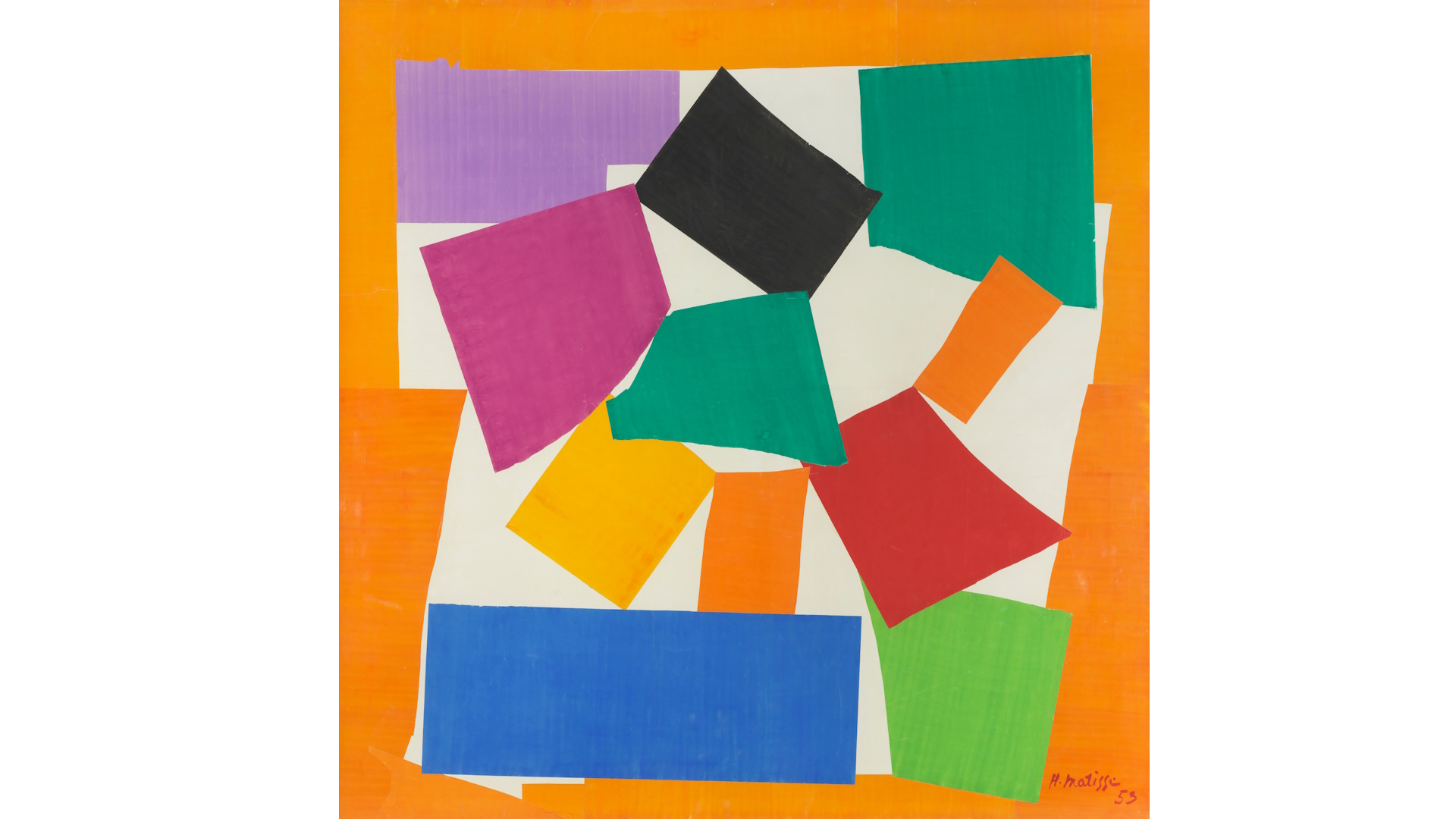
About the painting: Unable to paint any longer and confined to his bed due to illness, Matisse adapted his style to work in collage (or as he more eloquently put it: gouaches découpées) with the help of an assistant. He produced several works in this medium, which showed his versatility and helped to make him one of the 20th century’s greatest artists. Here, colourful cuttings are meticulously placed to resemble a snail.
What I like: I’m always drawn to colour, and I love the vivid colours used here. There’s something both orderly and unorderly about the way each piece has been placed, seemingly abstract but at the same time clearly representing a snail’s shell.
The Three Dancers by Pablo Picasso
About the painting: Inspired by a love triangle that ended in violence – and sadly death for his friend Carols Casamegas, who took his own life – The Three Dancers is one of Picasso’s most pivotal works. Painted in 1925, it signalled the time he moved away from a Neo-classical style into Surrealism. Ramon Pichot, who was Casamegas’ love rival, died while the painting was in progress and he can be seen portrayed as the black profile, behind the dancer on the right.
What I like: I like the energy of this work, created by the unusual forms, the sense of movement and use of colour. The figures are seemingly dancing in quite a chaotic way with their limbs bent and extended.
Tate Modern gallery details:
Tate Modern Discovery Tour
See some of the gallery's most famous artworks and gain insight from your guide on this hour-long tour.Best paintings to see at the National Portrait Gallery
Queen Elizabeth I (the “Ditchley Portrait”) by Marcus Gheeraerts the Younger
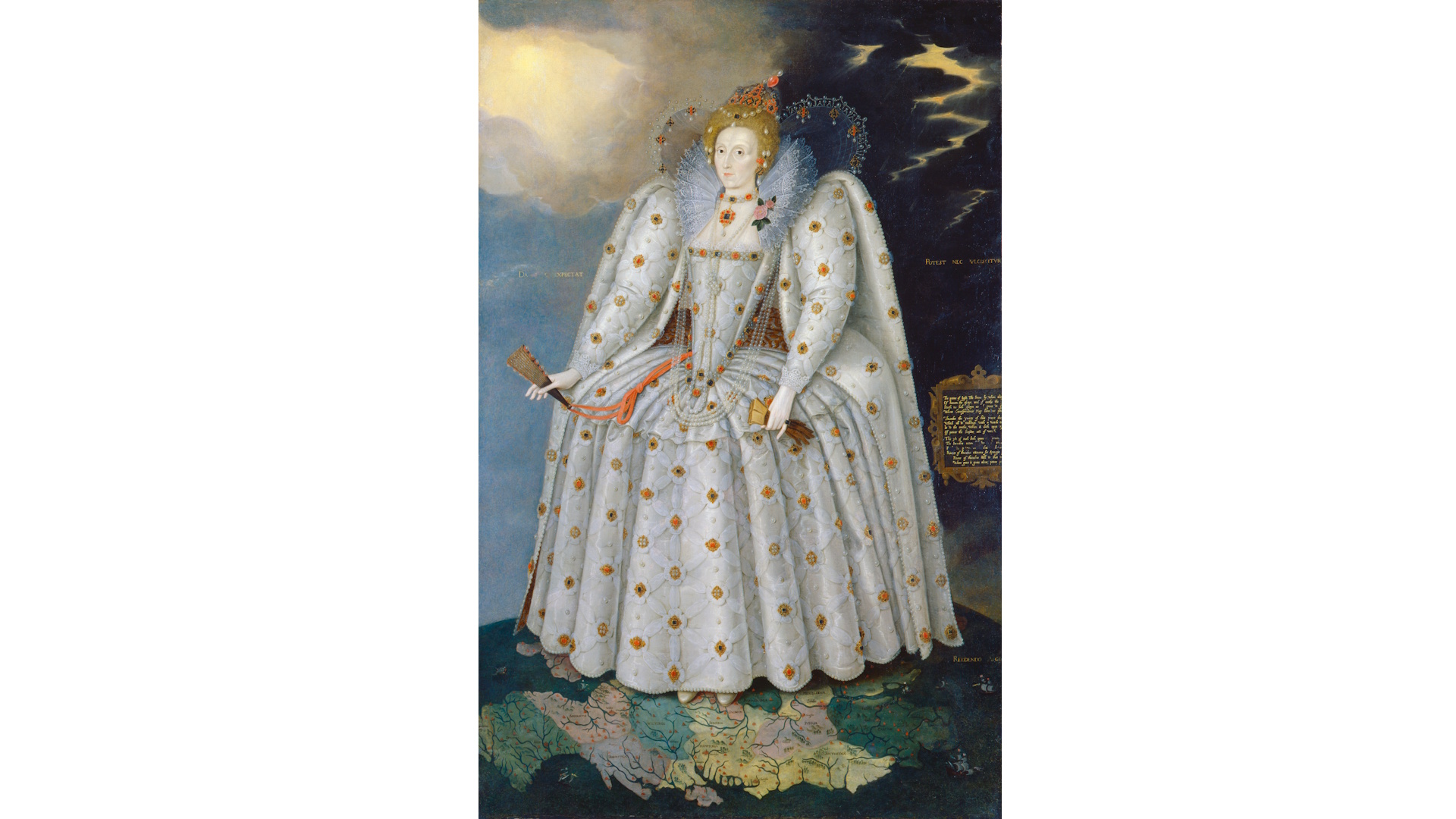
About the painting: This imposing 2.5-metre portrait of Elizabeth I hangs among a world-class collection of Tudor portraits at the National Portrait Gallery. It was commissioned by Sir Henry Lee, who hosted the queen at his house at Ditchley, in Oxfordshire, as an apology for running off to live with his mistress (luckily for him, she forgave the adulterous act). There are symbols of power and wealth throughout the portrait, as well as references to the queen’s virginity – including her pure white dress and pearls.
What I like: The detail on the silk dress gives it a sumptuousness that shows an incredible level of skill.
Lucian Freud by Lucian Freud
About the painting: Painted in his distinctive expressive style, this self-portrait shows the artist’s face contorted, almost squinting. The broad, sweeping brushstrokes in various fleshy tones are loose, but come together to form a facial structure that’s recognisable as the artist.
What I like: I love the looseness and freedom of the brushstrokes – something that’s hard to do while still expressing a clear form and likeness.
Sir Henry Unton attributed to Richard Scarlett
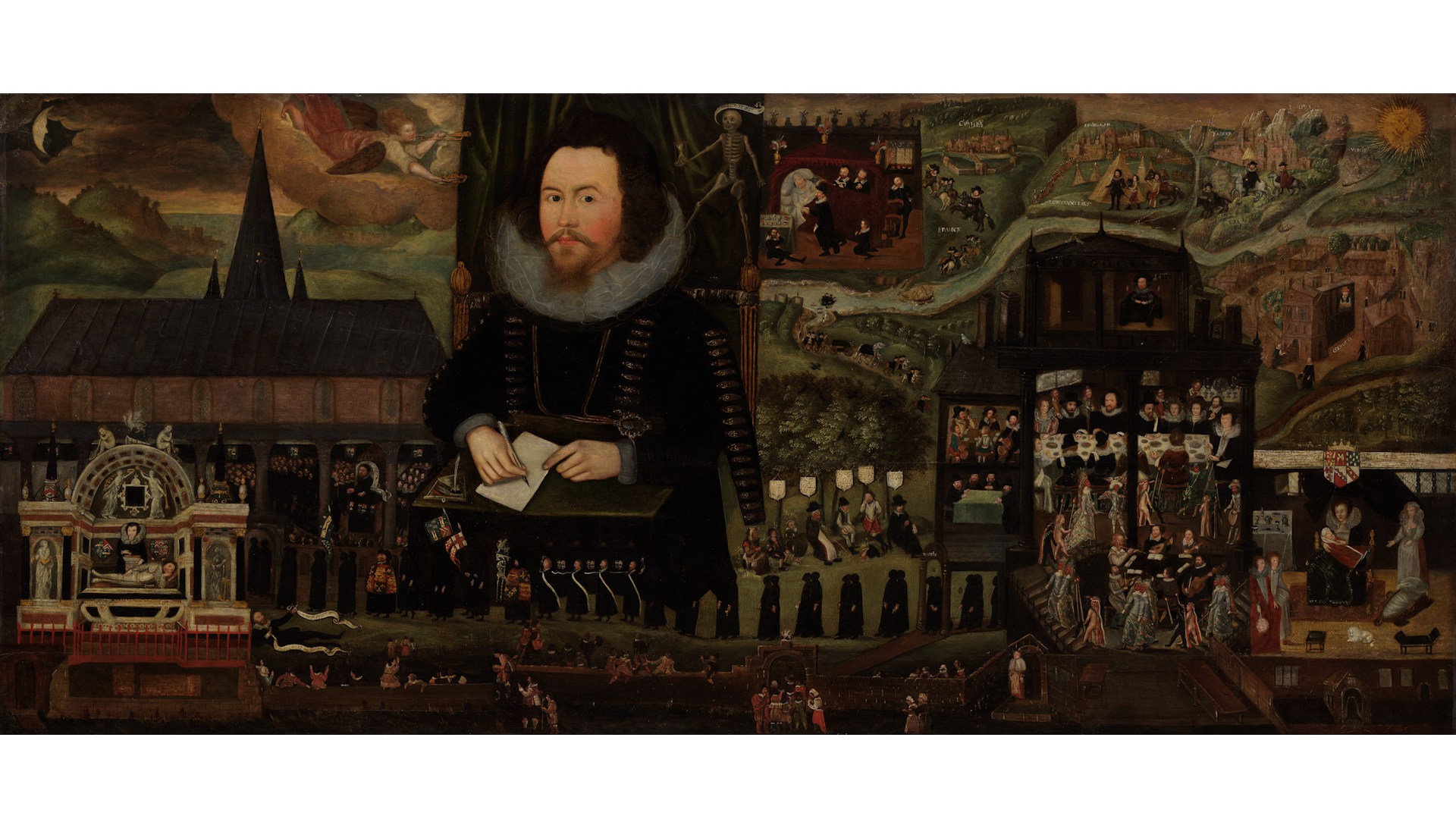
About the painting: A posthumous painting commissioned by his widow, this unusual portrait incorporates various smaller panels related to Sir Henry’s life. The diplomat is shown in varying stages: as a baby, a student at Oxford, to his time as a soldier and his later death. The main portrait shows a rosy-cheeked Unton, holding a quill.
What I like: The brave move the artist has made in shunning the usual style of portraiture of the time, instead deciding to chronicle the diplomat’s whole life around a central portrait. This bold choice makes the piece far more intriguing.
Sir Anthony van Dyck by Sir Anthony van Dyck
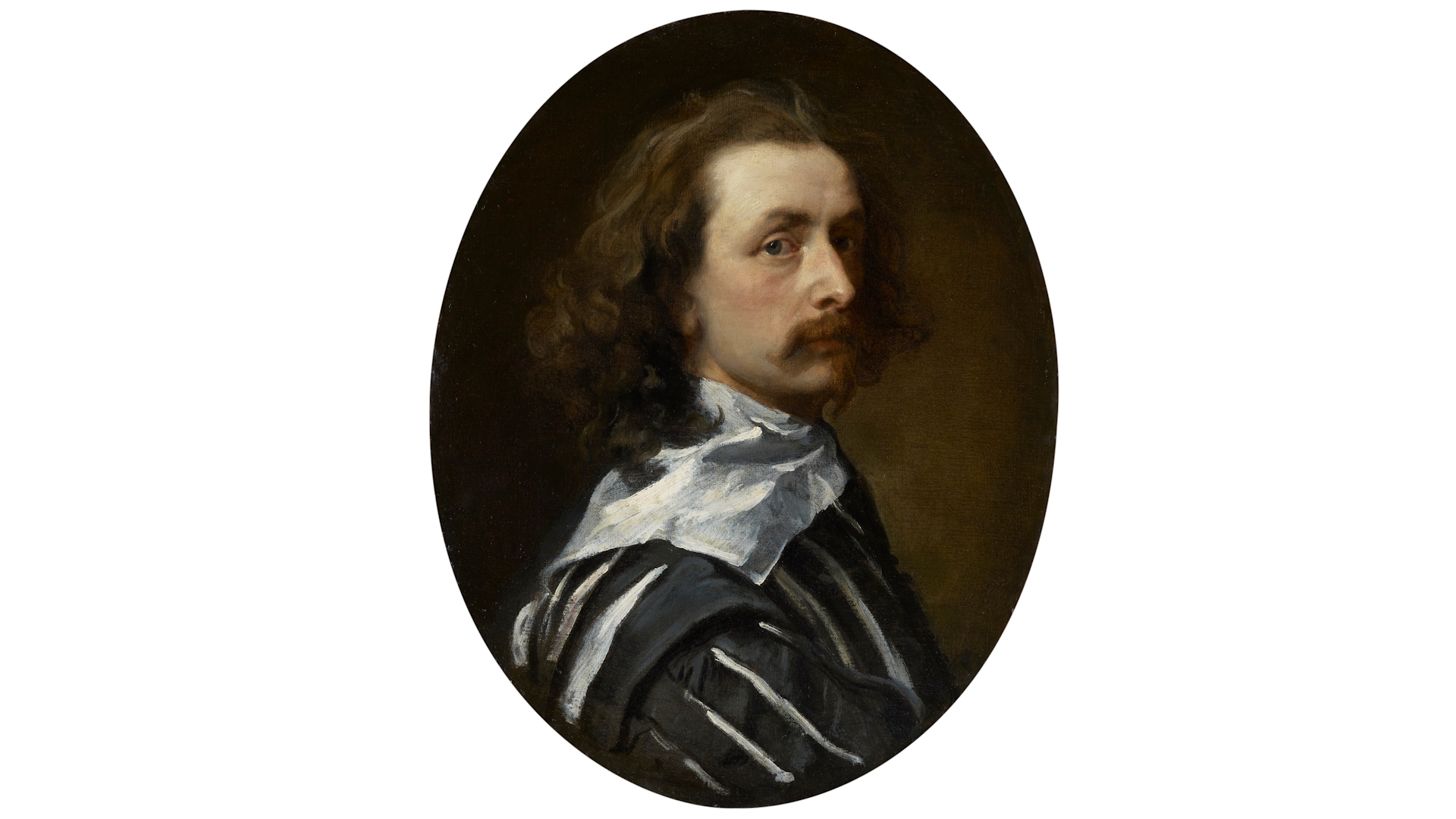
About the painting: This influential Flemish artist played a significant role in changing the perceptions and style of portraiture in Britain, having been appointed as King Charles I's main man when it came to putting a brush to canvas. Just one of three self-portraits van Dyck painted during his time in Britain, this work of 1640 was also among his last, given he died a year later. The angle of the artist's arm suggests he is painting, clearly focusing intently on the subject at hand.
What I like: The contrast between the detail of the artist's face and hair, with the looser style of his clothing. Whether this indicates the picture was unfinished or just experimental is unknown, but it's a clever technique that makes the portrait stand out among the more traditional works of the day.
National Portrait Gallery details:
- What's inside: Historic to contemporary portraiture, including paintings, photography and sculpture
- Entry: Free (general admission)
- Opening times: Daily: 10.30am-6pm (open until 9pm on Fridays and Saturdays)
- Best times to visit: Weekday mornings or Friday and Saturday evenings
- Location: St Martin’s Place, London, WC2H 0HE
Best paintings to see at the Wallace Collection
The Swing by Jean-Honoré Fragonard
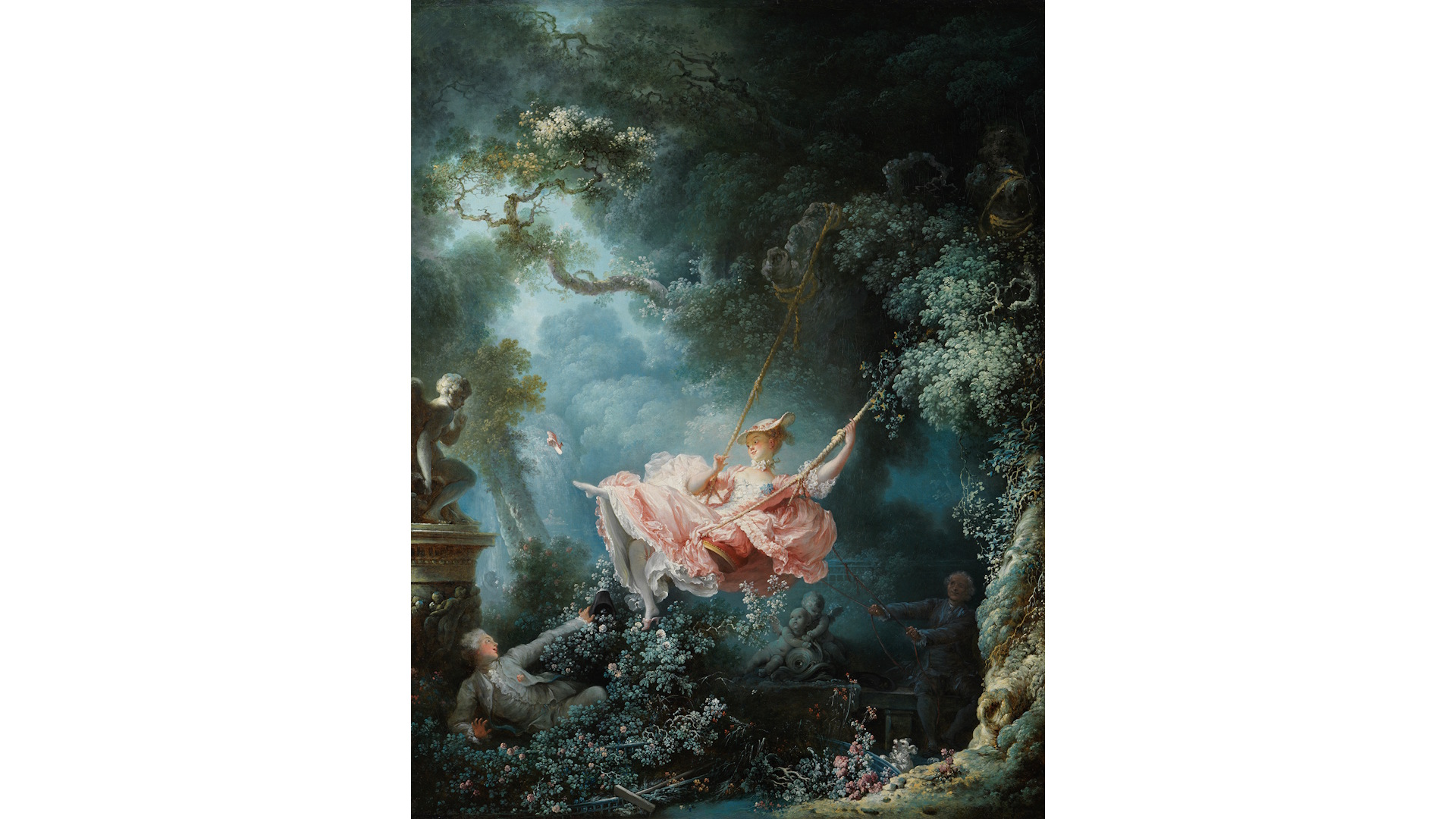
About the painting: Suggesting a tussle between her older husband on the right and younger lover on the left, the young lady in Fragonard’s The Swing seems to be enjoying the moment – her slipper kicked off in mid-air, towards her lover, who is holding out his hat in anticipation. Meanwhile, her husband is behind, holding onto the reigns as if he’s keen not to lose her. The French artist’s work is one of the most prominent from the Rococo period of the 18th century – it was commissioned by Baron Louis-Guillaume Baillet de Saint-Julien, who wanted a picture of his mistress!
What I like: The sheer sauciness of it, with a mix of romance, infidelity and impending scandal. The dress is exquisitely painted and I like the movement suggested in the use of the swing and slipper.
The Laughing Cavalier by Frans Hals
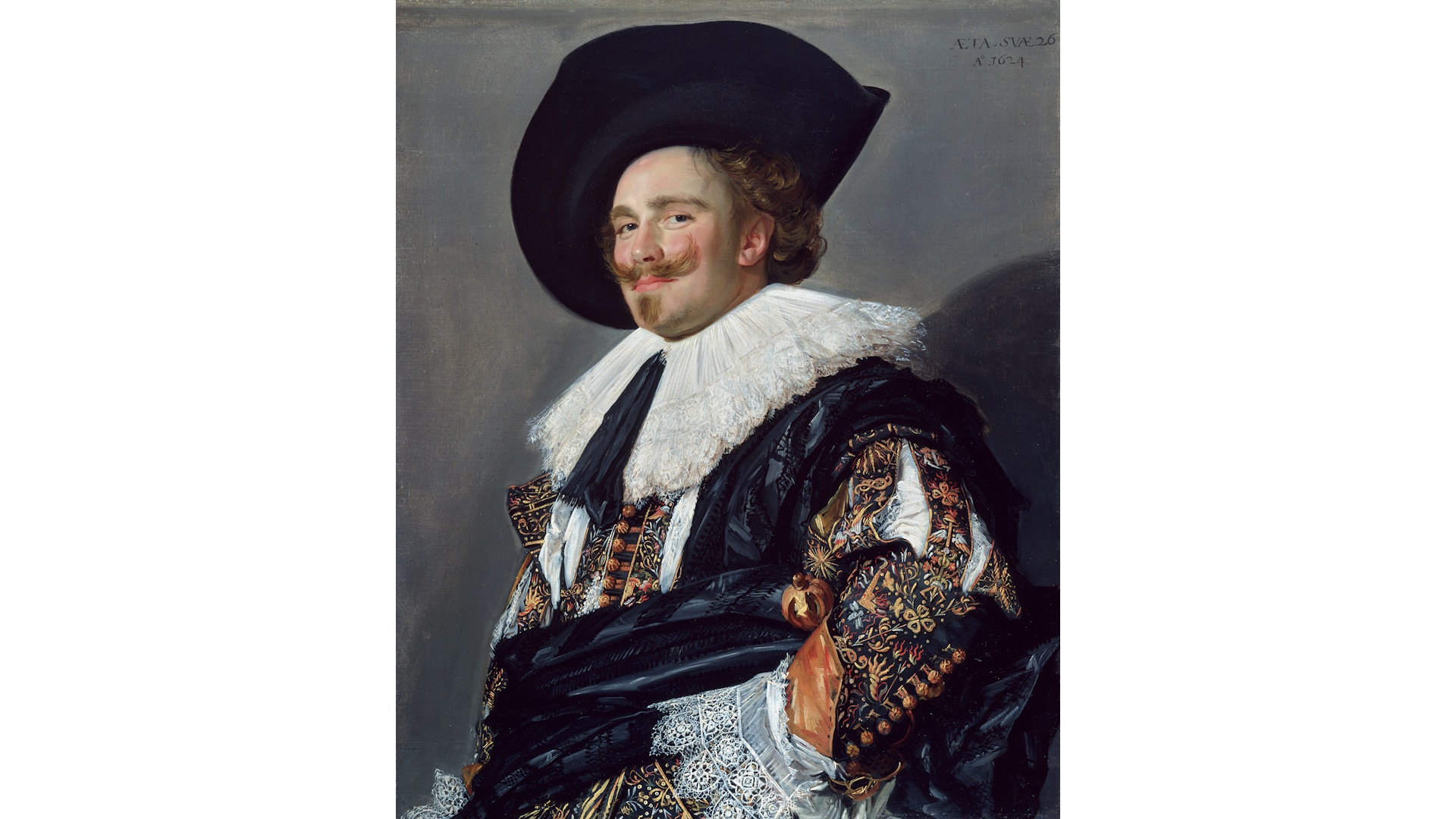
About the painting: Frans Hals’ 1624 portrait of this very confident young man is regarded as his finest. He’s neither a cavalier, nor is he laughing, but the title was coined in the Victorian era and stuck… but who cares! The gaze of the sitter engages the viewer instantly… slightly smug, slightly evaluating, making you question what’s going through his mind.
What I like: The detail on the embroidery and particularly the use of various shades of black in the sash and hat – a difficult colour to master.
The Wallace Collection details:
Best paintings to see at the Courtauld Gallery
A Bar at the Folies-Bergère by Édouard Manet
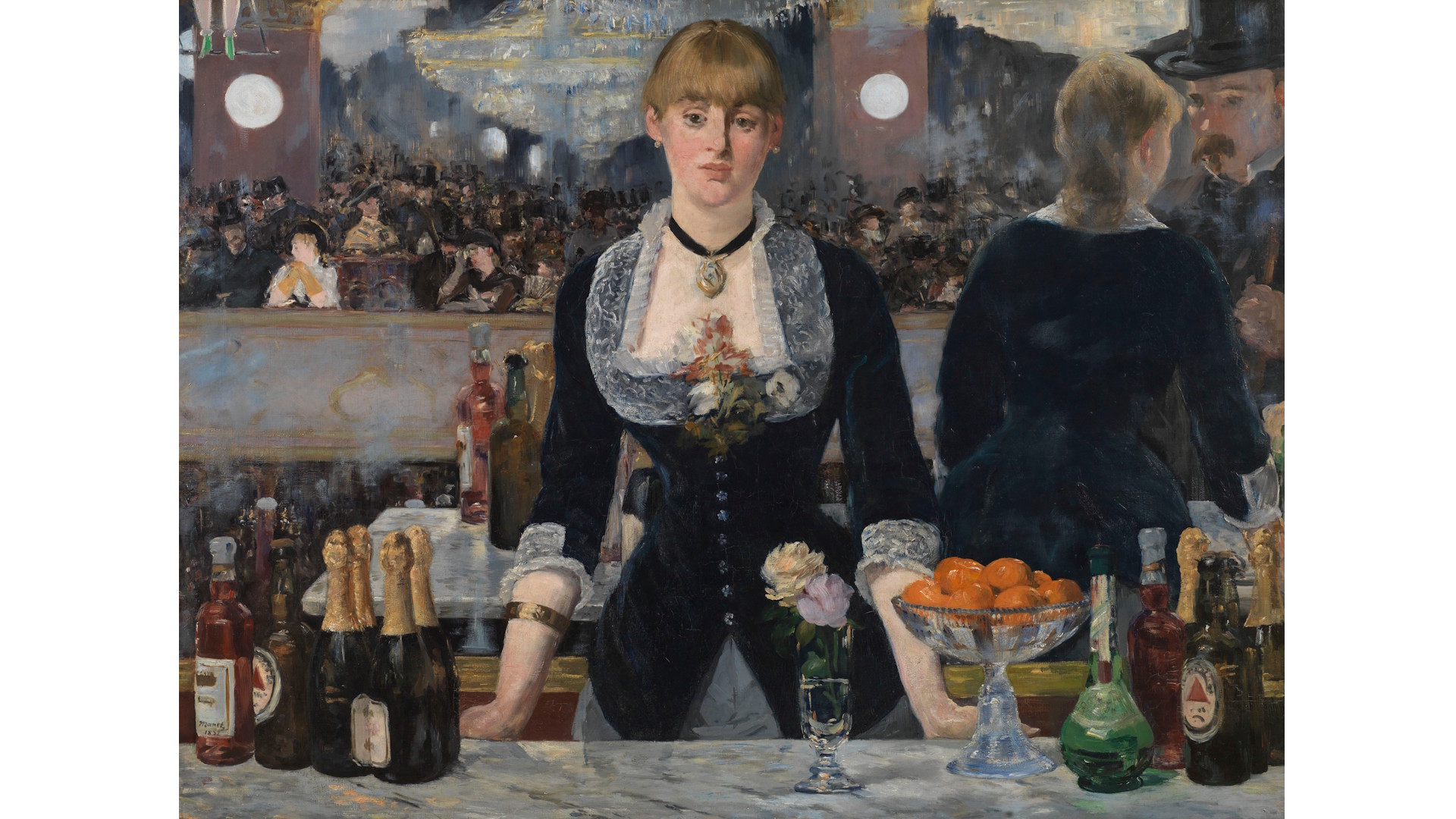
About the painting: One of Manet’s most recognisable works, A Bar at the Folies-Bergère was painted in 1882, just a year before his death. It shows a bartender with a cleverly painted reflection of the music hall packed with customers. But the mirror also raises questions about the scene… a man in a top hat is placed in the position of the viewer, but the reflected figures are in an unnatural position, as if being seen from a different angle.
What I like: The use of the small greyish-white marks that give a clever suggestion of the mirror, and the use of the mirror itself to provide intrigue and a sense of distorted reality.
Self-Portrait with Bandaged Ear by Vincent van Gogh
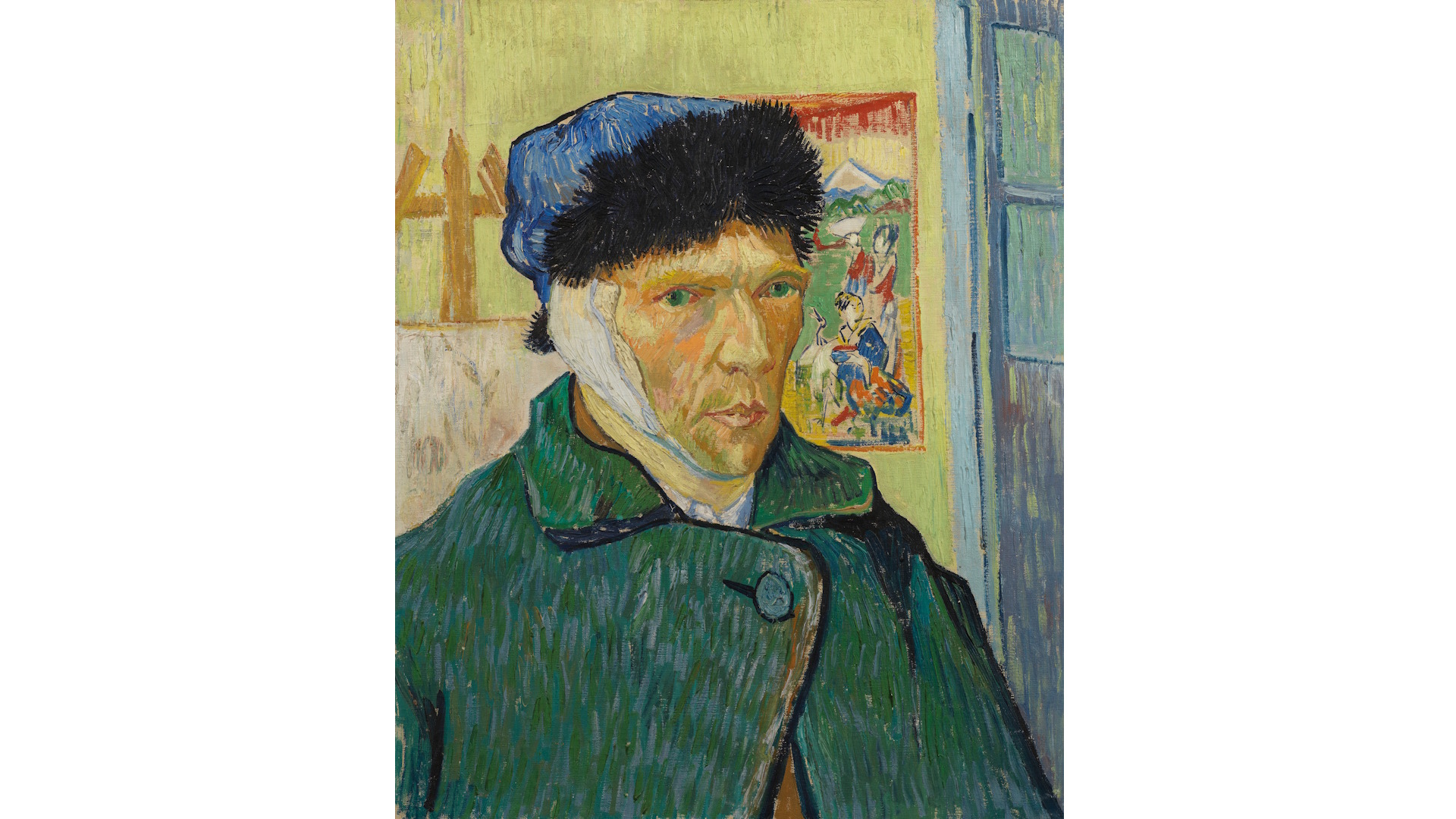
About the painting: Van Gogh’s troubles are well documented, and this famous painting is arguably the most public example of his turbulent mental state. Van Gogh painted this work soon after leaving hospital in 1889, having cut off most of his ear following an argument with his friend Paul Gauguin. The portrait shows an almost determined look in the artist’s eyes, to carry on.
What I like: The coat is a masterpiece of its own… the strong marks made with thick oil paint, the dark black shadows and outlines, and the button are all distinctively Van Gogh.
La Loge by Pierre-Auguste Renoir
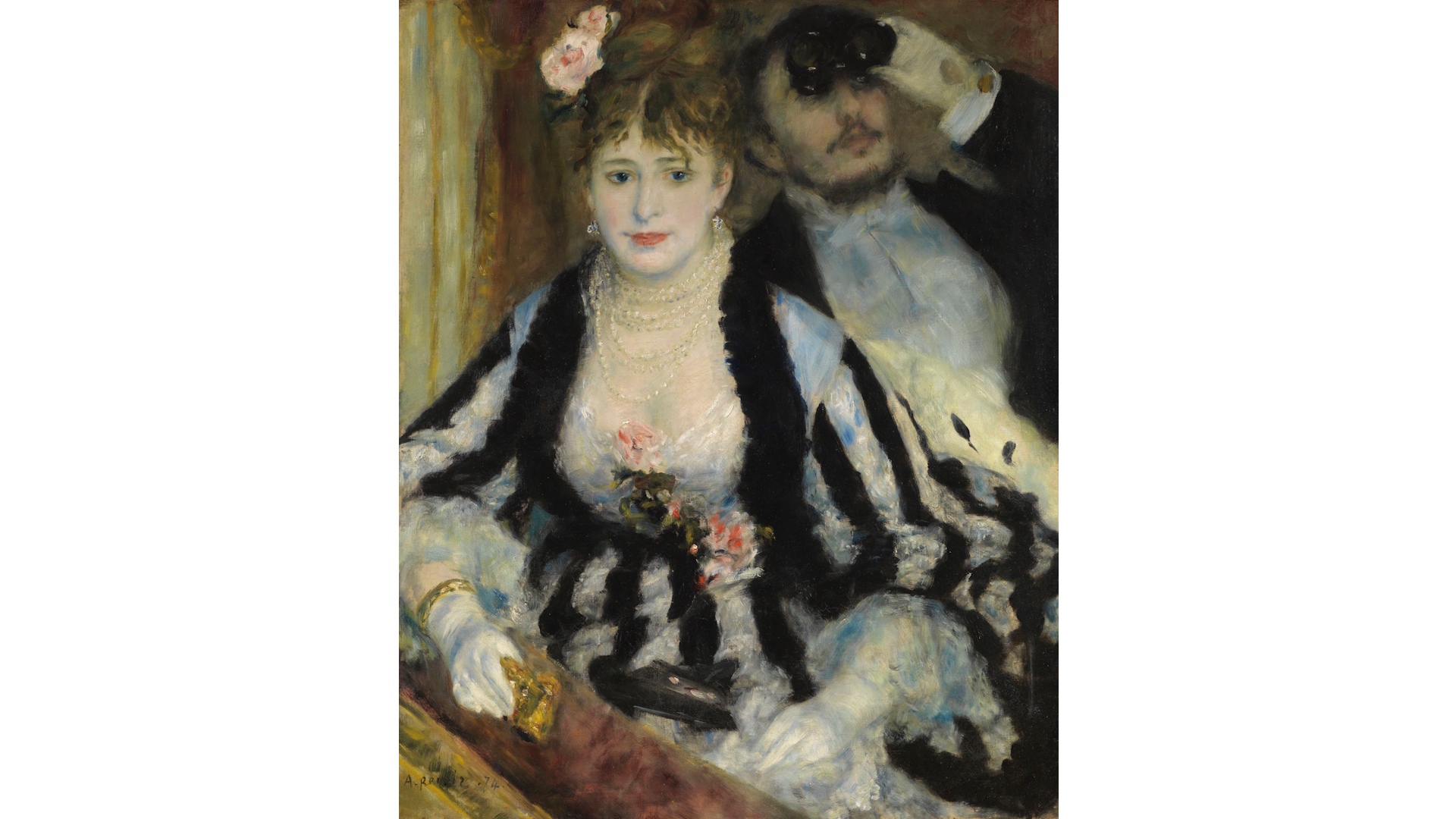
About the painting: La Loge, or The Theatre Box in English, was among the paintings included in the first exhibition by the “Impressionist group” in 1874. Renoir’s work has endured, thanks to its sumptuous tones and delicate mark-making. The elegant depiction of a man (Renoir’s brother) and a woman in a box at a theatre – hence its title – shows the man’s gaze, via opera glasses, being elsewhere. This raises questions about his relationship with the woman and what’s attracting his attention.
What I like: The contrast between the subtle tones of the woman's skin with the bold black and white stripes of the dress.
Montagne Sainte-Victoire with Large Pine by Paul Cézanne
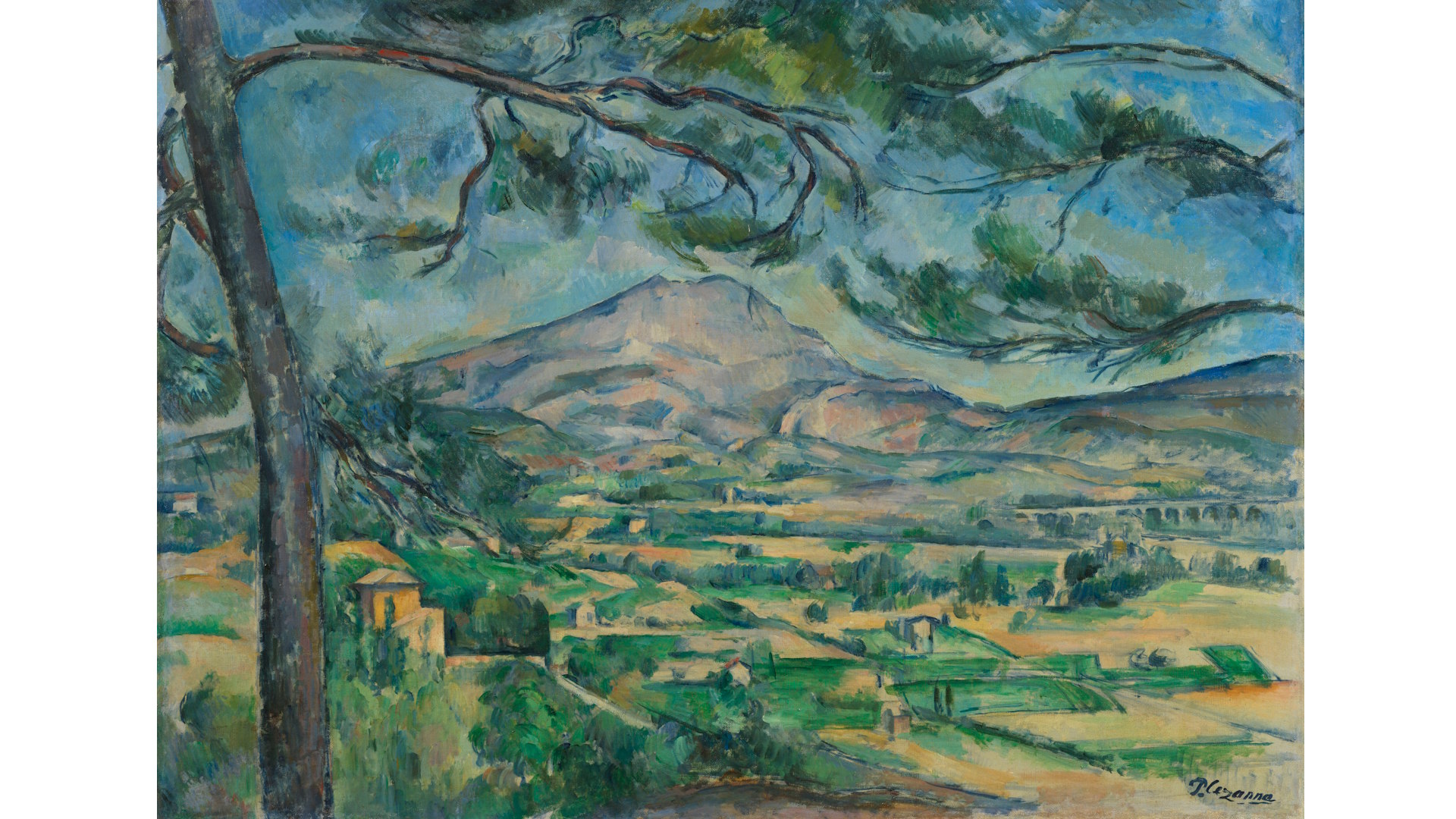
About the painting: Rooted in a sense of place – in this case the Sainte-Victoire mountain in Aix-en-Provence near Cézanne’s home – this 1887 painting is one of several similar works. The painting is effectively split in two using contrasting colours: blues and pinks in the top half, versus yellows and greens below, creating a harmonious landscape. Cézanne’s trademark use of repetitive brushstrokes can be seen within the fields in the foreground.
What I like: The composition doesn’t get much better for a landscape painting – especially the pine trees framing the view, which mirror the horizon. My eye is drawn to the mountain, the focus of the piece, thanks to the perspective created by the fields below.
Courtauld Gallery details:
Best paintings to see at the Royal Academy of Arts
The Royal Academy of Arts’ Collection Gallery – where its free-to-visit permanent collection of paintings is housed – is currently undergoing a major expansion project and will reopen in 2027. However, it continues to host major exhibitions and temporary displays of its collection.
Invention, Composition, Design and Colouring by Angelica Kauffman
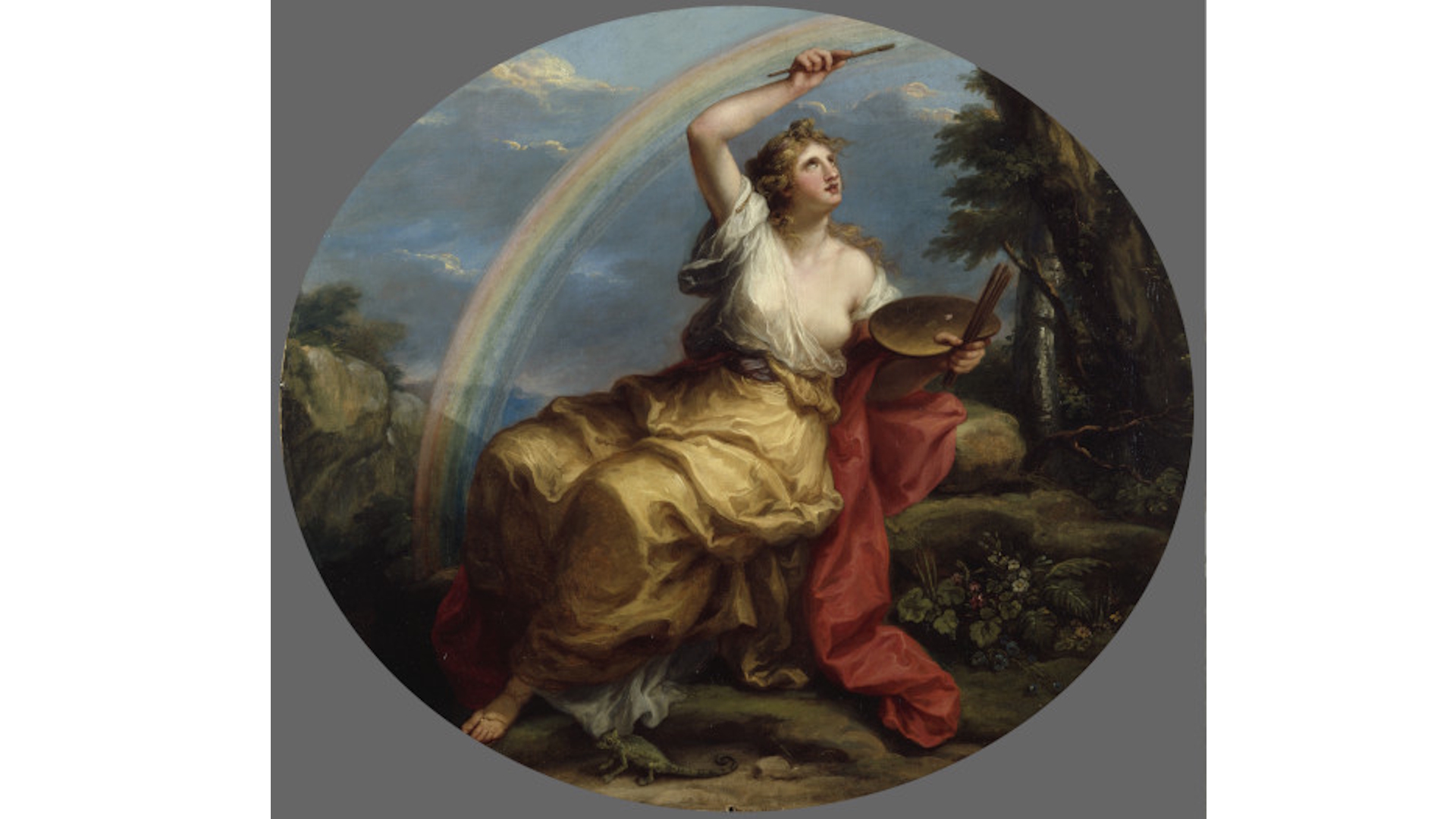
About the paintings: Angelica Kauffman played a key role in London’s art scene, being one of only two female Founding Members of the Royal Academy of Arts. See these four works depicting the “Elements of Art” (the key stages of the artistic process), each represented in female form, on the ceiling of the front hall of the gallery’s Burlington House wing.
What I like: Kauffman’s decision to depict the elements as women, instead of their usual interpretation as men. This mirrors the artist’s fight to be recognised as an equal in the male-dominated art world of the time, especially as she was in a minority as a female Royal Academician.
Royal Academy of Arts gallery details:
- What's inside: A long-running gallery run by the Royal Academicians, who are elected by fellow artists for their outstanding work.
- Entry: Free (general admission)
- Opening times: Daily: 10am-6pm (open until 9pm on Fridays)
- Best times to visit: Weekday mornings
- Location: Burlington House, Piccadilly, London, W1J 0BD
Other places to see famous art in London

Interactive art at FRAMELESS
Become immersed in some of the world’s most famous paintings at this mesmerising multi-sensory experience. Read our FRAMELESS review.
William Holman Hunt, The Light of the World
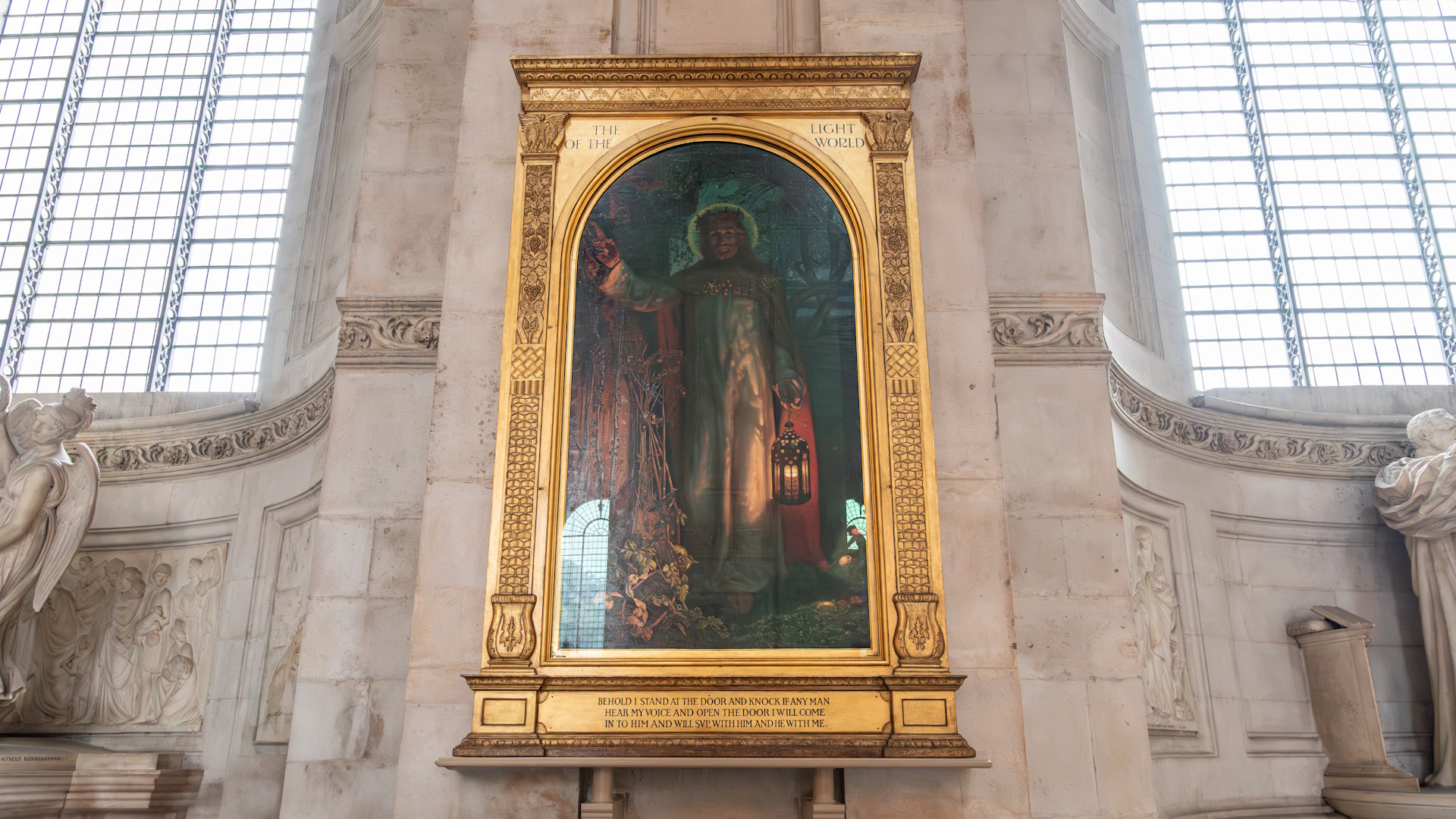
Where to see it: St Paul’s Cathedral – check with the venue in advance, as this artwork may not always be on display (paid-for ticket required).
About the painting: Inspired by a passage from The Bible (John 8:12), this work housed in St Paul’s Cathedral is one of three versions of the painting by Pre-Raphaelite artist William Holman Hunt. Jesus Christ is seen holding an illuminated lantern, the glow resembles the light of conscience. From the morning star to fallen fruit and an ivy-covered door with no handle, the painting is full of symbolism.
What I like: The superb treatment of light and warmth created from the lantern – particularly on the robes. We had a print of this masterpiece hanging on the wall at home when I was growing up and I always noticed something different in the dimly lit scene each time I looked at it.
- Details: London’s iconic cathedral designed by Sir Christopher Wren.
- Entry: From £26 - book tickets for St Paul’s Cathedral
- Opening times: Monday-Saturday: 8.30am-4pm (open from 10am on Wednesdays)
- Best times to visit: Weekday mornings
- Location: St Paul’s Churchyard, London, EC4M 8AD
The Waterseller of Seville by Diego Velázquez
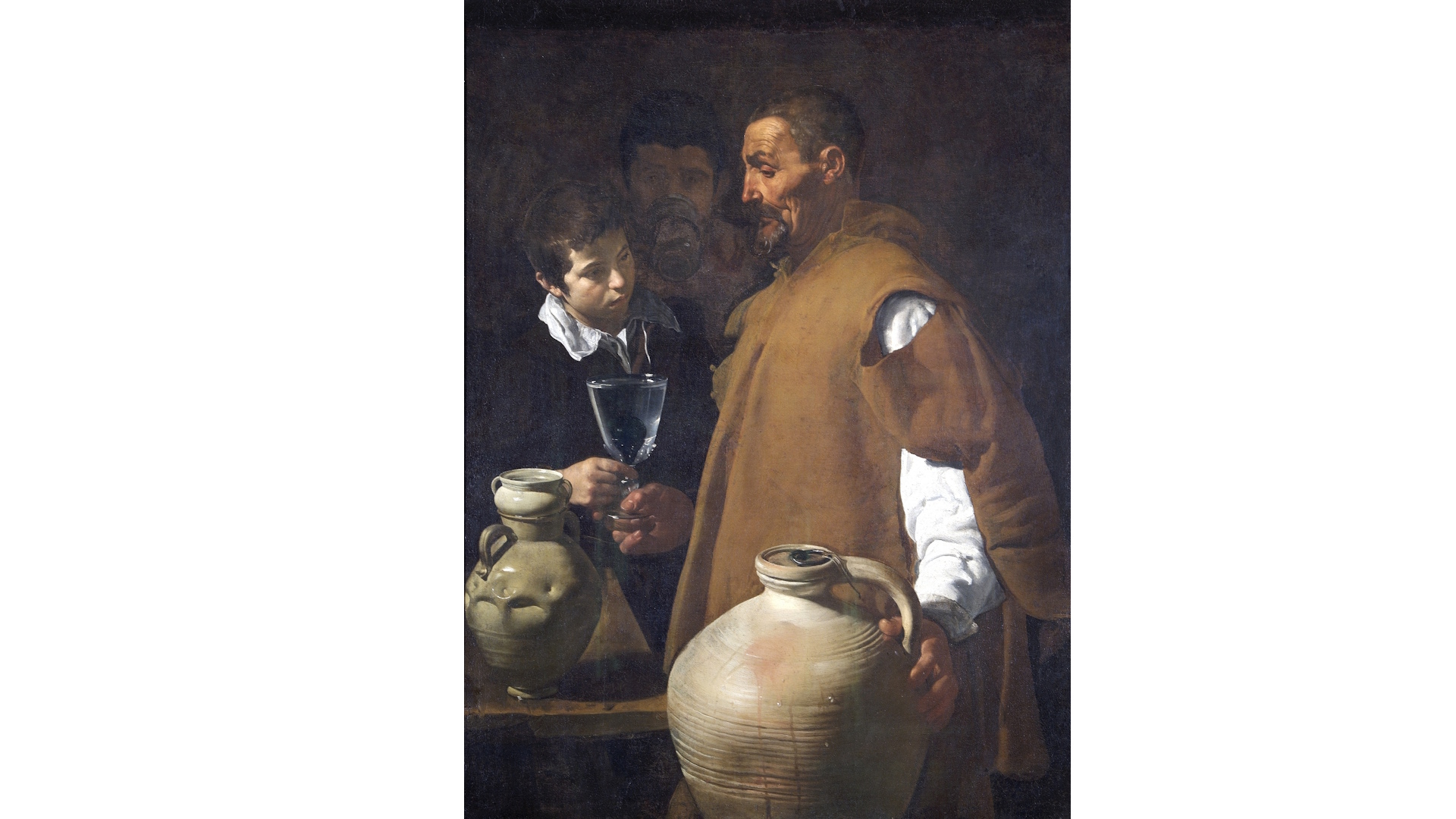
Where to see it: Apsley House (paid-for ticket required).
About the painting: One of the finest examples of Velázquez’s talent held outside of Spain, The Waterseller of Seville is a key work in the artist’s Seville period of 1617 to 1622. It shows an older man holding a water jug, a younger man receiving a glass of water and a man in the background watching intently (who knew the act of filling up a glass with water could draw such attention!).
What I like: The drops of water on the water jug and the shine on the glass, which highlight the artist’s mastery of light.
- Details: A lifetime collection of art and artefacts from the first Duke of Wellington, in his former home.
- Entry: From £14 - book Apsley House tickets
- Opening times: Vary per season – check the booking page for the latest opening times
- Best times to visit: Mornings
- Location: 149 Piccadilly, Hyde Park Corner, London, W1J 7NT
Girl at a Window by Rembrandt van Rijn
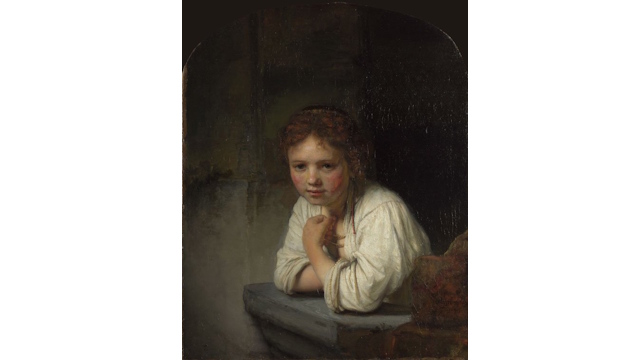
Where to see it: Dulwich Picture Gallery (paid-for ticket required).
About the painting: Dulwich Picture Gallery holds a fine collection of historic works – among them hangs this charming portrait of a rosy-cheeked young girl. Although theories abound, there is no evidence of the identity of the girl, who is looking straight out at the viewer in a thoughtful pose. The title is thought to come from the (maybe fanciful) tale of Rembrandt placing the painting against his window, which caused some in the street below to believe it was a real girl.
What I like: The very subtle change in skin tone on the forearm, showing a slight tan.
- Details: The world’s first purpose-built public art gallery.
- Entry: From £10
- Opening times: Tuesday-Saturday: 10am-5pm
- Best times to visit: Weekday mornings and late afternoons
- Location: College Road, London, SE21 7AD
Gassed by John Singer Sargent
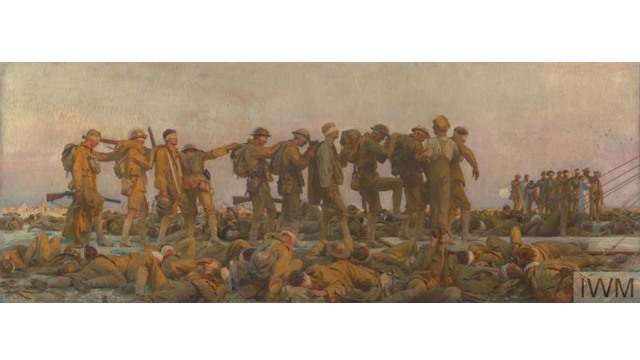
Where to see it: Imperial War Museum London
About the painting: Among the impressive Blavatnik galleries at Imperial War Museum London is this striking, large-scale work by John Singer Sargent, which was commissioned by the British government in 1919. Referencing the scene of devastation following a mustard gas attack in the trenches of the First World War, the painting conjures up the sense of camaraderie in such atrocious conditions. Soldiers with bandages over their eyes lean on each other as they inch forwards, while others lay stricken on the ground.
What I like: The grand scale and powerful depiction of wartime horrors, which give the viewer a real sense of being among the troops on the battlefield.
- Details: A museum that gives a voice to people affected by conflict - within the museum, the Blavatnik Art, Film and Photography Galleries’ houses artworks related to war and conflict.
- Entry: Free (general admission)
- Opening times: Daily: 10am-6pm
- Best times to visit: Weekday mornings and late afternoons
- Location: Lambeth Road, London, SE1 6HZ
Tips for art lovers visiting London
- Make use of free entry at many London galleries.
- Keep an eye out for special exhibitions: these generally require a paid-for entry ticket with booking in advance recommended.
- Book onto a guided tour – tours of the National Gallery, Tate Modern and Tate Britain include highlights of the collection and fascinating insights about famous artworks.
- Visit on weekdays, as weekends and bank holidays are usually busier.
- Early morning after opening and later in the afternoon are less busy periods for most galleries.
- Some galleries offer late openings, ranging from after-hours exhibition viewings to fun and interactive events.
- Many galleries have cafes and restaurants, so enjoy a pit stop between viewing artworks.
- Browse gallery shops for stylish art-themed gifts, including books, prints and limited-edition items.
If you’d like more art immersion, check out the latest exhibitions, discover more London galleries and plan your visit to one of the city’s many museums.