

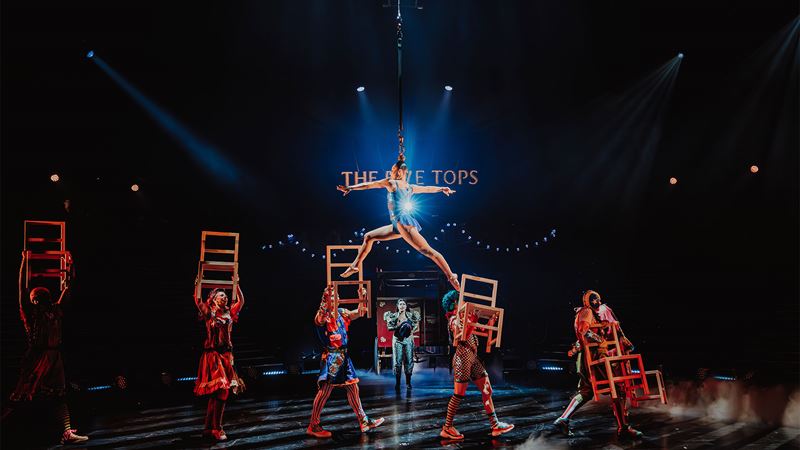
Having just celebrated its first anniversary in London, the Come Alive! show, inspired by the 20th Century Fox film The Greatest Showman, has been wowing the crowds at the Empress Museum. So, the opportunity to step into the world of The Greatest Showman once again was one I couldn't pass up.
This spectacular show is an adaptation of a golden cinema classic in an immersive setting that introduces you to the people who have kept the magic and wonder of the circus alive for centuries. What's more, it's in the heart of London – a big top in the megacity... Not something you see every day!
After experiencing the wonder for myself – with thousands of stars in my eyes – it was time to meet the creative minds behind the live stage production.
- Meet the Come Alive! creatives
- From empty space to a spectacular Big Top
- An immersive circus experience from the start
- What makes Come Alive! unique
- Combining musical and circus acts
- Creating the magic with real-life props
- What to look out for in Come Alive!
- What's next for Come Alive!
Step behind the scenes, explore the museum, and take your seat under the Big Top. Book your tickets to Come Alive! and see the magic unfold live.
Meet the Come Alive! creatives behind the show
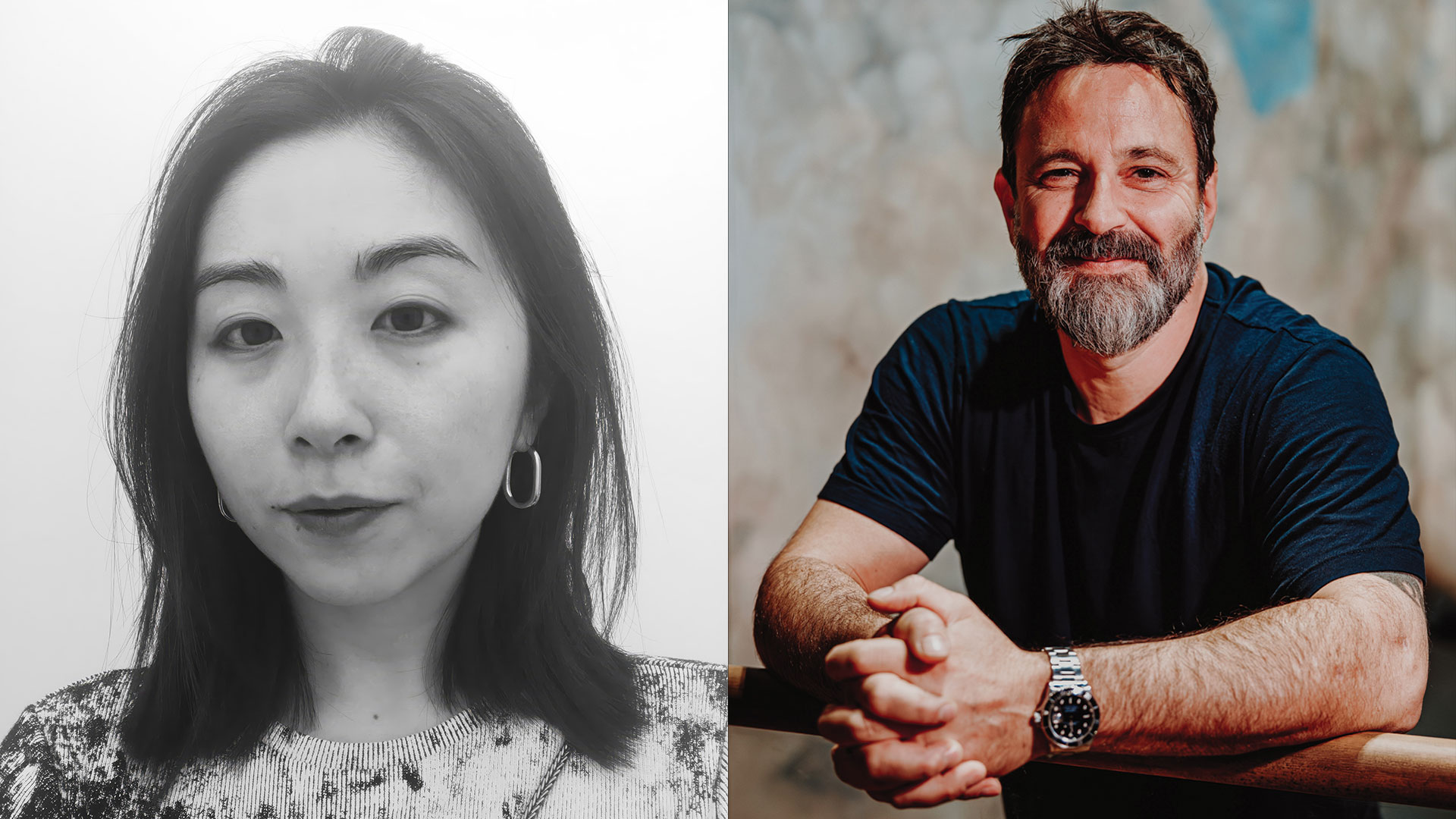
Simon Hammerstein, the creative director behind the project, owns the opulent New York theatrical venue and nightclub, The Box Manhattan, as well as its London counterpart, The Box Soho. Drawing on his decades of experience in the entertainment industry, he has brought his vision to the Come Alive! immersive show, pushing boundaries by blending theatre performances and circus acts. Led by West End and world-class circus performers, the show puts its own spin on the original story, breathing new life into the much-loved classic by blending multiple performance genres into a circus dream.
Joining him is Ruby Law, an architect and stage designer renowned for her innovative work in performative spaces. Notably, she created the bold theatre productions Twice Born by Scottish Ballet and Warrior Queens at Sadler's Wells. Her work extends beyond theatre; she has also staged concerts for renowned artists such as Billie Eilish, Jorja Smith, and Haim. Her work on Come Alive! The Greatest Showman brings the traditional circus world to life with extraordinary props and sets, placing visitors at the heart of the story in a modern theatrical setting.
Transforming the venue: from empty space to a spectacular Big Top
The creatives behind Come Alive agree on one thing: they were lucky enough to find a place in London big enough to bring their big idea to life. The space needed to be large enough not only to build the Big Top, but also to bring to life the world of circus performances and performers' lives. There was also space needed to house a museum showcasing the circus world. The building, which was previously used for the BBC Earth Experience, was deemed to be the perfect space to match the show’s vision, giving visitors a sense of the circus world even before the show starts.
The early stages involved first creating an identity for the immersive show about The Greatest Showman. The idea of a museum came from history, as P.T. Barnum originally had a museum of curiosities, which later evolved into the circus show we all know today. Having visitors first step into a museum of curiosities allows them to immerse themselves in the world of the circus, exploring the great masters of the trade through posters and even the costume of The Greatest Showman himself.
Inside the show: an immersive circus experience from the start
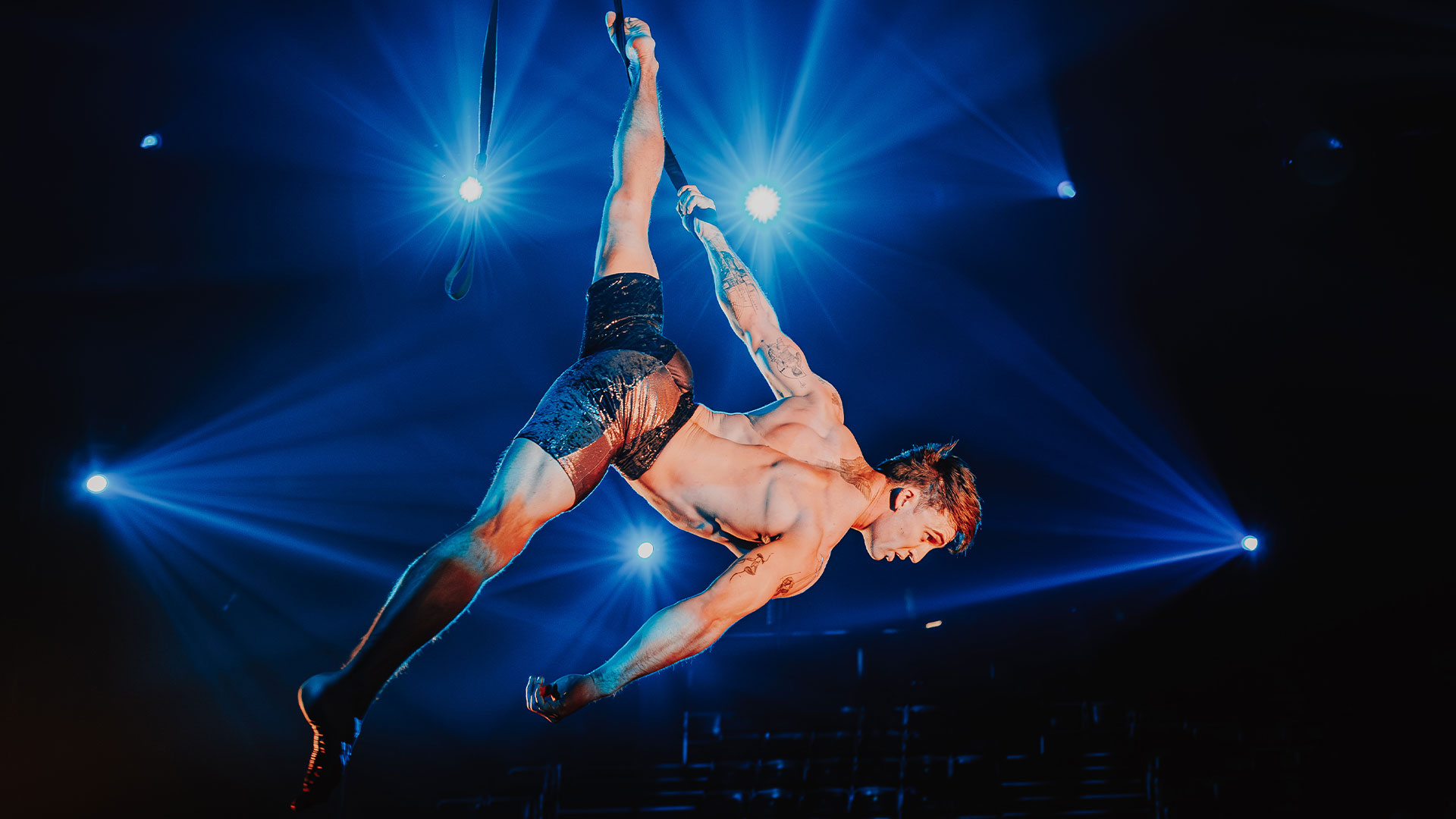
From the outset, you feel as though you are entering a magical world of circus performance and high flying acrobatics. There are various themed areas leading to the Big Top, each with their own aesthetic and story. It feels as though a touring circus family is about to arrive, and there is something new to discover around almost every corner.
According to Ruby Law, one of the major challenges was to make the engineering project stand out at eye level, providing an intimate experience and the sensation of entering a different world. As the Big Top does not support any weight from the ceiling, a whole standalone structure had to be built to hold the Big Top. This required careful consideration of many practical and technical elements, which had to be kept out of sight of visitors. A great deal of work has gone into drawing attention to eye level, achieved using materials on the walls and interesting objects placed along the way. Law continues, "It's a significant engineering achievement to calculate the number of seats required to fill the Big Top while maintaining the sense of intimacy. We want the experience to feel close to the action, no matter where you are in the Big Top."
The pre-show: the show within the show
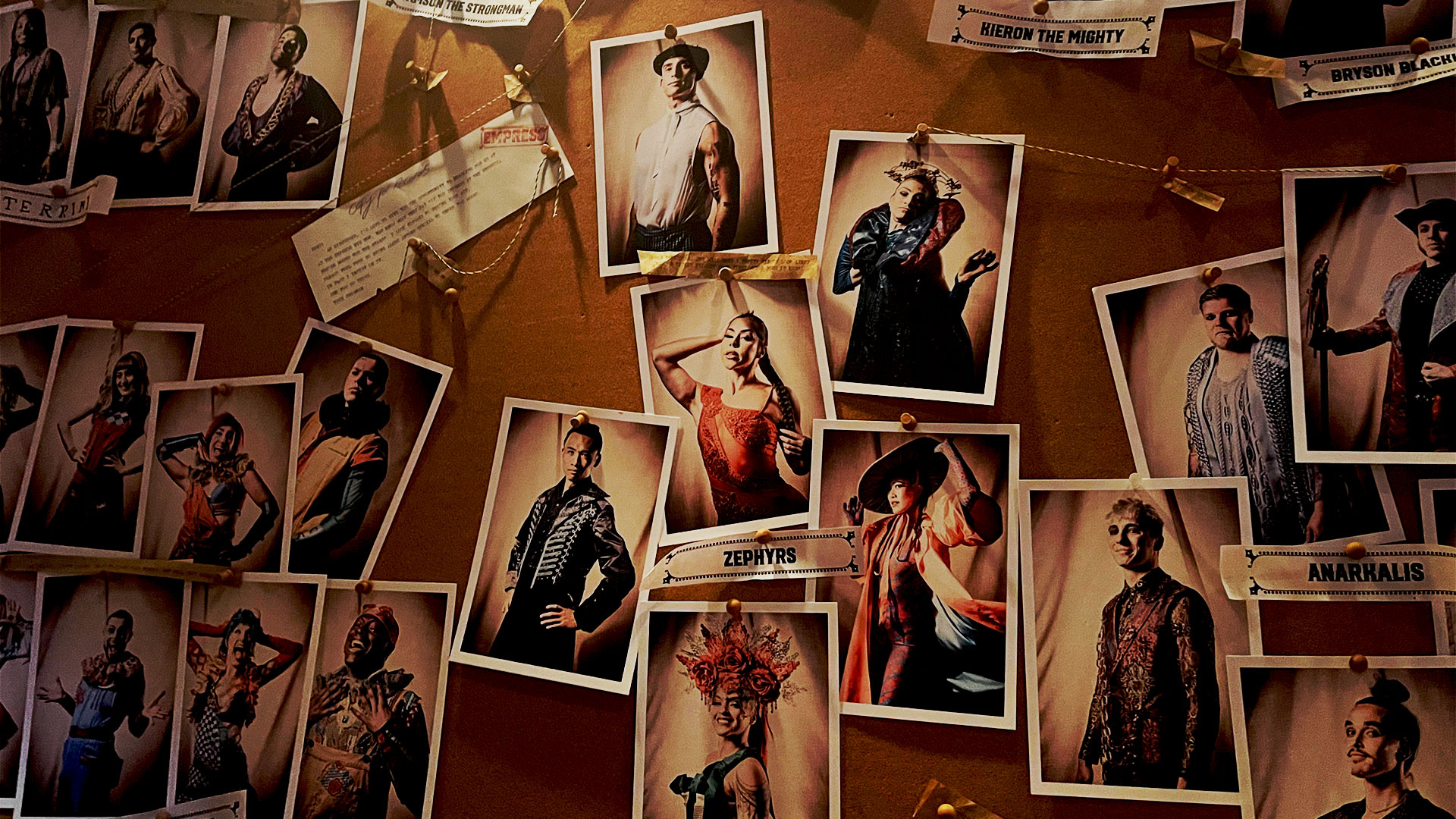
A great deal of time was spent blending the different sets, carefully placing objects and props in specific locations so visitors wouldn't notice the transitions, and everything would flow together to create one continuous experience. Treating the pre-show as an experience in its own right meant that it could serve as an introduction to the world of Come Alive!, building atmosphere and anticipation while providing a seamless transition to the main event.
Rather than waiting for the show to start, visitors move through a series of spaces designed specifically to pique their curiosity. This layered approach builds anticipation for the main show, immersing audiences in the circus world and preparing them for the spectacle, ready to delve deeper into the world of Come Alive!
What makes Come Alive! unique: a fresh take on The Greatest Showman
Back in 2017, film producer Chip Seelig first approached the idea of an immersive show based on The Greatest Showman, resulting in London’s first fully immersive circus show, which began its first run in 2024. Rather than being a mere live adaptation of the film, the show is a complete reimagining, featuring a new storyline that strikes a balance between honouring the original film and creating something entirely new. Hammerstein recalls the project as a completely new challenge, combining a variety of entertainment formats, with the story unfolding in real time. It follows the journey of circus performers, with many ups and downs – a story that could be set today or 100 years ago.
Celebrating diversity onstage: a collaboration of performers
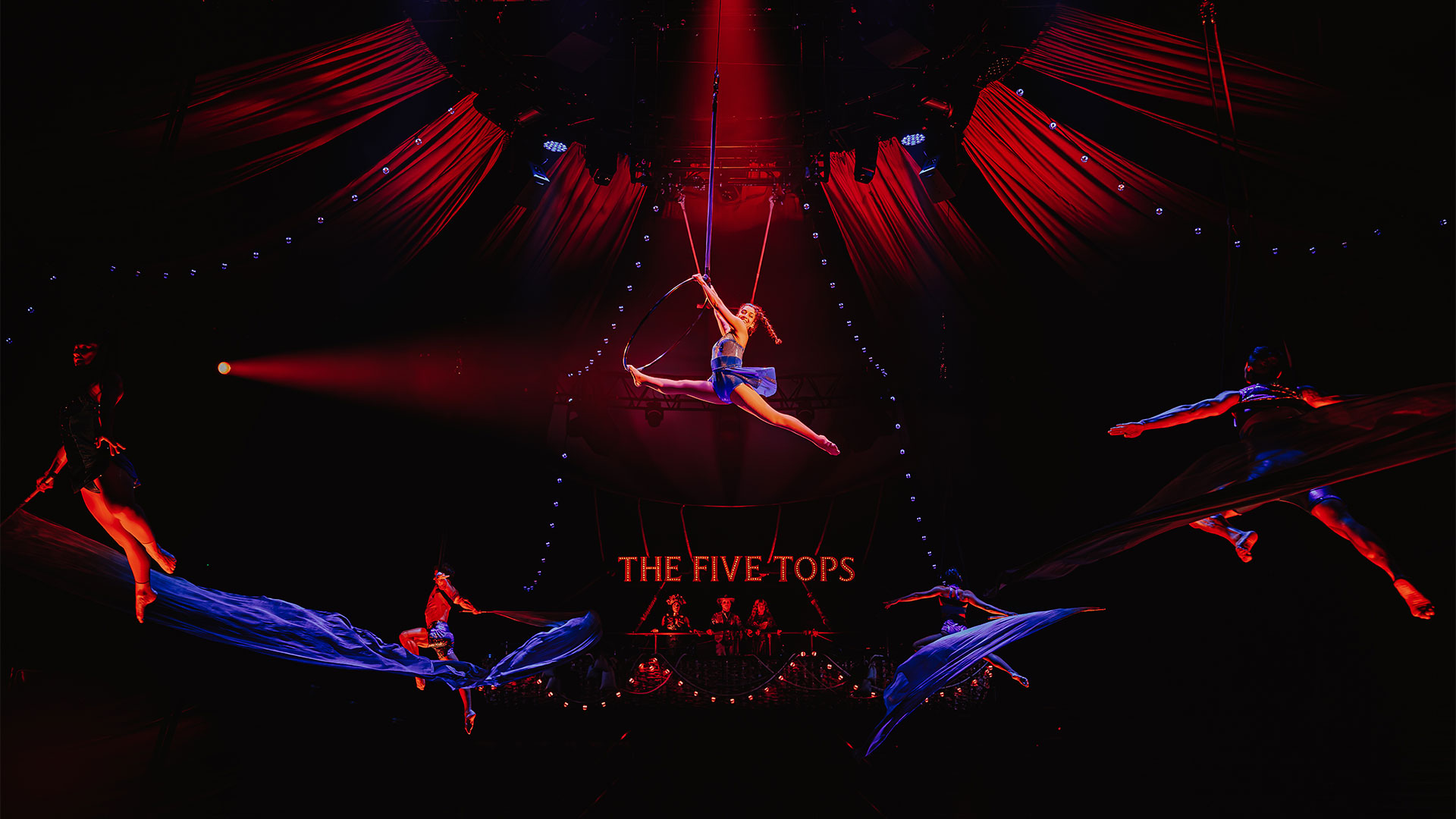
While the core of the story of Come Alive! The Greatest Showman is set, there is always room for play, with roles and characters adapted to suit each performer's personality and skills. Drawing on a diverse ensemble of artists, including circus specialists, dancers and theatre performers, the creative team works closely with the cast to shape performances that highlight individual strengths. This collaborative approach celebrates the uniqueness of each performer and brings fresh, dynamic energy to the production, ensuring the show evolves with its cast while keeping the main story intact.
The challenges of combining musical and circus acts
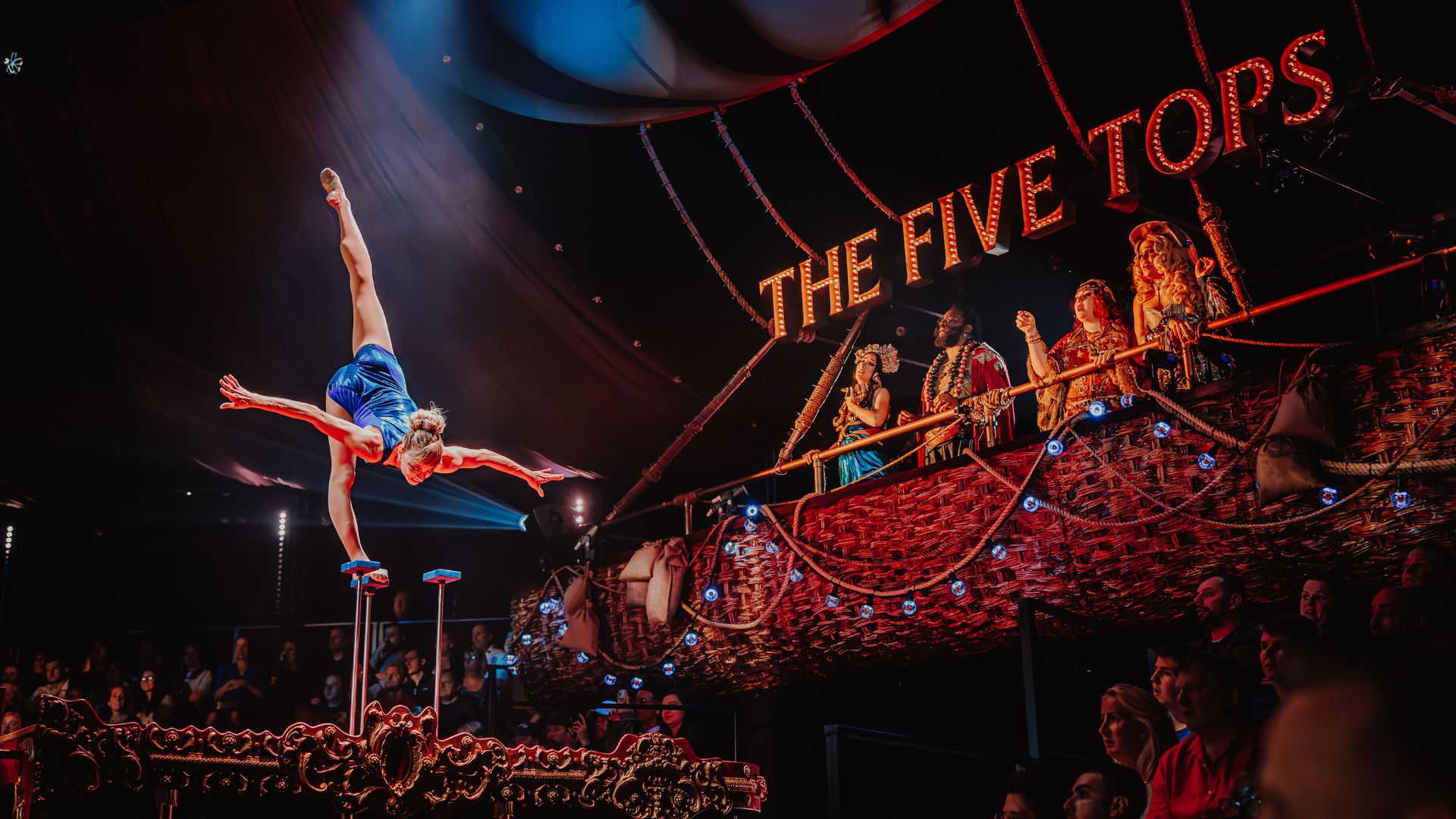
The musical score of The Greatest Showman is one that is that is recognised and celebrated, inspiring and wowing audiences all around the globe. Simon Hammerstein recalls how the team considered using that same music to tell a new story with a new character, while immersing audiences in the same universe they love: that of The Greatest Showman. He continues, "We want audience members to immerse themselves in a new world and get a sense of what circus life is like before the show even begins, with pre-show acts – a show within the show."
Hammerstein recalls that the hardest part for the creative team was the immersive component, which is what makes the show the celebration it is today. The experience had to appear as distinct from the film, with its own identity, while incorporating the iconic songs from The Greatest Showman, as well as circus acts and moving narratives. The team found new ways to perform certain songs to fit this new storyline, putting their own twist on them while ultimately serving the story.
Simon Hammerstein acted as the architect, putting different stories together and providing enough foundation for the stories to have a life of their own. By the middle of rehearsals, the team had decided on the direction of the story and which songs should be featured where within the narrative. During rehearsals, three rooms were set up for circus performers, dancers and the production team, helping to coordinate their efforts and piece the work together to create a single vision for the show.
In the end, the best result of the team's hard work was seeing how audiences of different ages reacted to the show. The crowd were singing along with wonder at the circus, and everyone reacted differently. It is also clear that the show has a broad appeal, touching a wide demographic, whether you’re six or 60.
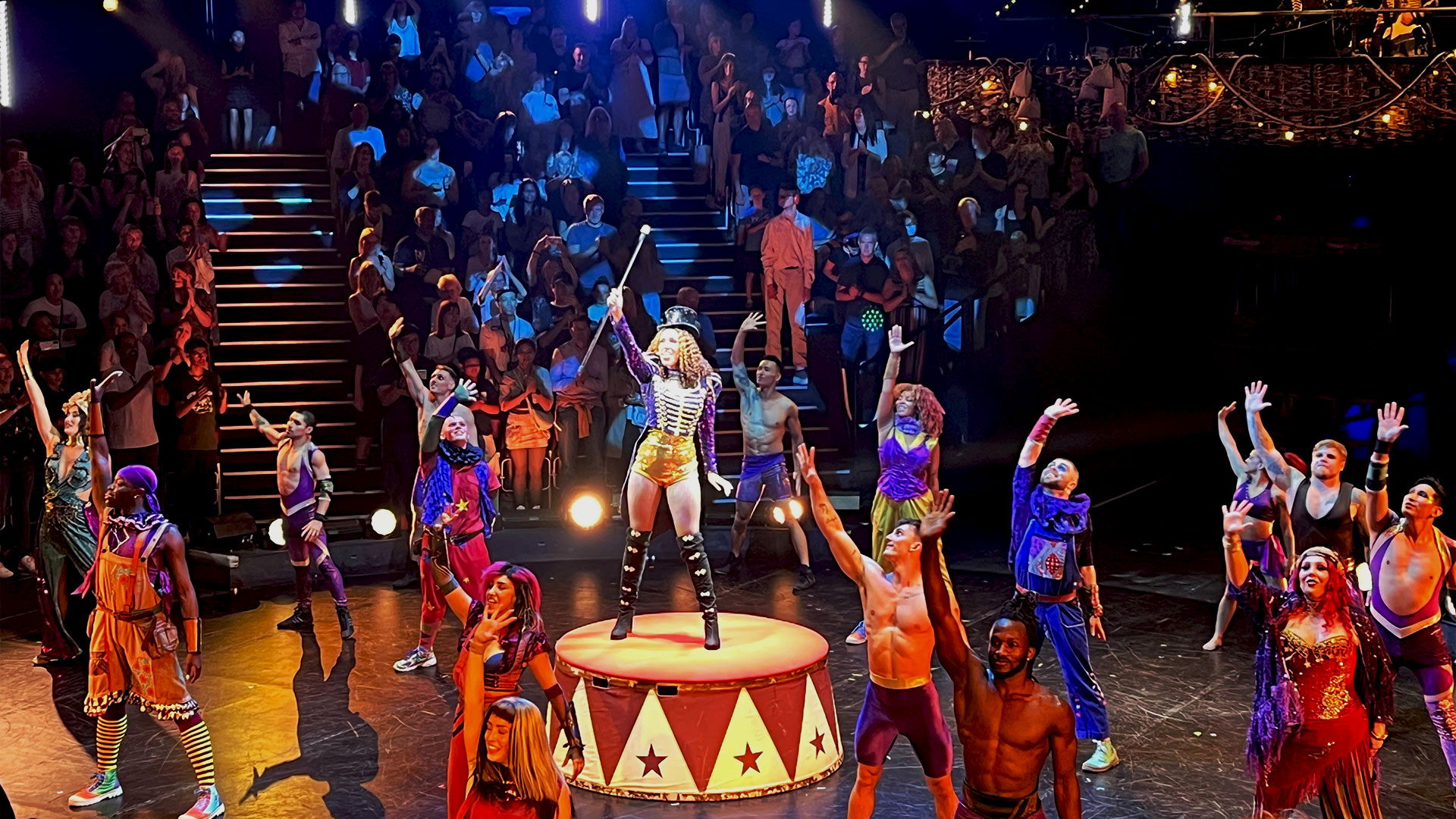
The Come Alive! set design and immersive format
Recreating the vibe of The Greatest Showman without necessarily copying the film was challenging, but allowed the production team to experiment with a new immersive format, bringing a circus show to the heart of London.
The team found it interesting to work on a new creative format, especially when it came to designing the pre-show spaces and bringing a world to life to introduce the main show. The process from ideation to the final product took five to six months. Many elements had to be built around the different acts, as well as the scenic elements. The sets also had to be adapted as the show's narrative evolved, which involved a lot of back-and-forth in the early stages. As with immersive shows, the sets were tweaked until the very last moment, as spaces evolve depending on audience interaction, behaviour and movement – something that is never predictable.
Creating the magic with real-life props
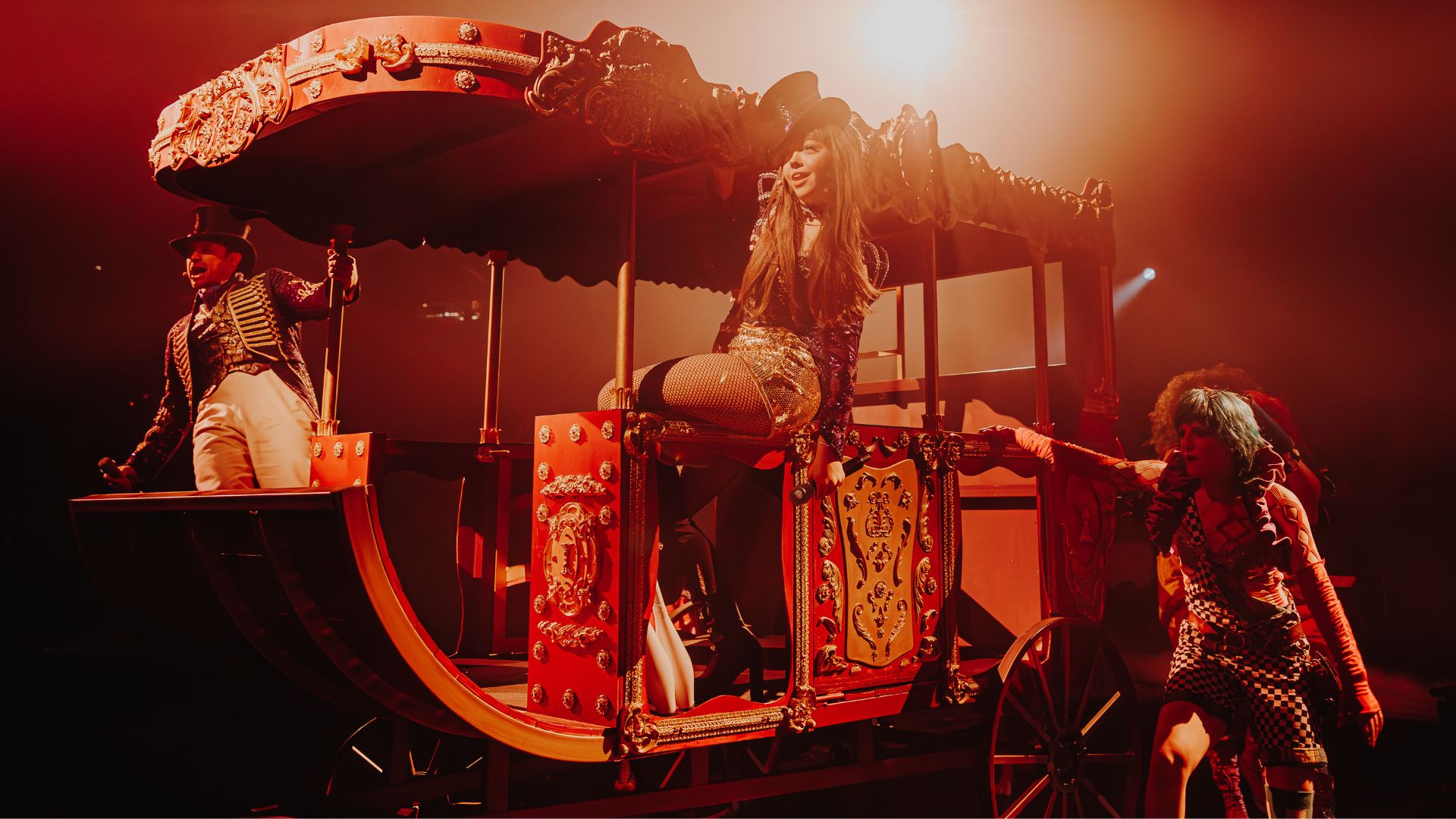
When asked what inspired the aesthetics of Come Alive!, set designer Ruby Law noted that, although the circus is not set at a specific time, it’s both a modern and a traditional circus, reviving the magic of different eras. To achieve this, the team looked at a wide range of references on circus life from the 1840s to the present day to see how people toured in the past. During the pre-show, we see what looks like traditional touring circus living quarters, mixed with more surreal and modern elements, such as hand-painted clouds where the performers would practise before the show.
The props and set pieces visitors can see as they navigate the different areas leading to the Big Top are a mix of original props and those designed and built in-house. The team scoured vintage markets and eBay, and even reached out to travelling communities, from which they obtained the most spectacular prop: the circus wagon. The process of acquiring the travelling wagon for the show offered a glimpse into the culture and way of life of the circus community, with the wagon arriving with a box of biscuits in keeping with their tradition of giving a gift when selling their wagon. As Ruby Law highlights, “all these objects having a previous life adds to the narrative and the richness of the circus family”. The wagon is a key piece in the show and is used in a variety of ways, for example, dancers use it as a key element in their choreography, and the greatest showman performs on it in the closing act.
What to look out for in Come Alive!
Make sure you arrive at the Empress Museum at least one hour before the performance begins to allow yourself enough time to enjoy the pre-show and explore the venue. The backstage area offers a fascinating insight into the world behind the scenes. You can explore the costume and prop rooms, take a look at the office where key creative decisions are made and view previews of costumes featured in the show. If you have time, head to the Sky Terrace to watch the trampolining performers before making your way to the main event inside the Big Top.
As the show begins, you are transported to the heart of a live circus performance, where you discover the story of a new generation of showmen set to some of the most beloved songs from The Greatest Showman. However, the magic of Come Alive! doesn't just come from the set or the costumes. Every act is carefully crafted to showcase the unique talents and personalities of the artists, including aerialists, acrobats, jugglers and physical theatre performers. The routines are designed to appear natural, playful and vibrant, offering audiences a glimpse into the energy and collaboration that takes place behind the scenes.
What’s next for the Come Alive show?
As Ruby Law told me, her work on Come Alive! is never truly finished. They have been considering different ways to adapt the show for touring productions. As the current London venue is unique in terms of its size and the creative freedom it offers, any touring production would need to adapt to a new environment. Law is excited about the prospect of creating an outdoor version of the show, as it would look completely different, particularly in terms of the pre-show elements, while still telling the same story. When I asked Simon Hammerstein, the creative director, about the future of the show, he said that they were considering taking it to other cities, although nothing had been confirmed at the time of our conversation. As for rumours that the new Disney musical The Greatest Showman might come to London after its run in Bristol, Hammerstein points out that it isn't unprecedented for two shows to coexist: Hammerstein concludes that each show deserves its time in the spotlight, just as Mamma Mia! and ABBA Voyage do.
And just as the immersive show celebrated its one-year anniversary in October 2025, with no plans to leave London, the team behind the jaw-dropping, gravity-defying spectacle confirmed that they are planning a spectacular Australian production. The show is set to tour five cities in 2026 with an Australian cast, starting in Sydney and continuing to Perth, Adelaide, Brisbane and Melbourne.
Step behind the scenes, explore the museum, and take your seat under the Big Top. Book your tickets to Come Alive! and see the magic unfold live.