
Everything you need to know about The 90s: Art and Fashion exhibition at Tate Britain in London
- 📍 Where: Tate Britain, Millbank, SW1P 4RG
- 🚇 Nearest Tube station: Pimlico (Victoria)
- 📅 When: 8 October 2026 to 14 February 2027
- 🎟️ Price: £22 for standard entry
- ⏱️ Visit duration: Approx. 90 minutes
- 👥 Who is this for?: Art, fashion and 90s culture fans
The 90s was a formidable time in the world of art and fashion, where self-expression and conformity collided to create a new visual language. From art and photography to fashion, music and design, the decade saw creative boundaries being pushed and long-held hierarchies beginning to break down.
The 90s: Art and Fashion explores how the decade changed British culture through the eyes of Edward Enninful OBE, whose lived experience of the era informs this specially curated exhibition.
Visit London Author Kirstine Spicer attended the preview of the exhibition to get a first look at what visitors can expect from the new show at Tate Britain.
First look: The 90s: Art and Fashion London exhibition
Faithless blasts from a set of nine old-school television sets, Kate Moss in that iconic sheer dress hangs on the wall, and a rainbow of colours covers the walkway to the exhibition entrance, as if you're being swept back in time. You're feeling the 90s before you've even stepped into the galleries.
But listen, if you're expecting a catalogue of supermodel headshots and pop culture memorabilia, you've got this all wrong. The 90s: Art and Fashion is far more nuanced than that, taking you from the outlandish excesses of the 80s into a decade where a generation challenged societal norms, pushed against convention and began changing the narrative on their own terms.
Tate Britain Director Alex Farquharson tells us this is “the most anticipated exhibition of the year” and, having lived through the 90s himself, labels it a period of time, whether you were there or are too young to remember, to look back on in fascination.
A decade "bursting with energy", this exhibition reveals a cultural renaissance, shaped by the brilliant Edward Enninful. Here, you'll find a strong overlap between British art, what Tate Britain is known for, and the fashion of the decade, expanding the stories told at the home of British art.
The exhibition, supported by Alexander McQueen, echoes the same message – a period of time deeply significant to the late designer, when creativity was being expressed in unexpected ways. Years later, those same principles remain. In this sense, it was a no-brainer that the house, founded in 1992, became part of the exhibition.
So, with formidable forces from across the industry, from its curator to its contributors, there is much anticipation around what will be included across the seven spaces. Together, they explore just how multifaceted the 90s were - from music and fashion to photography, identity, cultural change and the artists who were pushing against the boundaries of what was considered acceptable.
The 90s: Art and Fashion London - exhibition highlights
Iconic 90s photography
The wealth of photography throughout the exhibition gives you a varied window into another time, from magazine covers to intimate snapshots of everyday life.
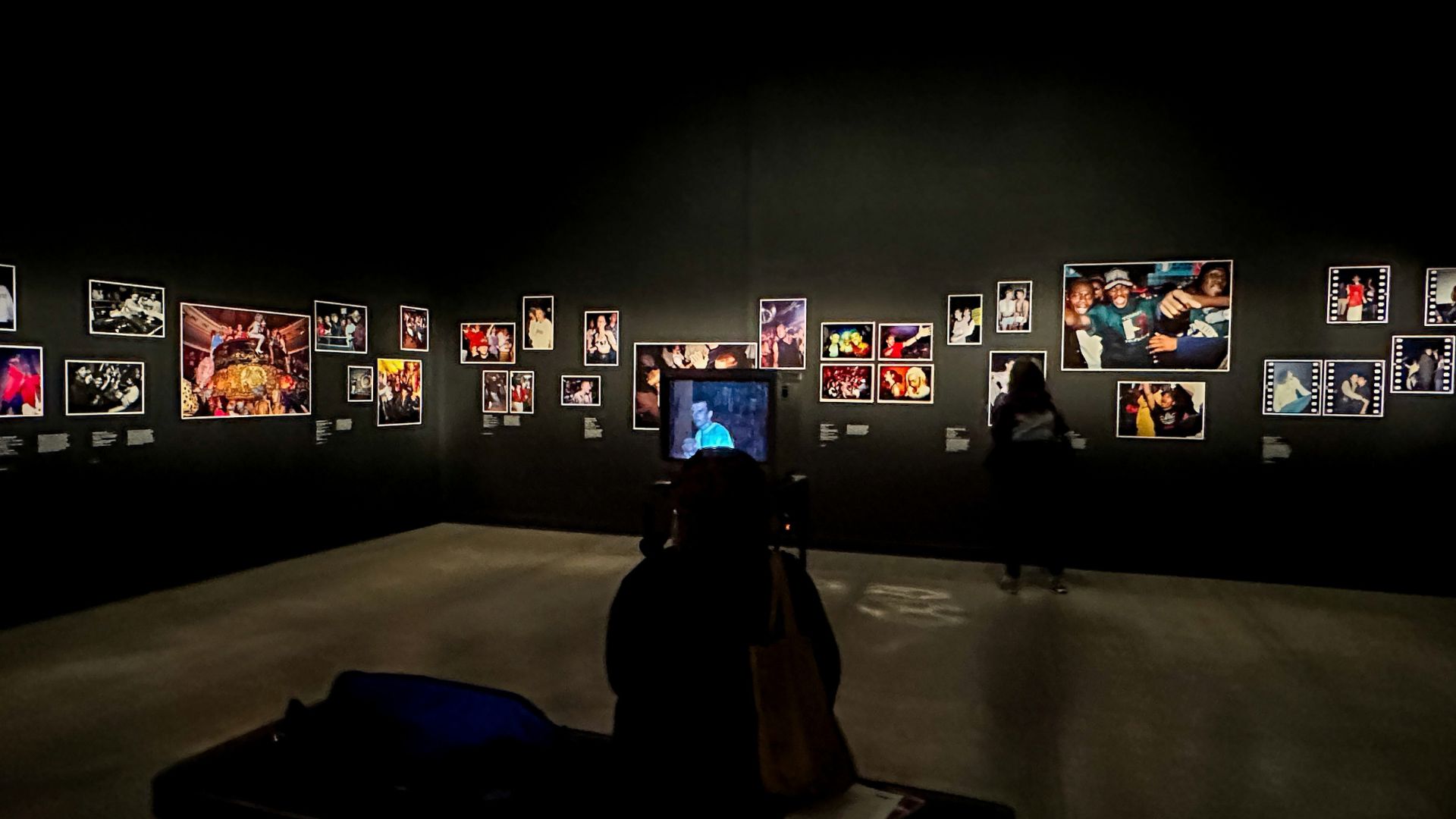
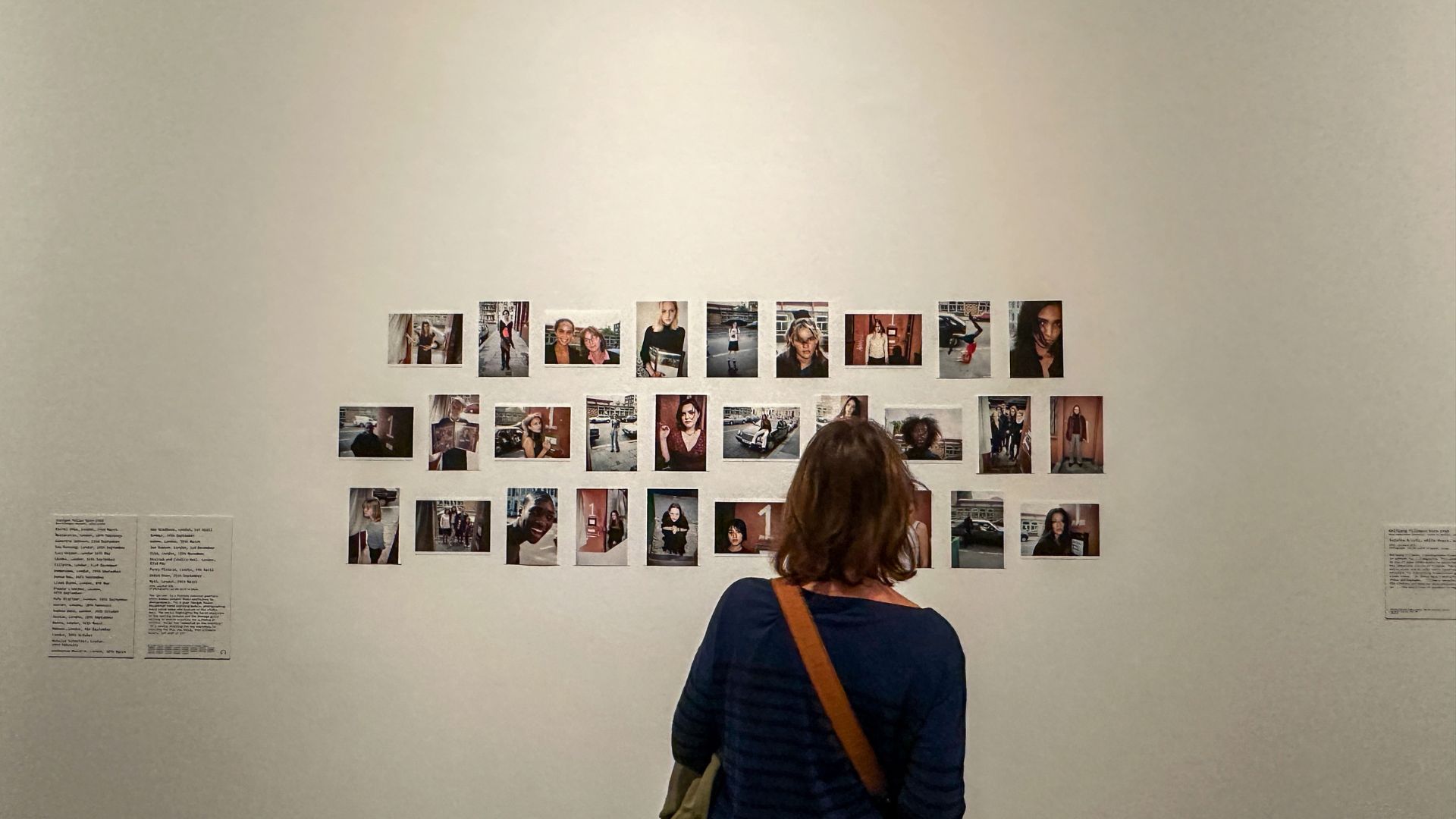
Shots from the 90s party scene, for example, feel surprisingly familiar – it's like looking through family albums, with the fashion, hair and make-up of ordinary individuals instantly transporting you back. While Juergen Teller's casting images will have you lingering for a different reason. An array of individuals are displayed side by side – not to document, but for judgement. Casting is quite a brutal process, where success rests on a single photograph. And here we are now, decades later, observing those same images – not to judge, but as a record of an era and left wondering, what might have made them stand out to him.
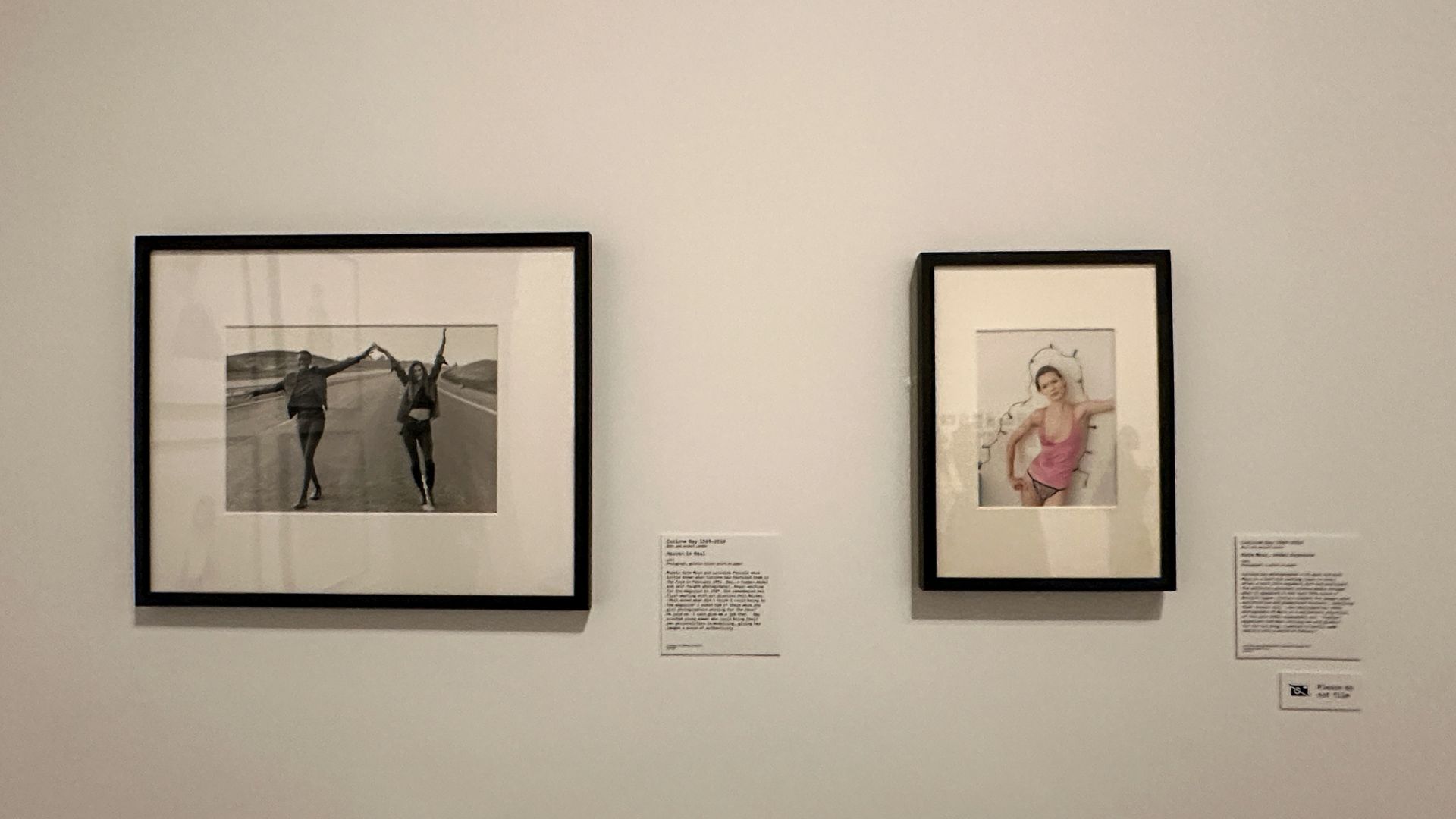
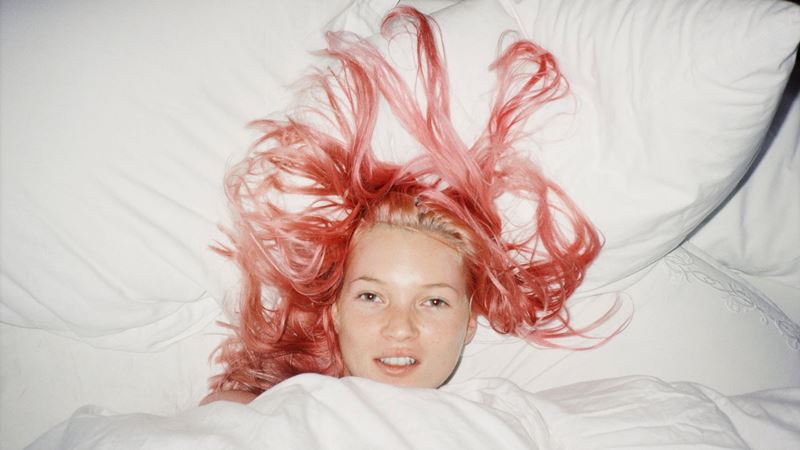
Alongside capturing moments in time, much of the photography in the exhibition intentionally showcases how those behind the camera were leaning away from commercial perfection. Corinne Day, for example, pictures a 19-year-old, fairly unknown Kate Moss looking almost teary-eyed after an argument with her boyfriend, posing in a pink spaghetti-strap top under harsh lights. Although it's somewhat curated, it's still understated, intimate and distinctly of its time.
You'll also see how artists were pushing against societal norms, for example Ellen von Unwerth's black and white photo of Naomi Campbell, in full glam, shaving her legs whilst sat on a toilet. Rather than presenting an idealised version of femininity, it turns the gaze back on everyday life: this is a woman as she is, rather than as she is expected to be.
The artists defining a decade
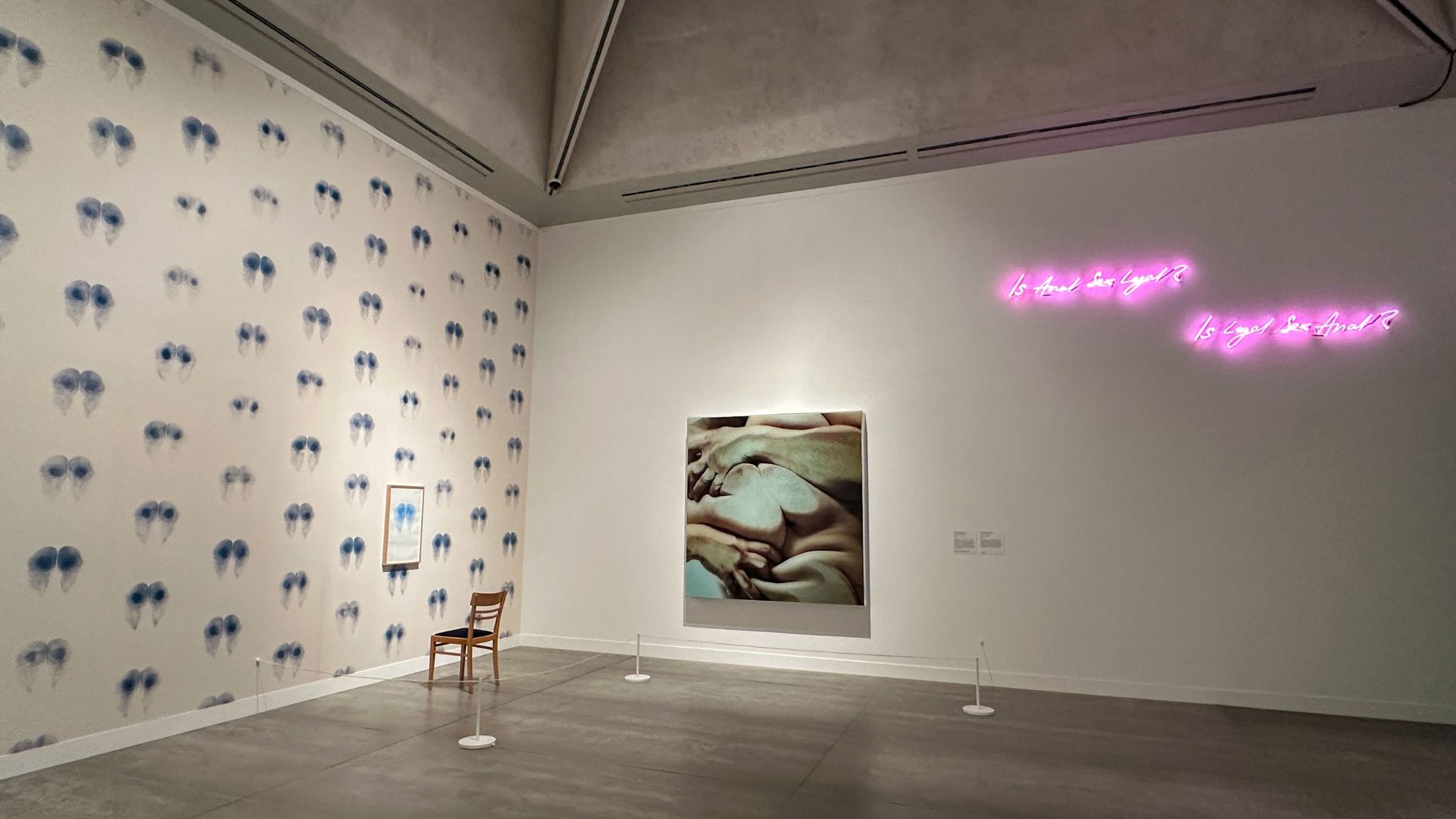
In the 90s, the boundaries between high art and popular culture became increasingly blurred, making this one of the exhibition's central themes. It brings together work by artists including Damien Hirst, Sarah Lucas and Yinka Shonibare, exploring the creative energy that emerged during the decade and the changing relationship between art and wider popular culture.
You'll see artists challenging the rules, from Abigail Lane's wallpaper of bottoms to Tracey Emin's luminescent signs. On the surface, some of these works might seem rebellious or controversial, but dig a little deeper and there's a much more serious conversation around identity, bodies, consent, status and social expectations. Female identity, for so long shaped by male perspectives, was being challenged in new ways – particularly fitting in an era associated with "girl power".
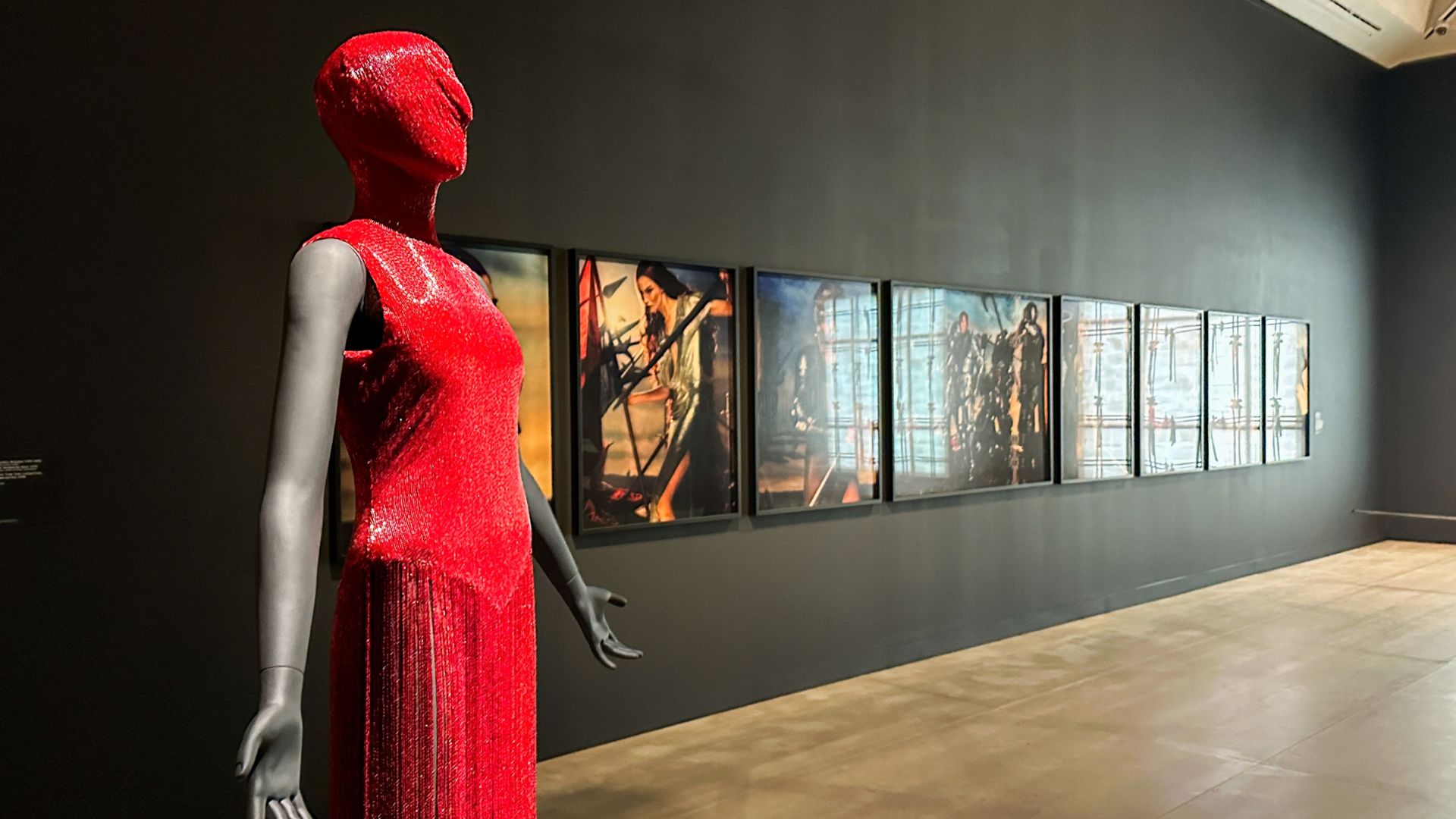
Body Shock is a space within the exhibition where things might become uncomfortable for some visitors. It explores the fragility of the human body, and I found some of the installations genuinely harrowing – but that's the whole point.
This isn't about the familiar notion that beauty is pain. Instead, it confronts something much more complicated through nightmarish creations, pseudo-medieval forms of fashion as armour and an overall sense of savage beauty. Look out for Alexander McQueen's beaded red fringed dress from his Joan collection, a striking addition to the space and just one of many gems pulled from the archives.
90s fashion and design
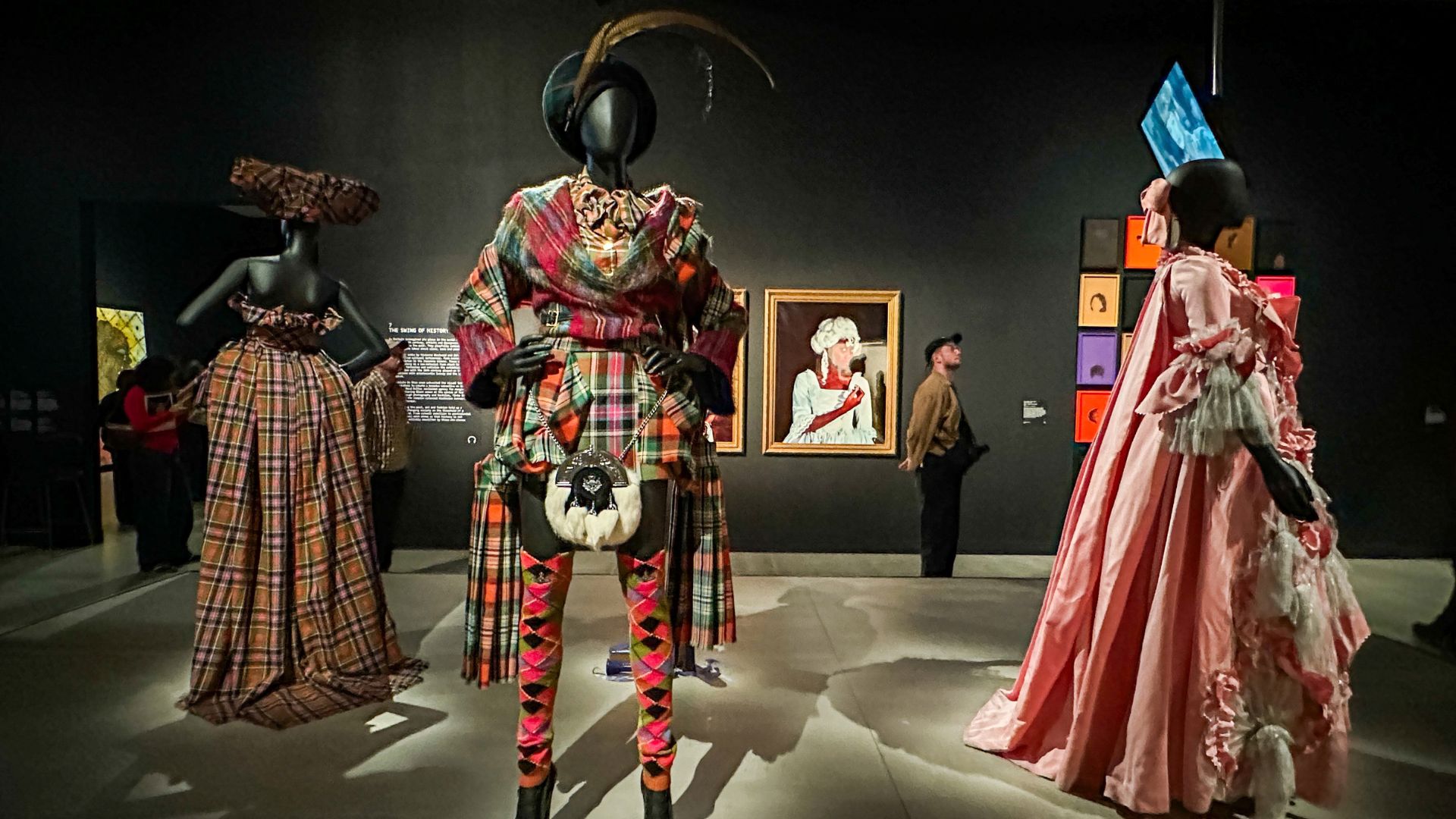
Perhaps one of the most defining features of the era was its fashion. An art form in its own right, creators including Vivienne Westwood, Alexander McQueen and John Galliano explored different mediums and pushed the boundaries of what fashion could be. Clothing became part of a much wider cultural conversation, with designers using it to challenge conventions, make statements and express identity.
For me, the appeal of 90s fashion isn't necessarily graphic tees, low-rise jeans and platform heels; it's the experimentation and creative brilliance of the collections, but also the fashion shows themselves. At this exhibition, you'll find a showcase of that creative freedom.
Ozwald Boateng was one of the designers who surprised me most. Many might be unfamiliar with his story: a Black British tailor who breathed new life into Savile Row in the 90s. Opening a boutique at just 28 years old, he took the boxy, broad power suit associated with 80s menswear and streamlined its silhouette, combining British tailoring with vibrant colours inspired by his Ghanaian heritage. Like much else in the exhibition, it's fascinating to discover the multiple narratives of the decade and the ways in which creativity meant celebrating difference.
Further along, you'll find the recognisable loud plaid, over-the-top frills and layered flair of the likes of Vivienne Westwood and John Galliano. It's a moody room brought to life through fashion pieces, striking artwork and catwalk footage that gives movement to the mannequins before you. You almost wish somebody was parading around the room in one of the pieces, just to experience it as it would have been seen on the runway.
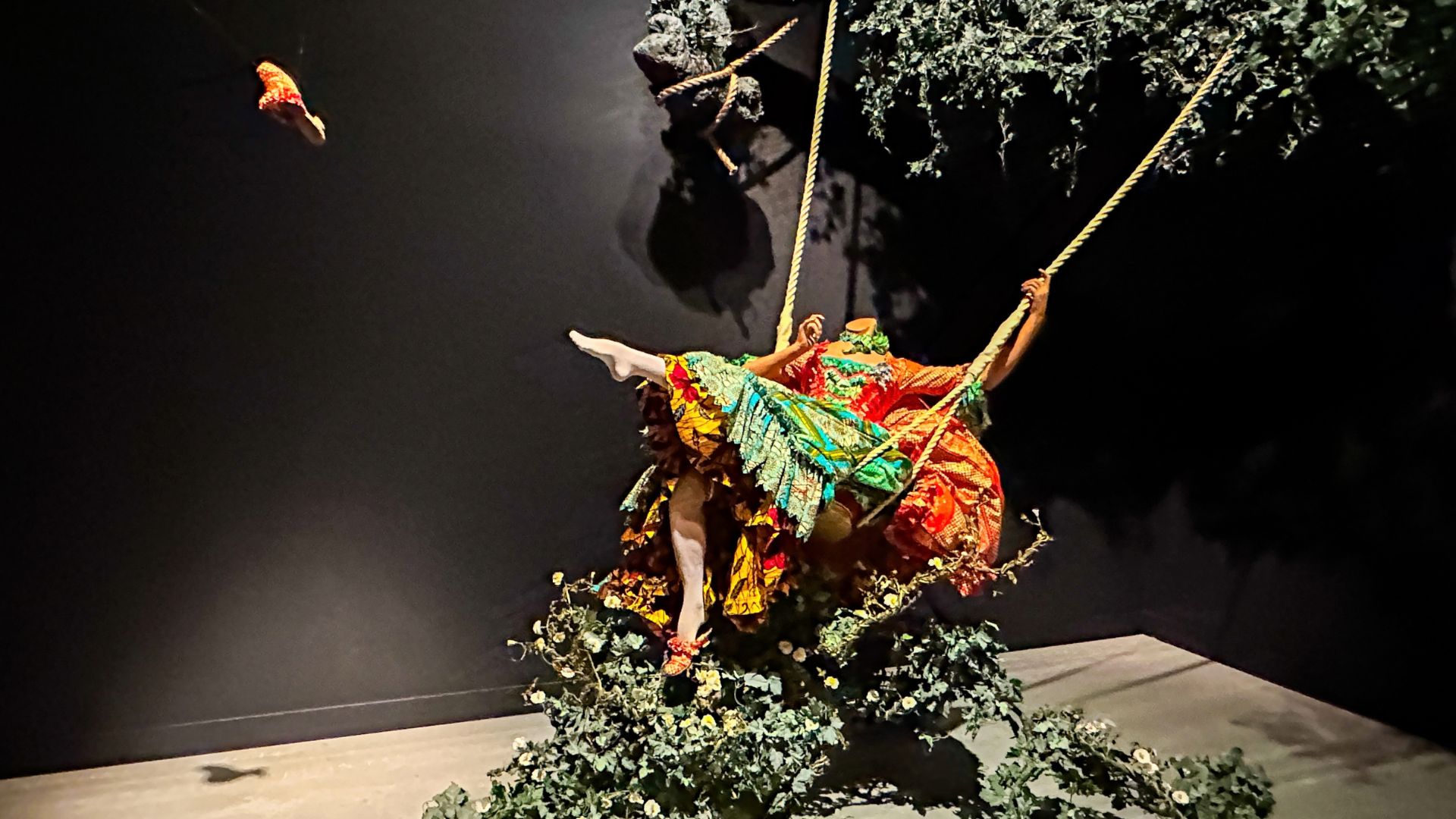
The standout piece in this room, however, is Yinka Shonibare's Swing (after Fragonard). You can find the original artwork in the Wallace Collection, but here it has been completely reimagined. The elaborate gown references the opulence of 18th-century Rococo fashion, while the headless figure and vibrant textiles introduce a more complex message around colonial history, wealth and privilege.
It's a striking installation, aptly positioned at the end of the exhibition, and embodies what the exhibition does so well: take something familiar, transform it and invite you to look at it differently.
Key things to see at The 90s: Art and Fashion at Tate Britain
These are some of the highlights worth looking out for during your visit.
- The Sound of the 90s: Head into the I Can't Get No Sleep gallery - a celebration of 90s club culture. It's one of the spaces where I found myself lingering longest, with its mix of music, photography and stories from people across different walks of life.
- Vinca Petersen's Diary of an Era: A kaleidoscope of diary entries, photographs and memories from Petersen's time living in London squats, attending raves, free parties and festivals. It's a raw and personal insight.
- Influential publications: Take a look at i-D and Dazed & Confused, which were at the forefront of the era's anti-fashion movement. Before social media, magazines were one of the ways people consumed culture, fashion and ideas – and their influence extended far beyond the page.
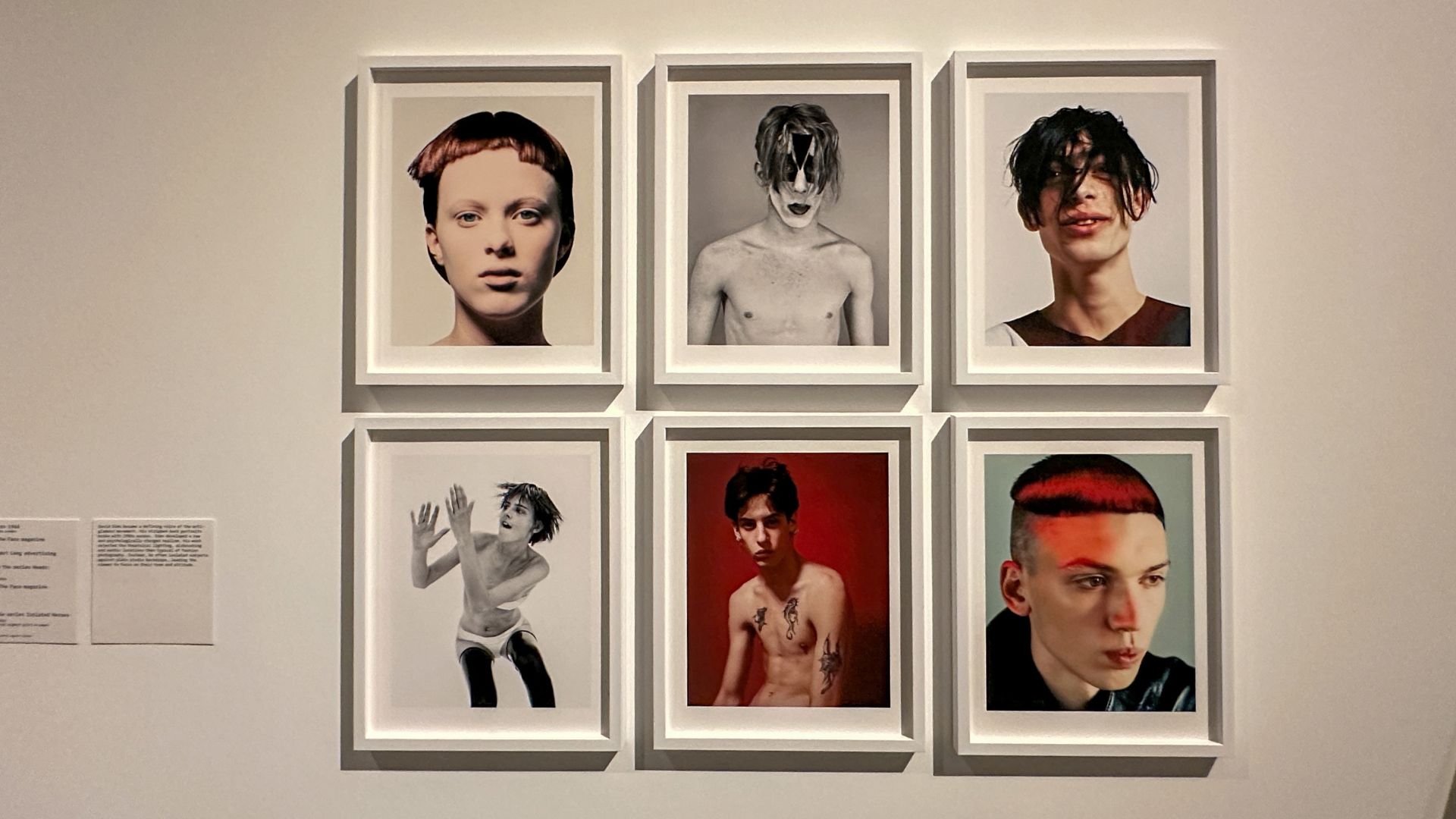
- David Sims' Simple Six: Six stripped-back portraits that perfectly capture the photographer's anti-gloss approach. Rather than airbrushing away imperfections or creating an overly polished image, Sims allows each person's personality, attitude and presence to come through.
- Sam Taylor-Johnson's work: Look out for work by Sam Taylor-Johnson, who challenged the sexist messages of tabloid media and explored female desire, identity and power.
- Make time for the multimedia: Don't just walk from artwork to artwork. Take time to watch the catwalk footage, listen to the audio and explore the screens dotted throughout the galleries. You can also download the audio guide in advance, which offers additional stories and context behind some of the works.
Why you'll love The 90s: Art and Fashion at Tate Britain
How do you define an era in one exhibition? It’s a seemingly impossible task, but The 90s: Art and Fashion sets out to capture the energy, experimentation and creative freedom of a decade whose influence is still being felt today.
The exhibition is curated by Edward Enninful OBE, whose own experience of the decade informs this exploration of its cultural legacy. Rather than simply telling us what the 90s looked like, the exhibition offers a more personal lens through which to explore the people, creativity and cultural shifts that defined the period.
What I loved most was how unexpected each gallery was. In the 90s, people were either not conscious of the camera, and if they were, it was raw and intentional rather than polished and refined. Across the exhibition, there is a real sense of people taking matters into their own hands, whether that's through art, fashion, music or the way they chose to express themselves.
If there's one thing I took away from the exhibition, it's that the 90s weren't just about looking different. They were about thinking differently. And in a world where we consume so much every day through our phone screens rather than lived experience, it made me consider just how individual I am.
Perhaps that's what makes this exhibition more than just a nostalgic trip back to the 90s. It's a reminder to be curious, to challenge the expected and, every now and then, to do things a little differently.
Top tips for visiting The 90s: Art and Fashion at Tate Britain
- Travel light: There are bag checks on entry and the exhibition can get busy. The lighter you travel the better, but if this isn't possible, make use of the cloakrooms on the lower level.
- Take your time: Allow at least 90 minutes to explore the galleries at a comfortable pace. The plaques alongside the artworks offer fascinating insight, so you'll want time to pause, reflect and learn.
- Purchase the smartphone audio guide: Hear stories from curators, experts and contributors, use your own headphones and follow along at your own pace.
- Pick up a copy of Tate Etc.: The Autumn 2026 Issue 71 edition has you thumbing through a decade of art and fashion. At £9.50 per issue, it also makes a great souvenir.
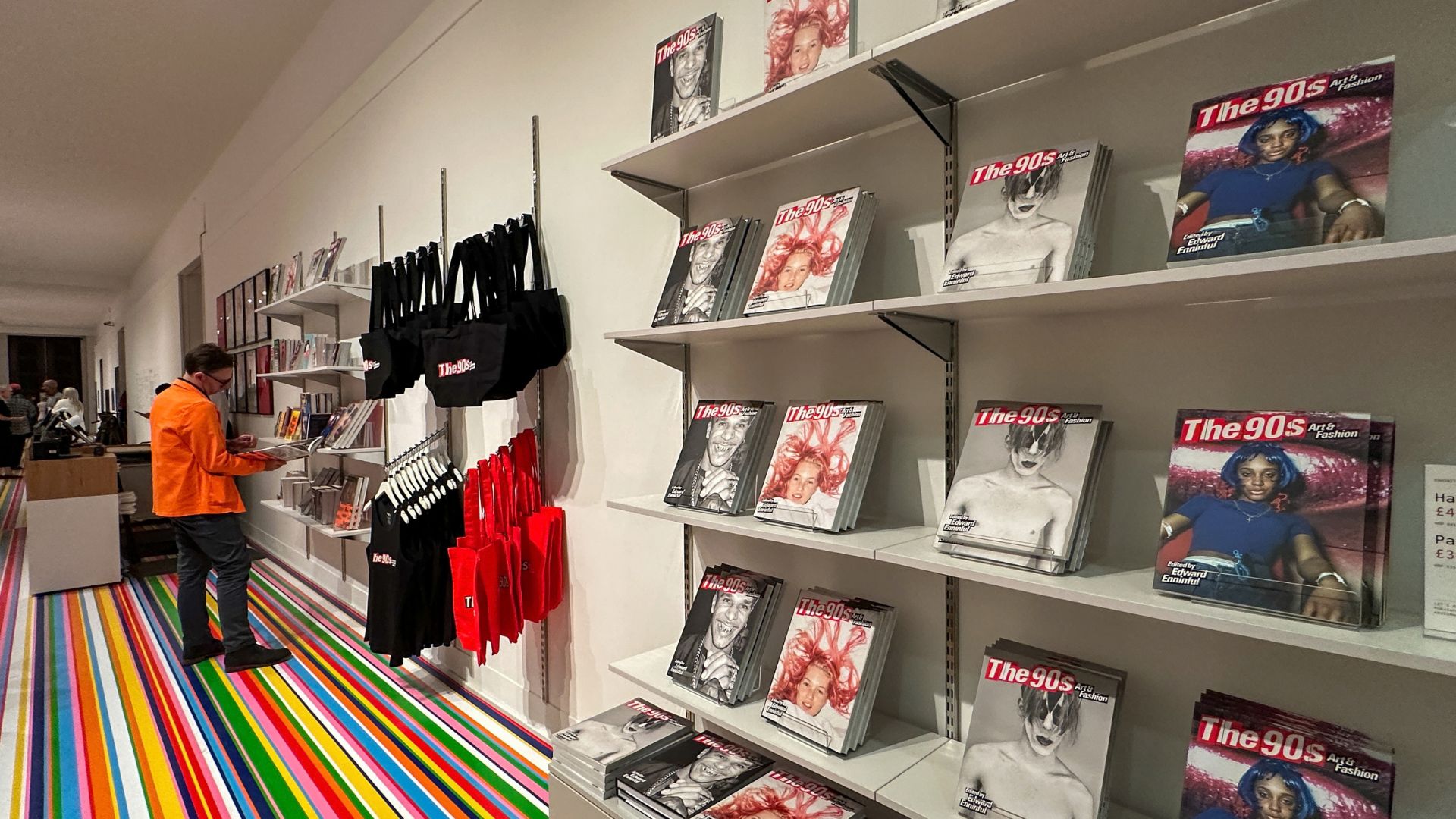
- Don't skip the gift shop: Leave time to browse the exhibition shop, which stocks prints (pick up the exhibition poster for £10), keychains and T-shirts, alongside more unique items such as cassette headphones and bespoke jewellery. Tate members also get special discounts on selected items.
- Explore the rest of the collections: Tate Britain is free to visit and has a vast collection of impressive artists, from Francis Bacon to J.M.W. Turner, as well as exciting temporary installations. Plus, the staircase under the dome is too gorgeous not to take a photo of!
How to visit The 90s: Art and Fashion at Tate Britain
The 90s: Art and Fashion at Tate Britain will be showing from Thursday 8 October 2026 until 14 February 2027.
Tickets for The 90s: Art and Fashion are available online. They cost £22 per person or are free for Tate members. Those aged between 16 and 25 can bag tickets for just £5 as part of Tate Collective.
How to get there:
Tate Britain is located in Millbank on the river Thames, with the nearest Tube station being Pimlico on the Victoria line.
More top exhibitions in London in 2026/27:
More 90s things to do in London
The 90s might be the focus of Tate Britain’s latest exhibition, but you don’t have to stop there. From nostalgic food and drink to throwback nightlife, vintage fashion and cultural gems, there are still plenty of ways to channel the decade around London.
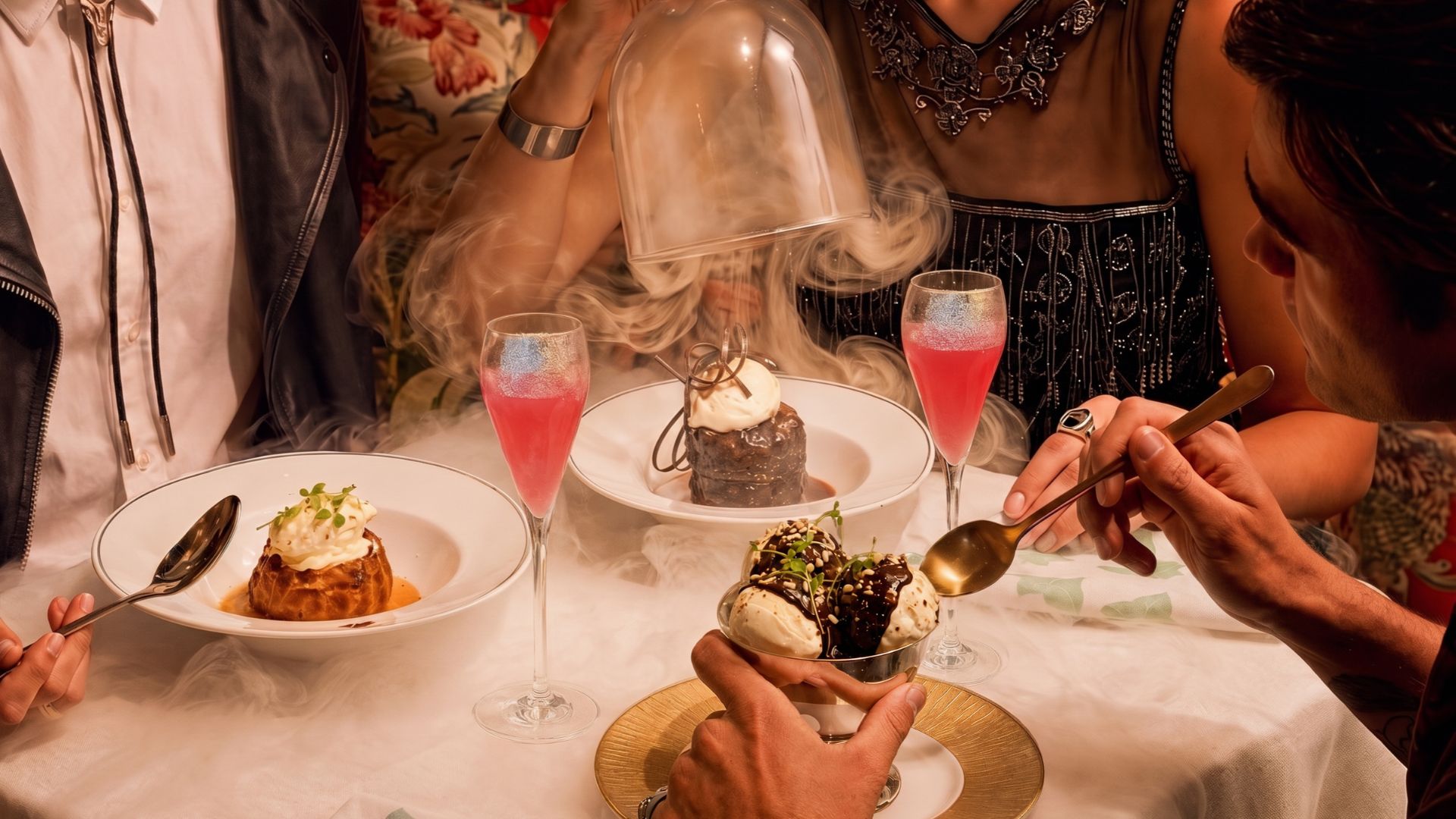
- Tuck into a culinary celebration of the 90s at Cool Britannia at The Ivy: Step into a nostalgic world of 90s-inspired food, cocktails and design, with elevated takes on some familiar British classics. The treacle pork and pineapple is a particular highlight, but save room for pudding, where more nostalgic favourites get a delicious upgrade.
- Get down at Bunga 90: Fancy a proper throwback night out? Bunga 90 on Drury Lane is a 90s-inspired karaoke club where you can sing along to your favourite classics while soaking up the nostalgic atmosphere.
- Take a silent disco walking tour: Put your dancing shoes on and take to the streets on a Silent Disco Walking Tour, complete with a drag queen host and a soundtrack packed with 90s bangers.
- Go vintage fashion shopping: The 90s are firmly back in fashion, so why not hunt down your own piece of the decade? Browse London’s vintage shops for everything from denim and graphic tees to leather jackets and statement pieces.
- Discover 90s fashion and music at V&A East Storehouse: Head to V&A East Storehouse to discover fashion and cultural objects spanning the decades, including notable pieces by designers such as Vivienne Westwood and Alexander McQueen. You’ll also find objects connected to music and popular culture, offering another glimpse into the creative world that shaped the era.