

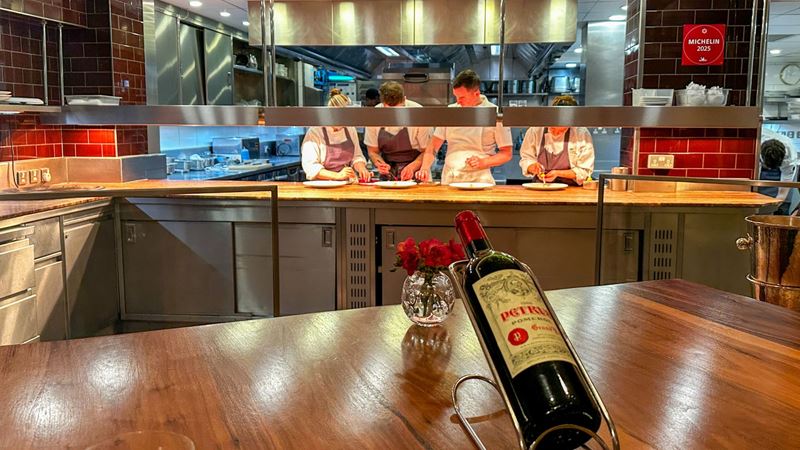
Gordon Ramsay has built an empire of restaurants across London - Pétrus is one of his more intimate establishments and has been a staple on the London food scene since 1999.
The Chef's Table at Pétrus offers diners a chance to become part of the full experience. Seated within the kitchen, you are close up to the action, with an immersive encounter that takes you beyond the pass and into the heart of the kitchen.
Join me as I try the Pétrus Chef's Table first-hand, guided by Executive Head Chef Orson Vergnaud.
Discover the Chef's Table Experience at Pétrus
Inside Pétrus: Belgravia’s Michelin-star restaurant
Belgravia is one of London’s quaintest areas, and the perfect setting for this cosy Michelin spot. Located just off Motcomb Street, a charming enclave known for independent boutiques, stylish cafes and luxury shops, the discreet entrance gives little away of the fine dining experience within.
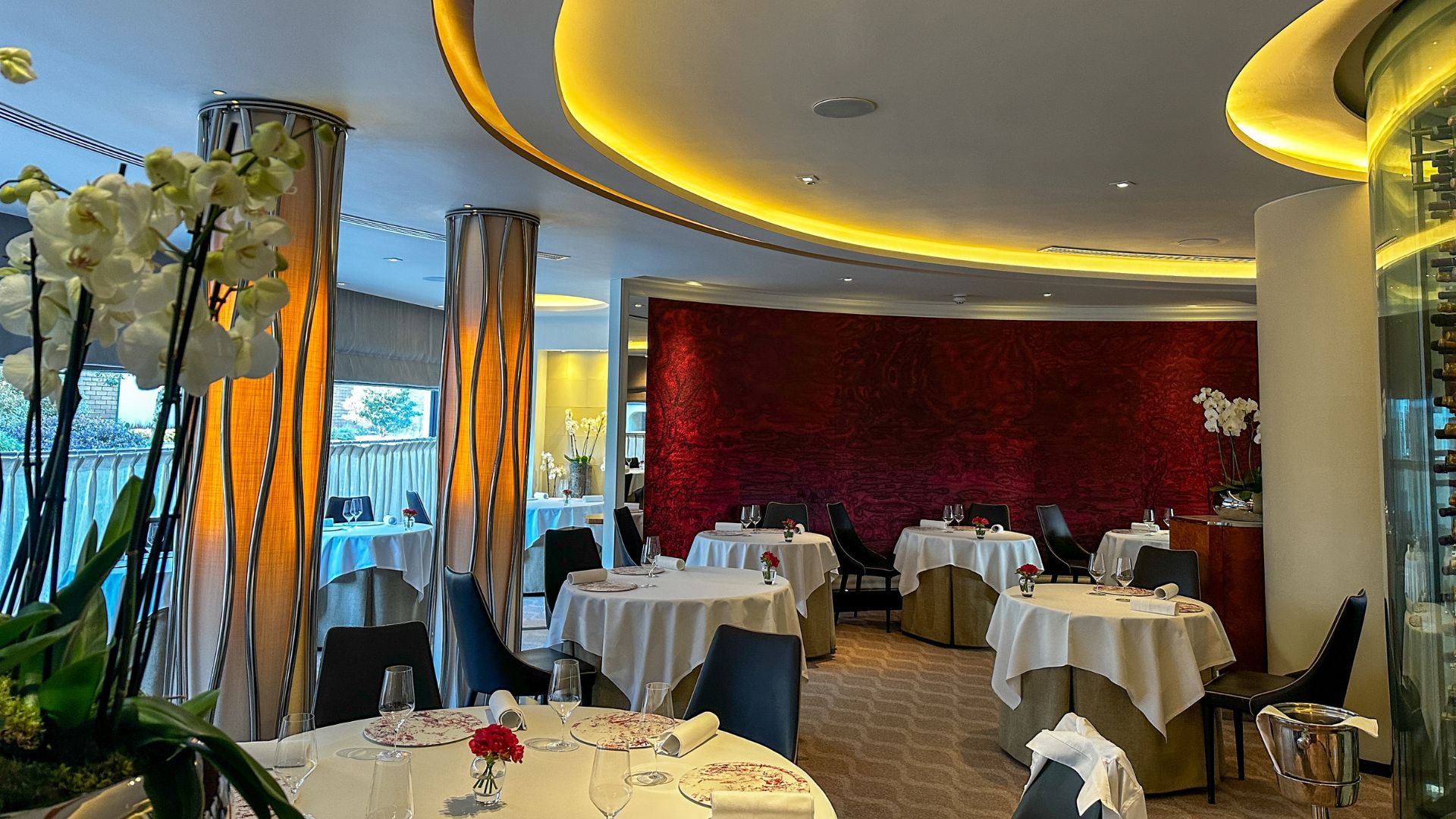
Entering the restaurant, I receive a warm welcome from the friendly team. Soft furnishings are dotted around the room, and a bold red wall forms the backdrop, which, I’m told, has a particularly striking impact in the evenings. At the heart of the space is a large circular wine cellar, appropriately sitting at the centre of the restaurant, like a library of sorts. If you’ve ever been to the British Library, it’s reminiscent of the towering glass cabinets – but instead of historic novels, you’ll find some of the finest old vintages. Including, of course, bottles of Pétrus – but be ready to part with a fair few pounds should you like to try the namesake tipple.
Subtle nods to wine can also be found throughout, such as the placemats which are designed to resemble wine splashed across a white tablecloth by merrymakers as they enjoy their meal.
Experiencing Pétrus: What is included at the Chef'sTable?
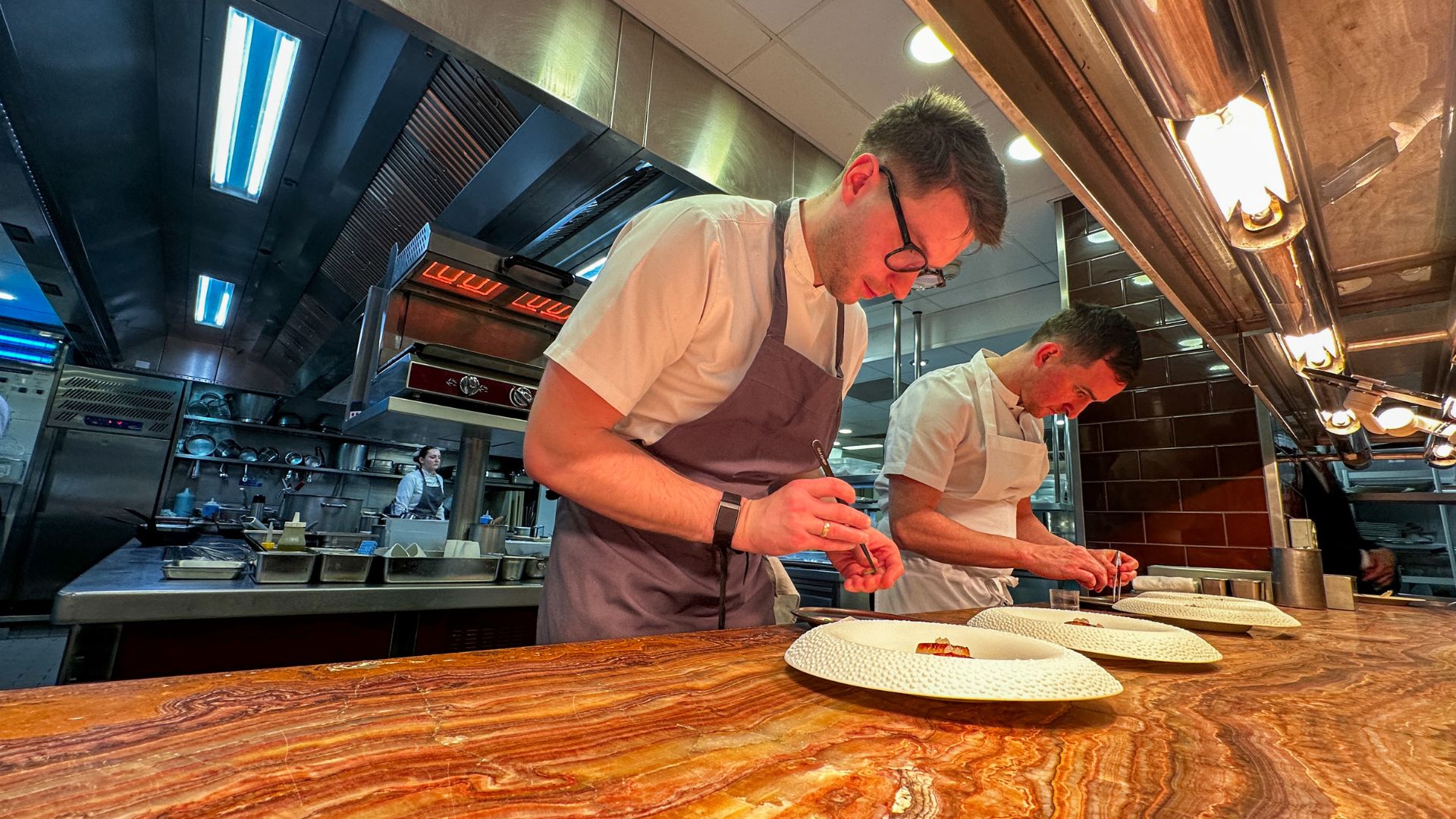
After taking in the ambience of the upstairs dining area, I descend into the kitchens, leaving behind the serenity of softly playing music and towards the whirring of ovens and clatter of pots and pans.
Just as the name suggests, the Chef'sTable allows diners to become a part of the beating heart of a Michelin-starred restaurant. Preparations are done ahead of the guest's arrival, but all elements of cooking are on show. The table itself is perfectly positioned in front of the pass, with one chef’s station directly to our left. The half-moon table is ideal as it means that no one in the group is missing out.
There are many restaurants where chefs prepare food in front of you, from table-side carving to intimate counter-tops, but this is a different experience entirely. It’s completely unfiltered. Unlike most open kitchen set ups where so much of the kitchen and its workings are still tucked away from view – here nothing is hidden. Sitting at the table, my senses are awakened – I smell the array of ingredients cooking, I hear chefs discussing service, I see the plumes of steam and fire leaping from the pan. And as for taste, well, this was catered for in abundance.
As someone who enjoys the pageantry of dining out, Pétrus takes it to the next level, and I couldn't wait to see the masters at work.
The meal as a conversation
The experience is kicked off with an introduction from Head Sommelier Milena De Waele, who asks how we’d like to start. She explains the option of adding a wine pairing, sampling a delicious selection of tipples perfectly matched to each dish.
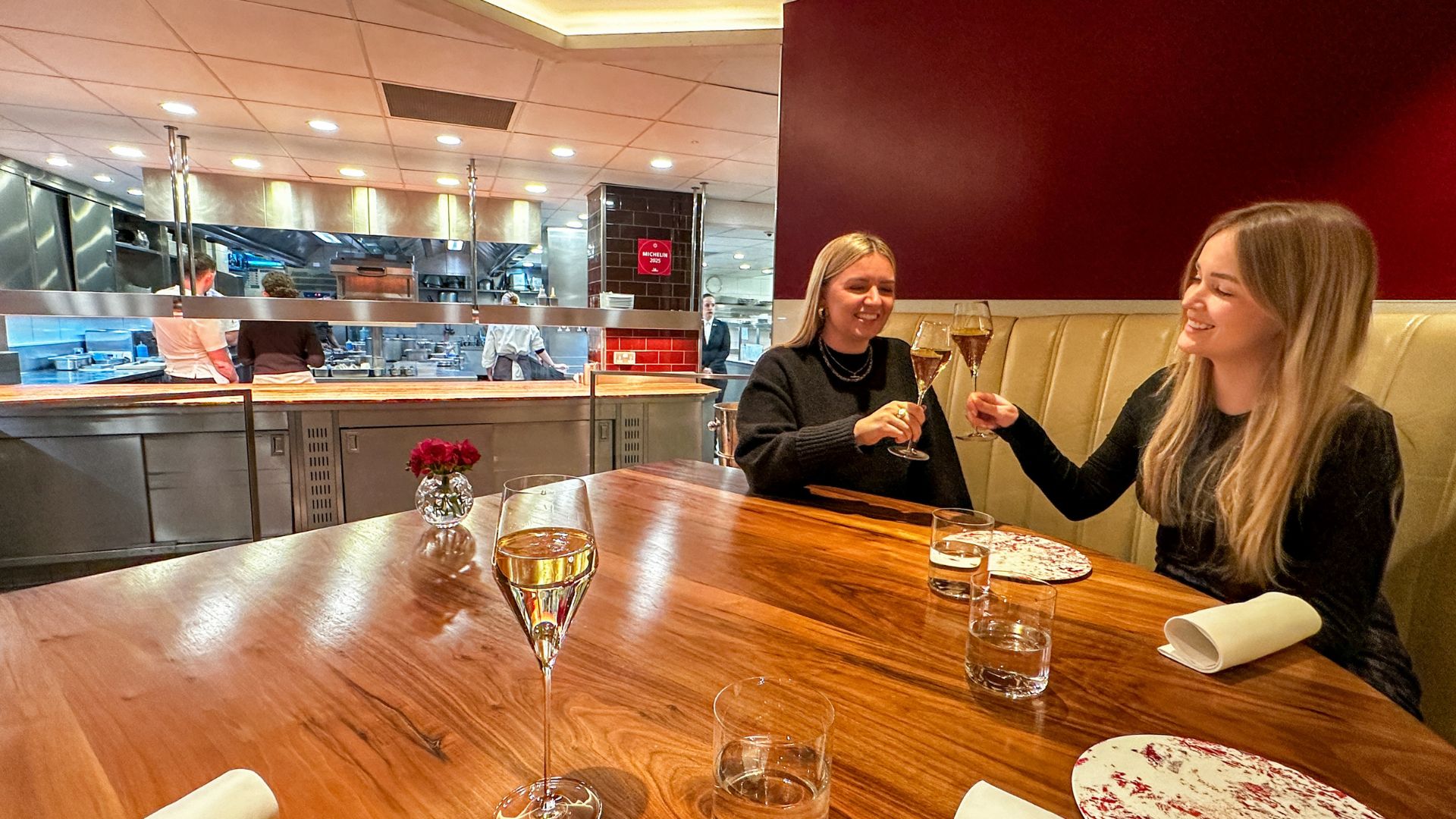
On this occasion, we start with a Palmer champagne – a blend from seven different suppliers. “You’ll find this across the Ramsay restaurants in London,” she tells us, “and here, we like to serve it as a Magnum.”
Before the meal begins, we’re given the option of knowing which dishes we’ll be enjoying or whether we’d prefer it to be a surprise. One for a bit of mystery, we opt for seven courses of the unknown.
The food: Dining at the Chef's Table at Pétrus
I know that Michelin-star dining can make some people nervous, but at Pétrus that’s not something you have to worry about. The food is ambitious, but it's also generous and considered and you can work with the team to adapt the menu to your taste.
A playful start: curious canapés
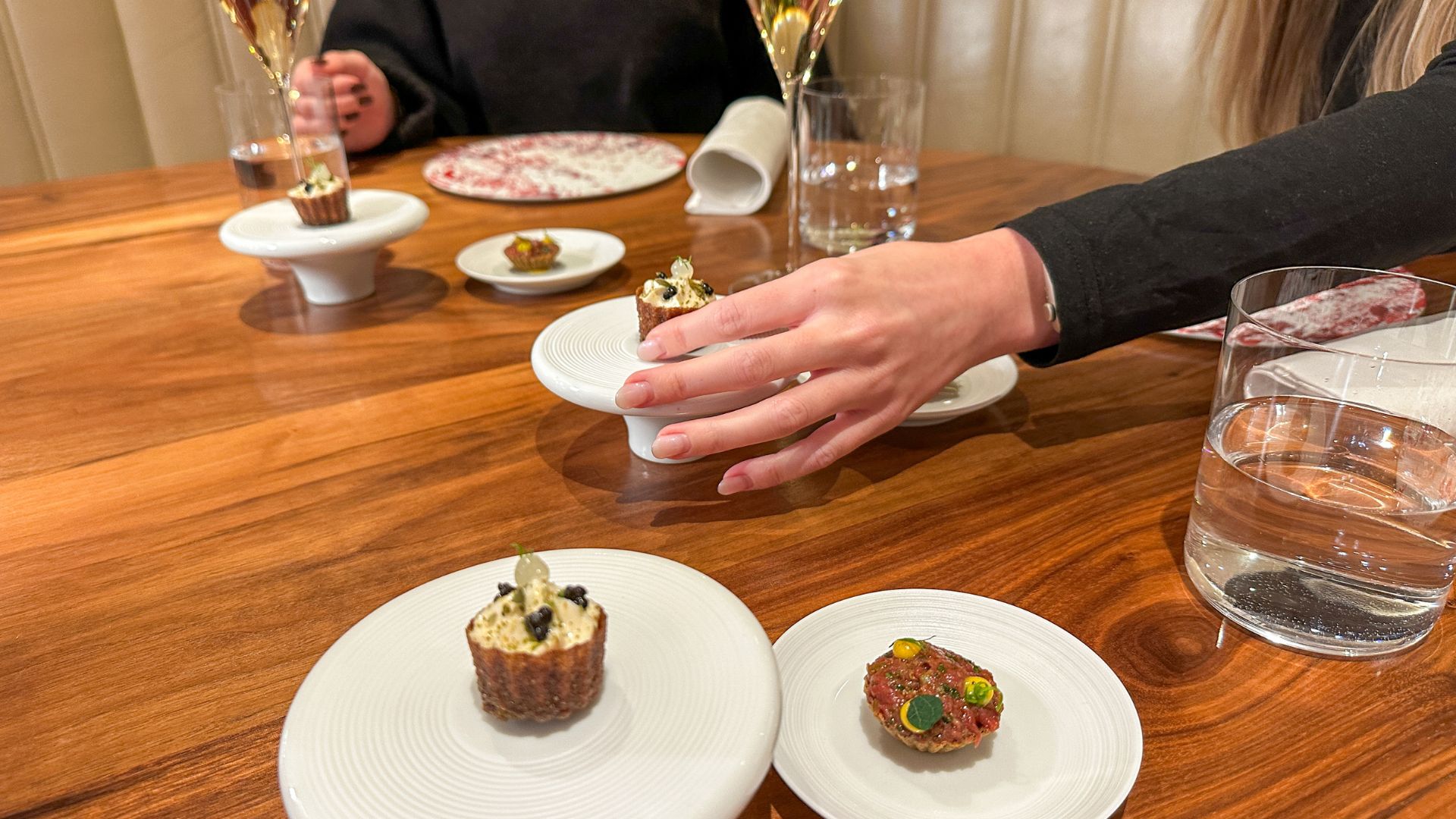
We begin with canapes. A miniature introduction to the food journey that lies ahead of us. Each dish arrives on small white plates, allowing the ingredients to shine. The presentation is refined, not fussy – rather than not wanting to touch it, you are drawn by the sight and smell to just tuck right in.
As the waiters place food on the table, they introduce themselves and talk us through the creation, explaining flavour combinations and specially selected ingredients. Chef Fleur then welcomes us, talking through the dishes and gently setting the tone for how the meal will unfold: open, conversational and led by the people behind the plates.
Watching the craft unfold between courses
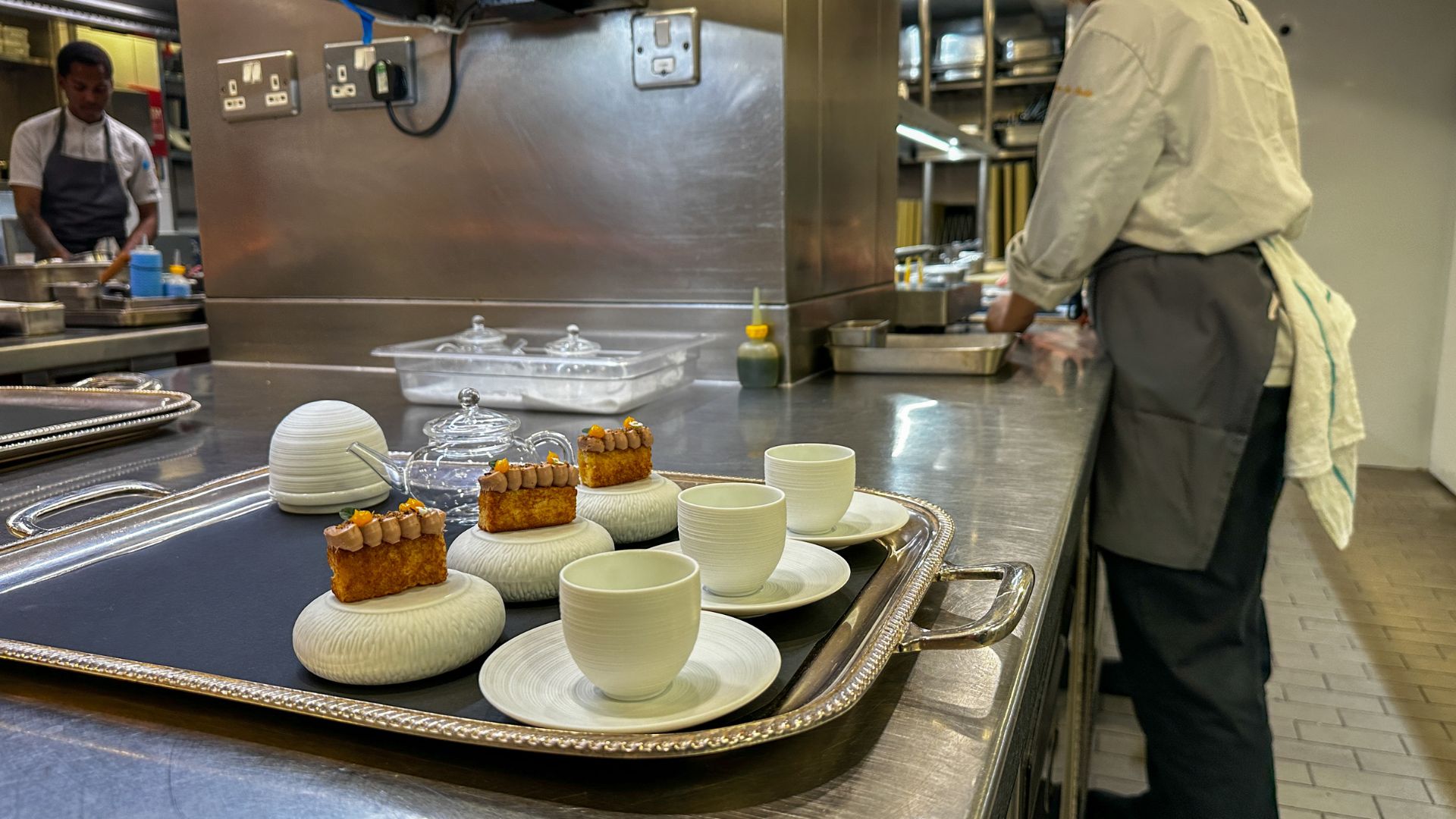
The brioche and broth tea is an early highlight in the second course, showcasing how something seemingly simple can conceal hours of thought and preparation. A delicate brioche loaf, impossibly light and crisp at the edges, is adorned with an intricately piped pate, decorated with flowers, paired with a comforting broth.
As each plate is cleared away, my curiosity builds. Clues arrive in the form of cutlery: a spoon and a fork. Conversation stirs around the table – guessing what might be coming next – and this, it turns out, is part of the joy. You’re not just eating... you’re engaged and invested. Eyes are drawn to the workstations – who might be preparing the next dish, how they are working and what might appear next.
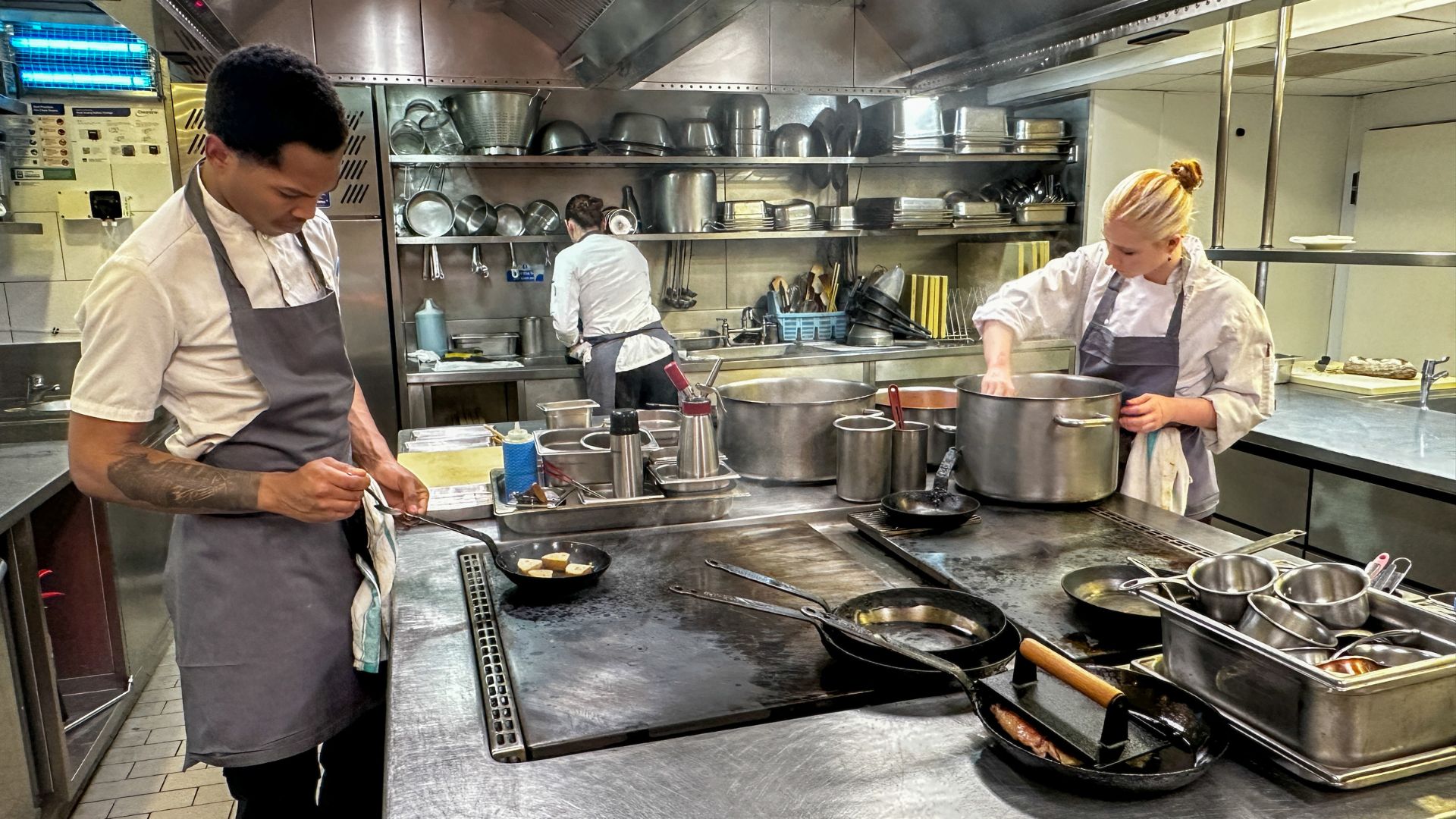
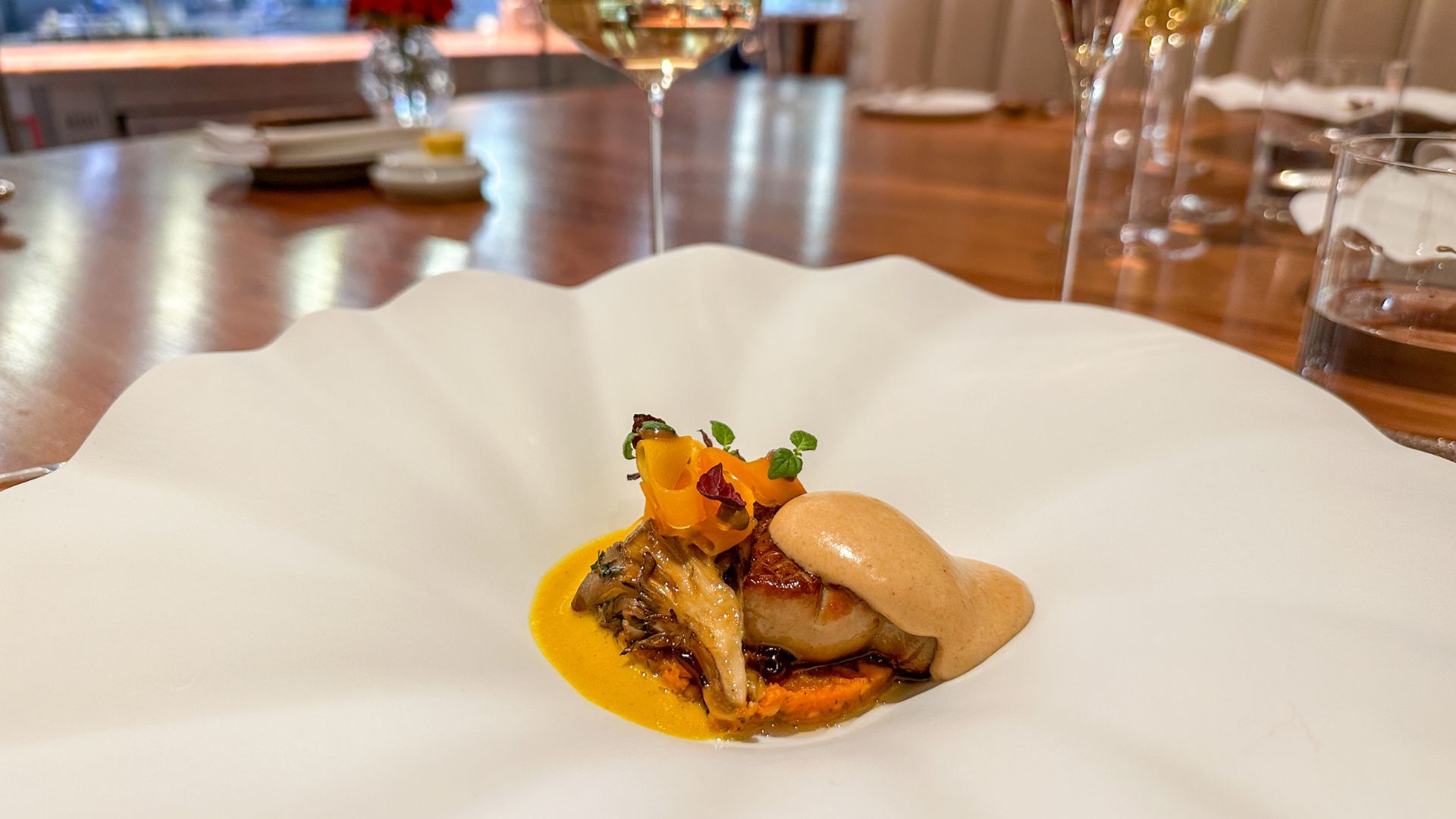
Between courses, I see the chefs work their magic. In the hot section, foie gras is basted slowly and methodically, coated in butter to achieve just the right tenderness and depth of flavour. Moments later, that same dish appears in front of me: a pillow-like piece of foie gras set atop smoky pumpkin, finished with an unexpected foam. As those at the table try to figure out the flavour, the foam, we learn, is brioche soaked in milk and transformed into a sauce. The contrast of flavours is precise and satisfying. I've had pumpkin, I’ve had foie gras – but never like this.
Another standout dish is the Isle of Skye Scallop. Succulent and perfectly cooked, they’re paired with a sharp lemon gel and silky olive oil foam. I just love the use of colour against such a simple ingredient, and the wine selected by Milena complements it perfectly.
As we discuss the dishes, Milena reminds us that what truly defines Michelin cooking is the thought behind the ingredients. The fish course is a perfect example, featuring a sauce made using vin jaune – a pale yellow-white wine found in the Jura mountains in northern France. This wine, which is aged for more than six years, is combined with fish stock and cream, bringing a delicious savouriness to the dish. Popular in the 1970s and still prized in Michelin kitchens today, it’s a sauce I want to take home by the bucketful.
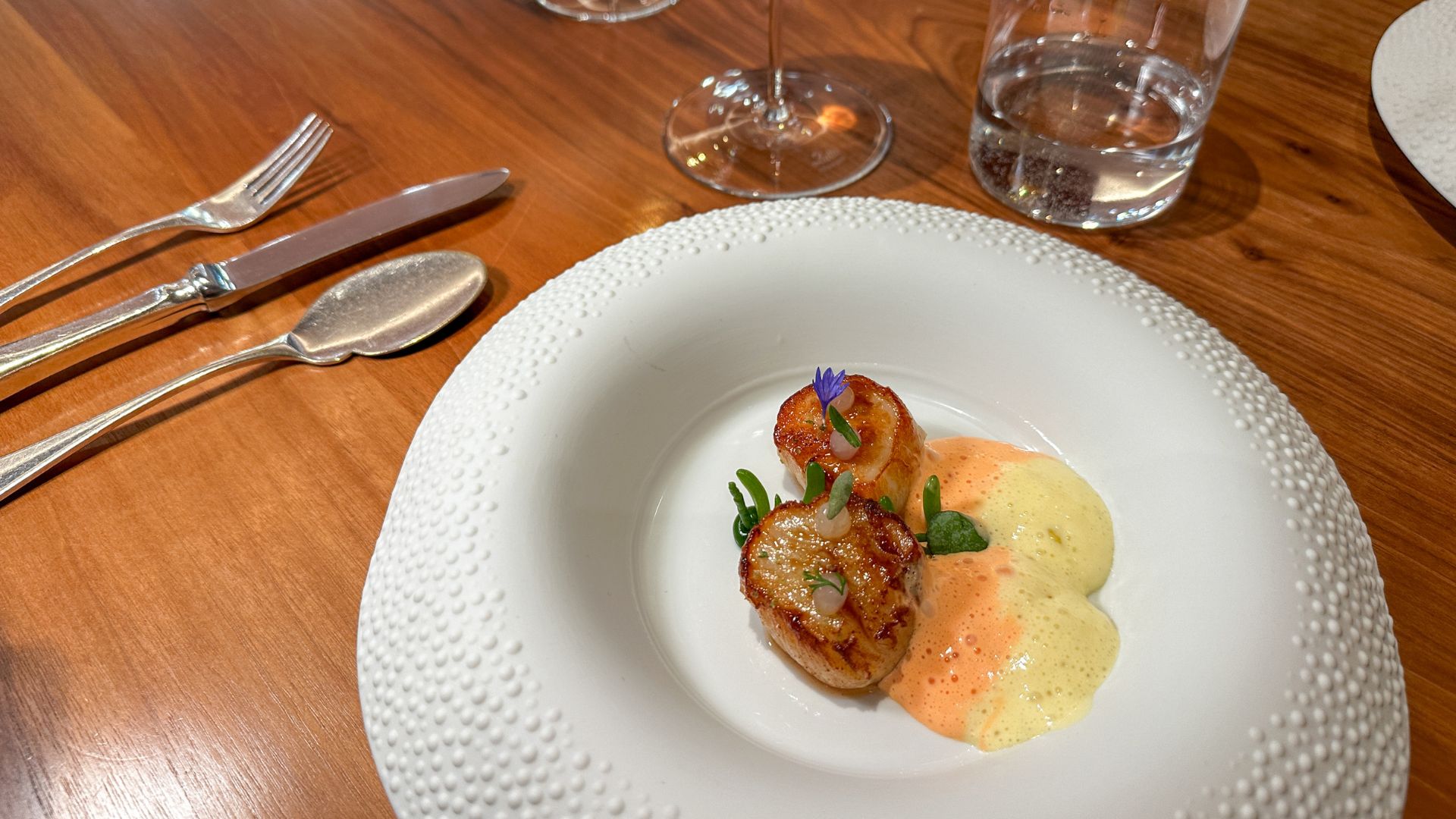
The same could be said for the unapologetically punchy Roquefort sauce that's paired with the venison and beetroot course. A few ingredients, presented in multiple forms, encouraging you to experience them separately and together.
As we murmur our appreciation, the kitchen continues to move around us. Chefs cook, clean and reset. Blink and the stations are spotless, already preparing for their next service.
Signature sweet courses
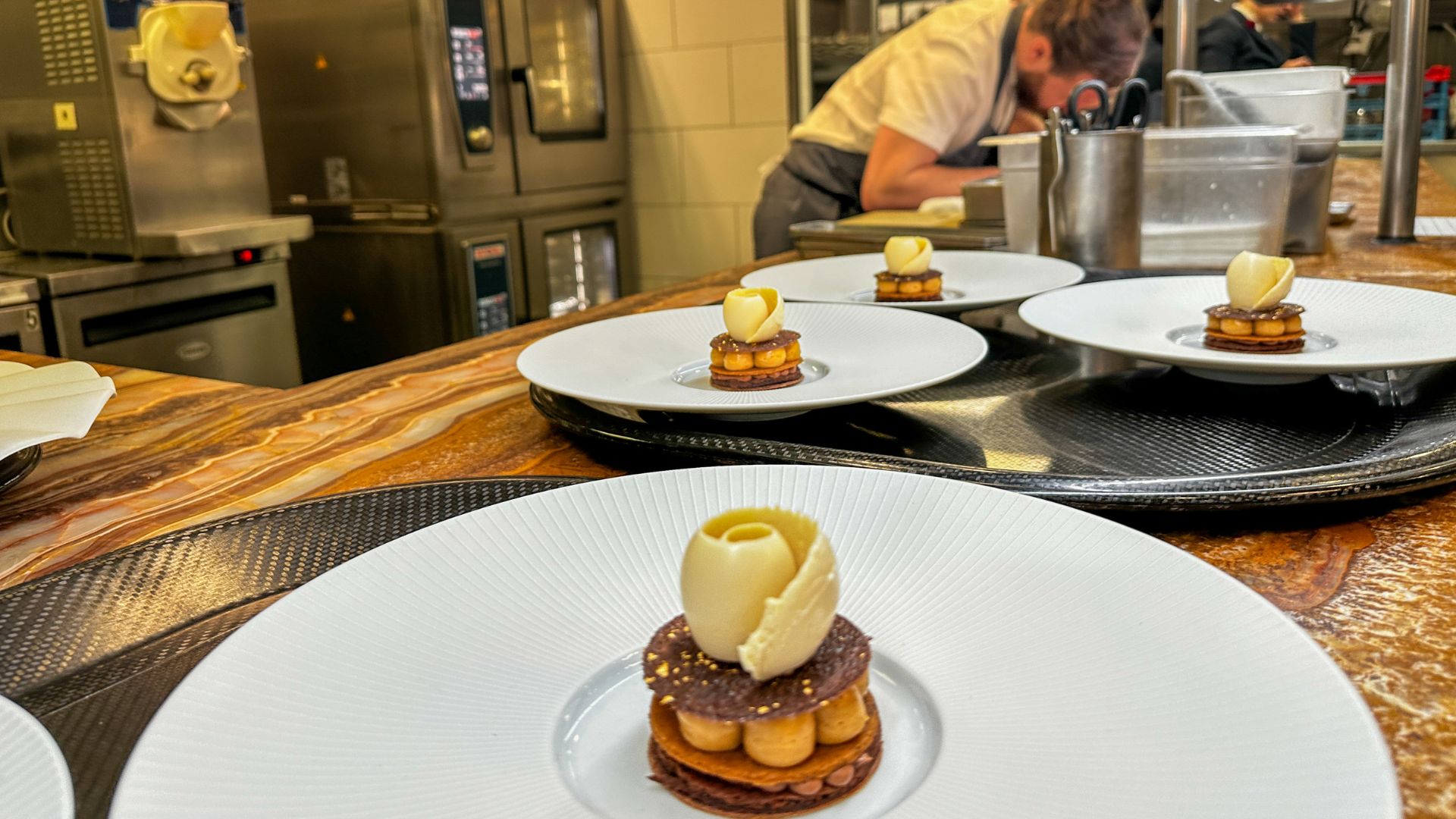
With all the savoury courses complete, we arrive at the restaurant’s signature dessert – a decadent plaisir sucré. A rich celebration of chocolate and hazelnut prepared by Chef Max who assembles each layer with expert precision, forming a perfect rose of ice cream to sit atop a sweet tower.
Just as I think I can’t manage another bite, the final surprise appears. A miniature macaron and a lemon madeleine, delicate and perfectly baked. One last pop of citrus freshness, and with it, a sense of complete satisfaction.
My final reflections of Pétrus London
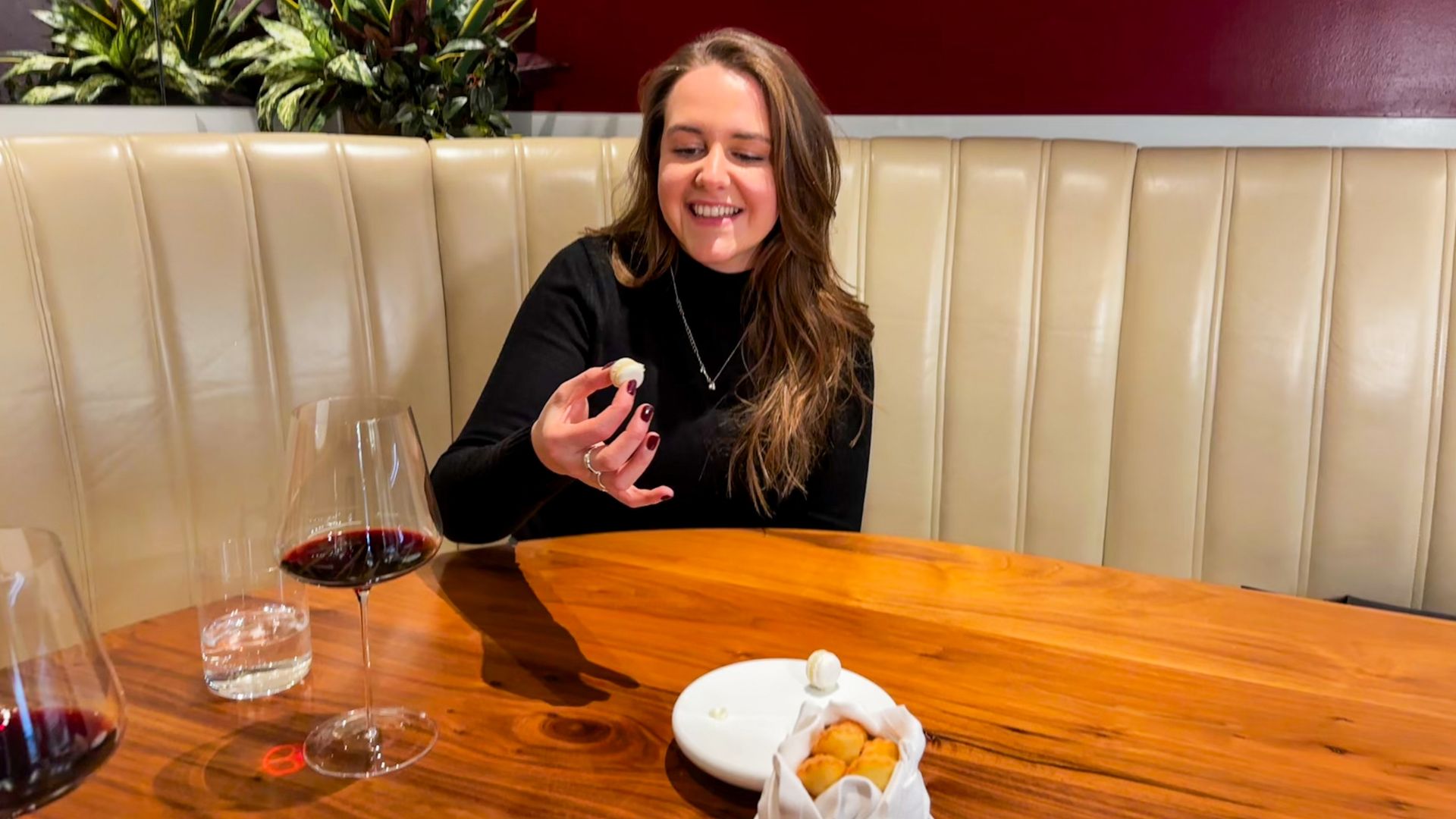
Sitting back, the experience feels unhurried. Consumed by the food, time slips by unnoticed, sipping wine and sampling exquisite flavours. As the experience comes to an end, I feel as though I haven’t just eaten an expertly prepared, delicious meal, I’ve witnessed something.
The Chef'sTable is as much about people as it is about food. A meal here is everything you’d expect from a Michelin-starred eatery – slick service and delicate dishes in a luxury setting. But this restaurant offers something a little different for diners who have a true passion for food and how it is created.
More than a meal, the Chef's Table at Pétrus is an invitation into the heart of the kitchen. As I left, I realised I hadn’t just dined well, I’d gained a deeper appreciation for the people and precision behind every plate. It’s certainly something to add to your London dining list.
Meeting Executive Chef Orson Vergnaud and the Pétrus team
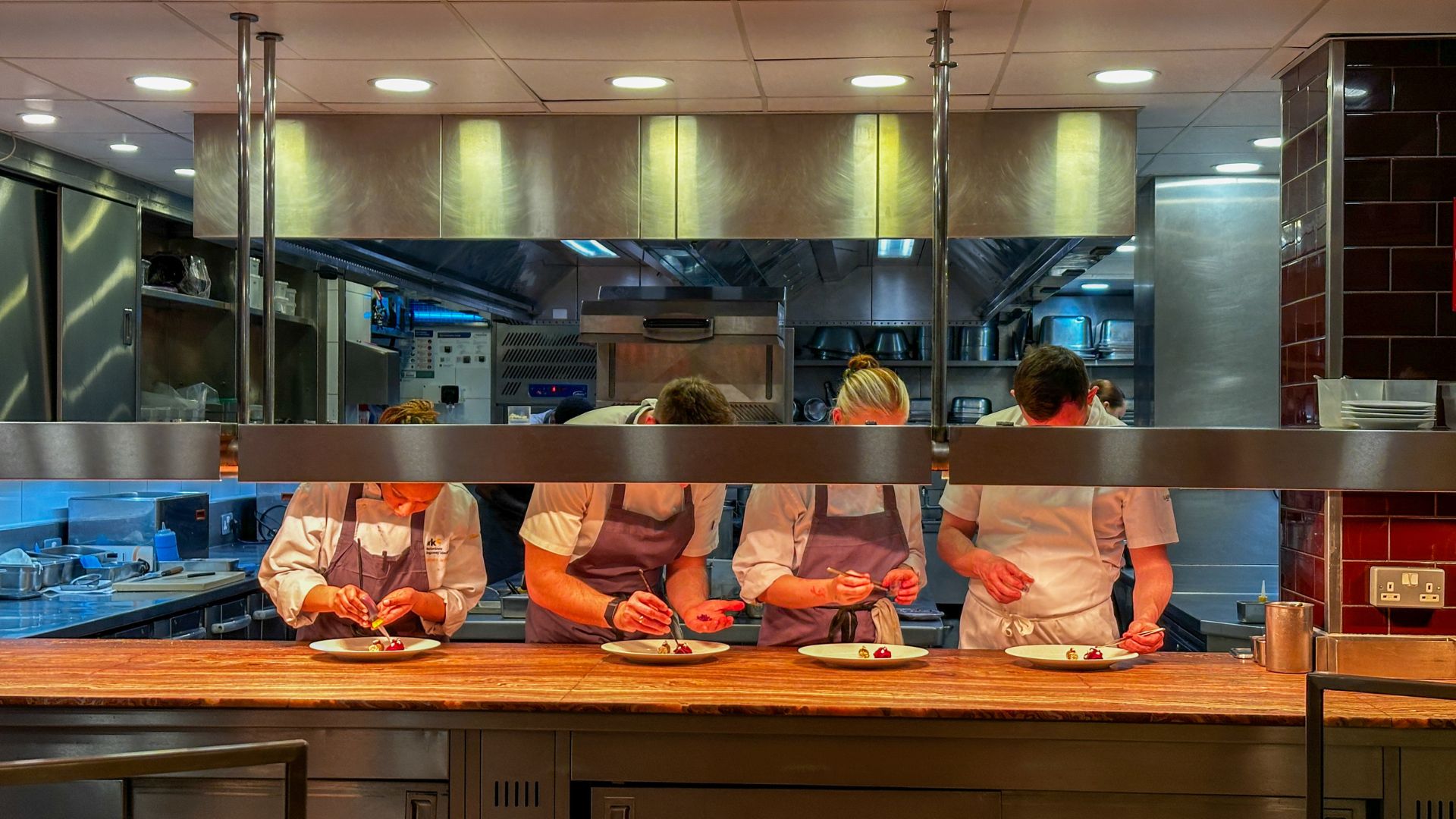
The team at Pétrus is led by Paris-born Executive Head Chef Orson Vergnaud. Now, not all diners will get the chance to meet Orson, but on this occasion, I have the privilege of him guiding us through the meal and going beyond the pass to get up close to the action behind the art.
As we stand by the hot section, I ask Orson how the current team came to be and what it takes to join his brigade. The team, made up of long-standing members and recent graduates, each manage their own station with absolute precision. For Orson, although some chefs have followed him from previous establishments, many of the talented team in the kitchen are recent graduates – those hungry to work but without having yet formed habits. These, Orson tells us, are the most exciting to work with, because everyone brings a different approach and those arriving fresh tend to have a more open mind.
For Orson, heading up a Michelin kitchen is about learning, delegation and trust. He understands that people want the opportunity to learn, but once they’ve been shown the ropes, they need to be given the chance to thrive on their own. Orson’s kitchens don’t invite chaos. No one needs to shout here, despite that being a Ramsay stereotype. Instead, everyone moves in sync, communication is clear and concise. The rhythm is set early, and service flows.
Q&A with Pétrus Executive Chef Orson Vergnaud
Can you tell us a bit about your journey into cooking, and how you eventually found your way to Pétrus?
I have had the opportunity to work in some amazing kitchens in my career. After studying cooking in Toulouse, I moved to London 13 years ago where I worked under some incredible chefs and kitchens, including City Social, Plateau and La Chapelle; before moving to Pétrus for the Head Chef in 2022 and I have loved it ever since.
For someone considering it for the first time, what can diners expect from the Chef's Table?
The experience is very different from dining on the main floor, you have the freedom to enjoy it however you like. You can be louder and experience the dinner in your own way, without worrying about disturbing other guests. You also have the opportunity to see the kitchen up close and personal, seeing the whole show behind the scenes. You can interact with the chefs and ask as many questions as you like, as we go along through each course. Guests are welcome to come to the pass, film and talk to us all through service and watch how it works behind the pass.
Is there an ingredient you find yourself returning to time and time again? Why?
When curating a menu, I follow the seasons. For example, we have morel to start the menu at the moment. Green asparagus is coming into season in the next four or five weeks, which will then make its way to the menu. Every season we follow and take the best ingredients available that that time.
How does cooking for the Chef's Table differ from cooking for the main dining room?
While the passion and commitment to each dish stays the same across all guests and across all menus, the main difference would be the guests personal experience with the kitchen. Guests are welcome to watch what we’re doing, and we’ll gladly slow down the cooking so they can observe the process in greater detail.
Are there any dishes on the menu that tell a personal story for you?
Although, there isn’t one single dish that tells a personal story of mine, the traditional French dishes are entwined with my French upbringing. I will take the traditional dishes and adapt them in a modern way.
Can you tell us about the inspiration behind the current menu?
I am trying to stay as French as possible, I am following the seasons so I just take the best ingredients of each season. My inspiration is ingredient led and from French traditional food.
Is there a moment during service at the Chef's Table that you particularly enjoy or look out for?
The part I enjoy the most about the Chef's Table is at the end, when I present the dishes to the guests and can talk directly with guests on their experience. Often the guests who come are very interested in what we do, so this gives them the opportunity to ask in-depth questions about the way the kitchen functions and the history of Pétrus.
What do you hope guests take away from sitting inside the kitchen, beyond the food itself?
I hope the guests take away the way the staff works. Most of the time, guests say it is like watching a ballet, with the brigade working very calmly and with passion. They are always surprised by the team, we have a lot of young chefs, and a lot of young women in the kitchen, always very passionate and professional. It is very important to me that the team gets praised, both service and the chefs.