
Everything you need to know about Marilyn Monroe: A Portrait
- 📍 Where: St Martin’s Place, WC2H 0HE
- 🚇 Nearest Tube: Leicester Square (Northern and Piccadilly)
- 📅 When: Until 6 Sep, Sun-Thu: 10.30am-6pm, Fri-Sat: 10.30am-9pm
- 🎟️ Price: From £25 for adults and £5 for children
- ⏱️ Visit duration: We recommend allowing around 1 hour to explore the exhibition
- 👥 Who is this for?: Pop‑culture fans drawn to Marilyn, portaiture and visual storytelling
Marilyn Monroe is one of the most recognisable faces in the world – an icon so endlessly reproduced that the woman herself can feel hidden behind the image. Now, marking what would’ve been her 100th birthday, the National Portrait Gallery invites visitors to look deeper with Marilyn Monroe: A Portrait.
Featuring striking works by leading 20th and 21st‑century photographers and artists, this much‑anticipated exhibition brings you closer to Marilyn than ever before, tracing her journey from Norma Jeane to global stardom.
I stepped inside to explore how Monroe’s captivating and incredibly powerful story continues to shape popular culture – and how she helped craft one of the most enduring celebrity identities of all time.
What is the Marilyn Monroe: A Portrait exhibition about?

In partnership with the Marilyn Monroe Estate, this major National Portrait Gallery exhibition celebrates the life and legacy of one of the 20th century’s most recognisable women. Through a remarkable collection of portraits, it explores not only Monroe’s image, but the role she played in shaping it – and the lasting inspiration she offered to photographers and artists.
From early pin‑up shots taken when she was still Norma Jeane to her final Life magazine interview and the poignant beach photographs from 1962, the exhibition traces the evolution of a woman who became one of the most photographed figures in history.

Works by Andy Warhol, Pauline Boty, Marlene Dumas and Audrey Flack sit alongside portraits by more than 20 era‑defining photographers, including Bruno Bernard, André de Dienes, Cecil Beaton, Bert Stern and George Barris.
As I moved through the galleries, Monroe’s creative influence became increasingly clear – her collaborative approach to image‑making, her instinct for performance and her determination to control how she was seen.
Exhibition highlights and what to expect
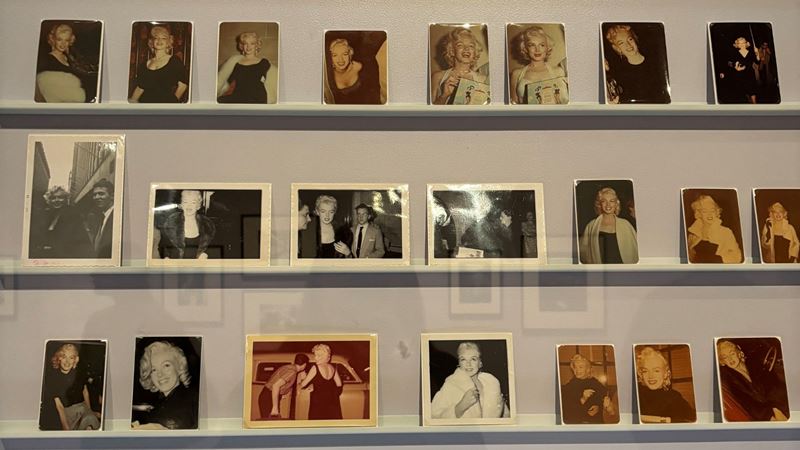
Charting Marilyn Monroe’s rise from movie star to cultural icon, the exhibition quickly shows that her image wasn’t simply shaped by Hollywood – it was something she crafted herself, giving herself fully to the camera while staying firmly in control.
Unfolding chronologically, the journey opens with one of its most intimate pieces: a tiny photo‑booth self‑portrait taken when she was just 15 and still known as Norma Jeane Mortenson. It captures a teenager experimenting with glamour, unknowingly laying the foundations for the global figure she would become.
This early glimpse sets the tone for a showcase that reveals how Monroe’s presence captivated some of the world’s greatest artists, setting the stage for the portraits that follow.
Marilyn through her photographers

Photographers who worked with Marilyn often described her as the best subject they ever had, and the exhibition is built around these creative partnerships.
It begins with Bruno Bernard, whose early photographs played a crucial role in shaping her first public image. Bernard spotted a young Norma Jeane on a Los Angeles street in 1945 and invited her to model – a moment that helped launch her career. His portrait Norma Jeane, Sailor Girl stands out on the gallery wall, full of youthful energy at just 19.
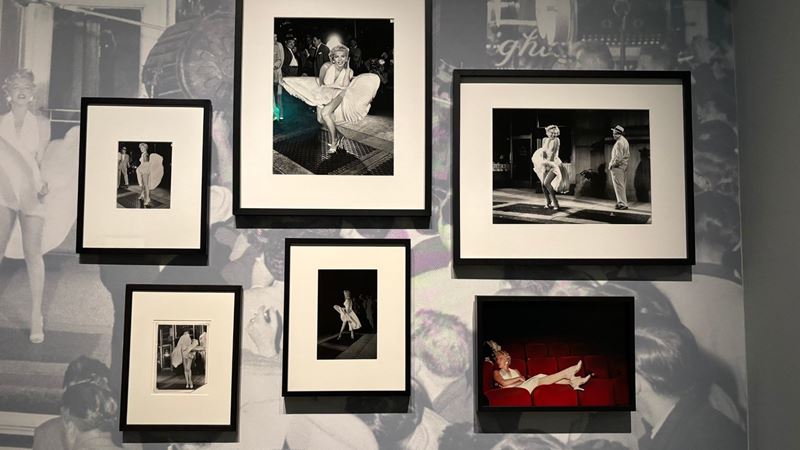
Their long‑running collaboration is explored through Bernard’s own reflections on her work ethic and charisma, culminating in his famous shots from The Seven Year Itch, capturing the iconic subway‑grate moment that became one of cinema’s most recognisable images.
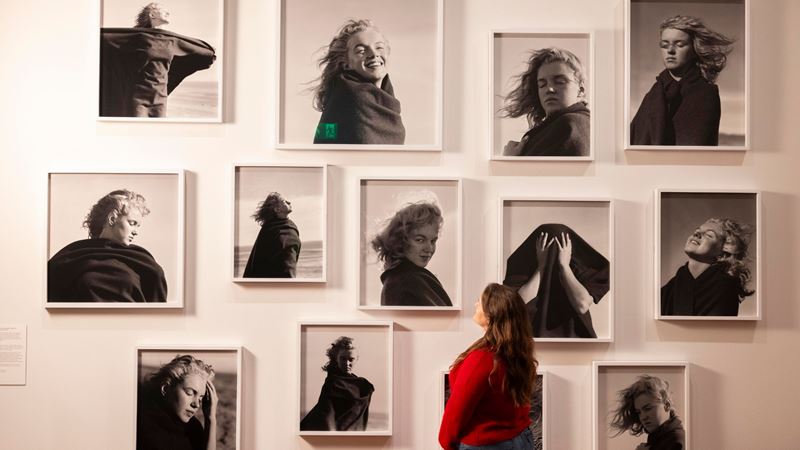
Another room focuses on her early work with André de Dienes, where a striking collage of black‑and‑white portraits taken on Malibu beach lines the walls. One contact sheet shows her newly blonde look in 1946, annotated by de Dienes with the words: “First photos of Marilyn Monroe – The legend has started.”
The exhibition also highlights Monroe’s deep creative connections with other photographers, including Cecil Beaton, as revealed through the section labels. A glamorous, ethereal black‑and‑white portrait from her personal collection – noted as one of her favourites – sits at the heart of this section. Though they worked together only once, Beaton considered the sitting a highlight of his long career.

One display I was particularly drawn to was The Last Sitting by Bert Stern, created for Vogue. In one portrait, an orange cross marks an image Monroe rejected. I learned that Stern disagreed, believing the crossed‑out frames were among the most beautiful. These markings reveal her sharp eye, her self‑critique and her determination to shape her own image.
The journey concludes with Marilyn’s final photo shoot in 1962: a 36‑year‑old Monroe on Santa Monica beach, radiant and relaxed, wrapped in a green towel or cosy knitwear. Taken by George Barris, these tender portraits became the last images of Monroe and are arguably the most intimate of her career.
Inside Marilyn’s world: Her personal belongings
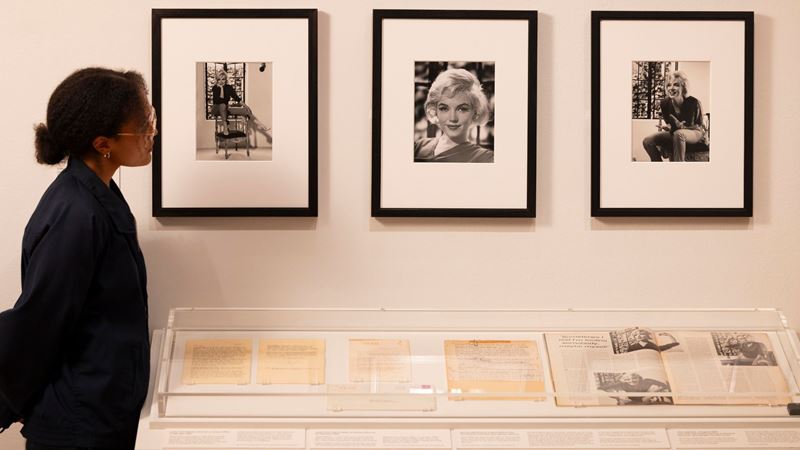
Marilyn was known for radiating warmth and joy, even in difficult moments, and the exhibition brings that humanity to life through a selection of her personal belongings – from scripts and shoes to dresses worn on and off screen.
Among the highlights is a costume from The Prince and the Showgirl, filmed in Britain, displayed alongside a glamorous gown Monroe later wore for public appearances. Nearby, a screen plays clips from her acting career, adding a welcome sense of voice and presence – one of my favourite touches in the exhibition.
Marilyn’s iconic white Ferragamo stilettos also make an appearance. A signature of her style, they’re a striking reminder of her physical presence and can be spotted in several portraits, including Allan Grant’s photographs taken at her home for Life magazine.

The exhibition also offers a rare glimpse into her inner world through annotated notes, scripts and even dinner menus. Two menus dated 26 March 1952 feature handwritten reflections, part self‑critique, part ambition, revealing her drive to improve and her determination to shape her own career. Lines such as “I need a great deal of work – and will always” show her deep committed to her craft.
A piece by Richard Hamilton recreates a contact sheet from one of her final shoots, complete with the images she crossed out. Hamilton saw these markings as a kind of self‑attack, adding a poignant layer to her otherwise confident control over her image.
Marilyn in the artist's eye
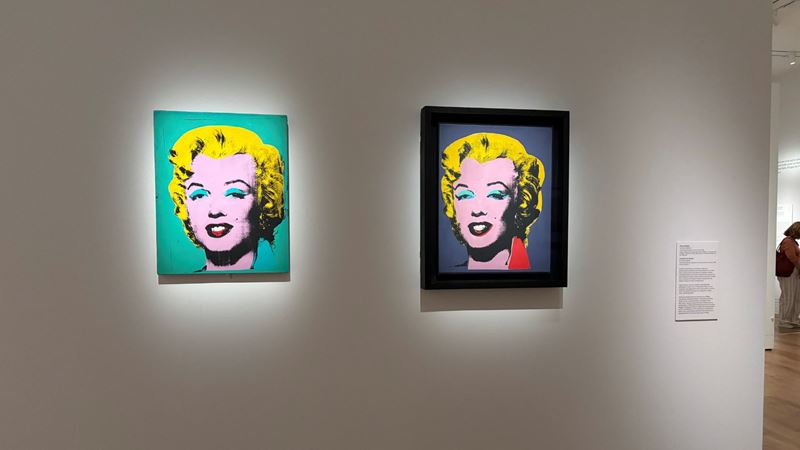
When I think of art inspired by Marilyn Monroe, Andy Warhol’s pop‑art screen prints spring instantly to mind – and here, Green Marilyn and Lavender Marilyn hang side by side as part of his multicoloured series. Created in 1962, shortly after her tragic death, they capture her as a true pop‑culture icon – bold, bright and almost electric.
Warhol’s lifelong fascination with film stars is reflected in the exhibition, which includes several Monroe images from his personal archive.

Many of the paintings and artworks on display date from 1962 and the years that followed. Pauline Boty’s Colour Her Gone shows Marilyn in a rare, casual pose, while The Only Blonde in the World offers a more glamorous, vibrant tribute. Both pieces reflect Boty’s fascination with Monroe as both actress and symbol.
The final room brings together more literal tributes, capturing the public’s enduring admiration. Robert Indiana’s The Metamorphosis of Norma Jean Mortenson fills an entire wall, celebrating Monroe as both pop icon and emblem of the American Dream. Nearby, Audrey Flack’s Marilyn (Vanitas) surrounds her portrait with symbolic objects, including candles, pearls, fruit and lipstick, creating a vivid still life.
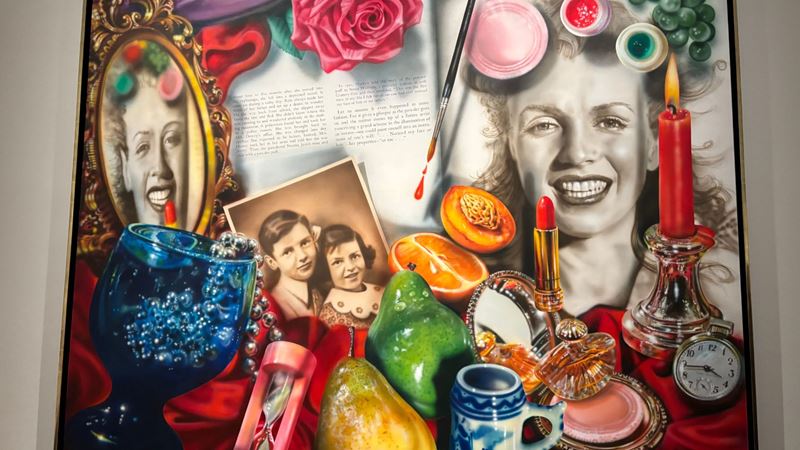
It’s clear Monroe embodied the Golden Age of Hollywood, captivating artists with her beauty, charisma and self‑crafted image.
Decades on, she remains firmly in the spotlight – inspiring designers, performers and storytellers, her life and legacy continually reimagined. Here, the National Portrait Gallery brings that evolution into focus, guiding visitors through the shifting images that shaped her public persona and revealing the woman who became Marilyn Monroe.
How to book tickets for the exhibition
Tickets for Marilyn Monroe: A Portrait can be booked directly through the National Portrait Gallery, with visitors able to choose from a range of timed entry slots. Booking is open right through to the exhibition’s closing date in September 2026.
For more cultural inspiration, explore the top art exhibitions in London this month or browse our month‑by‑month guide to what’s on across the capital.