

Updated for 2026
Wondering how to use buses in London? You’re in the right place. Riding the city’s buses is simple, whether you’re a local or visiting for the first time, and it’s a great way to explore the city and sightsee at the same time.
This guide has been carefully curated by Visit London’s travel experts, combining official Transport for London (TfL) information with insights from real visitor experiences. You’ll find practical tips for getting around London by bus, including how to pay, plan routes and travel efficiently, safely and comfortably. Our advice is designed to help both first-time visitors and seasoned travellers make the most of every bus journey across the capital.
London buses – key facts
Single bus fare: £1.75
Daily cap (bus and tram): £5.25
Payment: Contactless, Oyster or Travelcard.
Cash: Not accepted.
Hopper fare: Unlimited transfers within one hour for single bus fare price.
Night buses: Night buses operate after the Tube network closes.
Accessibility: All buses are wheelchair accessible.
Updated as of March 2026. Bus and tram fares are typically reviewed annually by Transport for London. For the latest fare updates, visit the official TfL fares page.
Jump to a section:
How to use London buses (step-by-step)
London’s bus route network covers the entire city with a 24-hour service. It’s easy to use and offers a convenient and cheap way to get around the capital. Follow these simple steps for a seamless experience on London buses.
How to take a London bus in four steps
1. Find your bus stop
Use Google Maps or the TfL Journey Planner to find the nearest bus stop and the best route.
2. Check the bus number and destination
When the bus arrives, check the number and destination shown on the front to make sure it’s the right one.
3. Tap your card or show your Travelcard
When you board the bus, tap your contactless card, mobile device or Oyster card on the yellow card reader. If you are using a paper Travelcard, simply show it to the driver.
4. Press the red stop button to get off
Press one of the red stop buttons before your stop. When the bus stops, exit through the middle doors. You do not need to tap out.
Find out more about using bus services in London with TfL's guide to using buses in London.
How to pay for buses in London
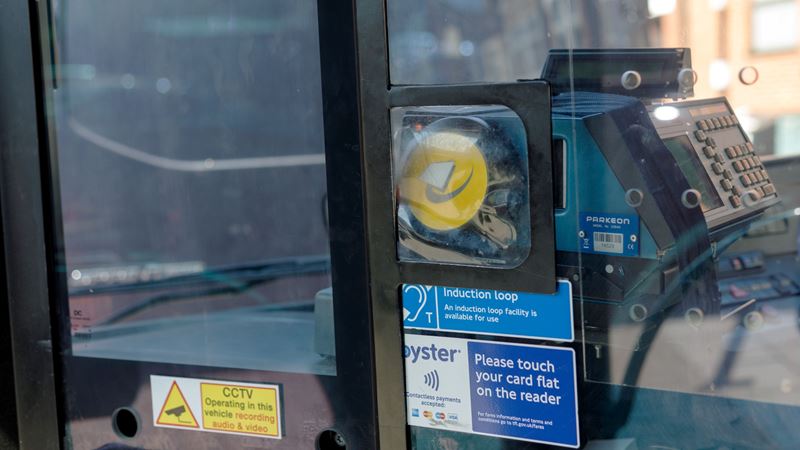
Paying your London bus fare is easy. Simply touch your Visitor Oyster card*, Oyster card, contactless payment card or mobile device on the yellow card reader as you board the bus or show the driver your paper Travelcard. To avoid card clash, make sure to only touch one card on the yellow reader and keep your other cards separate.
London buses are card only, so you cannot buy a ticket with cash. If you don’t have enough credit on your Visitor Oyster card or Oyster card, you will be able to make one more journey on a bus before needing to top up.
For contactless payment cards issued outside the UK, check with your bank to find out whether transaction fees or other charges apply.
For more information about London bus fares, see the Transport for London website.
Still not sure which travel ticket you need to buy? Unclear on how to use your Visitor Oyster card? Read our comprehensive guide to Oyster cards in London.
Bus fares, discounts and concessions
Unlike the Tube zone fare system, a single London bus journey costs £1.75 no matter how far you go. You can even take multiple buses within one hour at no extra charge thanks to the Hopper fare.
No matter how many buses or trams you take in a day, it will never cost you more than a total of £5.25 – just make sure you use the same payment card for every journey.
There are a number of ways to save money on your bus and tram journeys in London:
- Children under the age of 11 travel free.
- Discounts are available for children, students and concessions.
- Freedom Passes provide free travel for wheelchair users, the over-60s and travellers with disabilities.
- If you're from outside London and have a bus pass issued by another English council, you can use it to travel free on buses displaying the red roundel.
Find out about all the discounts and concessions on London's bus and tram network.
London bus routes and maps
Check out the London bus maps section on our free London travel maps page or get travel advice from a TfL Visitor Centre.
Plan your bus route online with Transport for London's Journey Planner.
For all London bus routes and maps, visit TfL’s website.
London's night buses
Many of London's bus routes run all night. Several London bus routes offer a 24-hour service, or look for the "N" in front of a bus number – this letter indicates a bus that operates after the Tube network closes and before the start of daytime bus services.
If you're not familiar with the routes, head to Trafalgar Square (the hub for night buses) or check the information board at any bus stop. London bus services are less frequent during the night.
Best routes for sightseeing

One of the best bus routes for sightseeing in London is route 11, which passes by some of London's top attractions including St Paul's Cathedral, Trafalgar Square, Big Ben, the Houses of Parliament and Westminster Abbey.
Route 139 is another top choice for sightseeing, with London sights including Waterloo Bridge, the South Bank, Trafalgar Square, Piccadilly Circus, Oxford Street and Regent Street.
Route 9 also offers a scenic ride, passing through royal palaces including St James's Palace, Clarence House and Kensington Palace, as well as fascinating museums such as the London Transport Museum, the Natural History Museum and the Design Museum. The route also includes other famous London landmarks, such as Somerset House and Hyde Park.
If you'd prefer a guided sightseeing experience, you can also explore London on a hop-on hop-off bus tour, which stops at many of the city's most famous landmarks. For something a little different, try the Tootbus kids tour, an afternoon tea bus tour or an eerie evening ghost bus tour.
For more inspiration, spot top sights from an iconic red London bus with these landmark-packed TfL bus routes or check out our selection of the best London bus tours.
Operating hours
London’s bus route network covers the entire city with a 24-hour service. Find bus timetables for every journey.
Accessibility
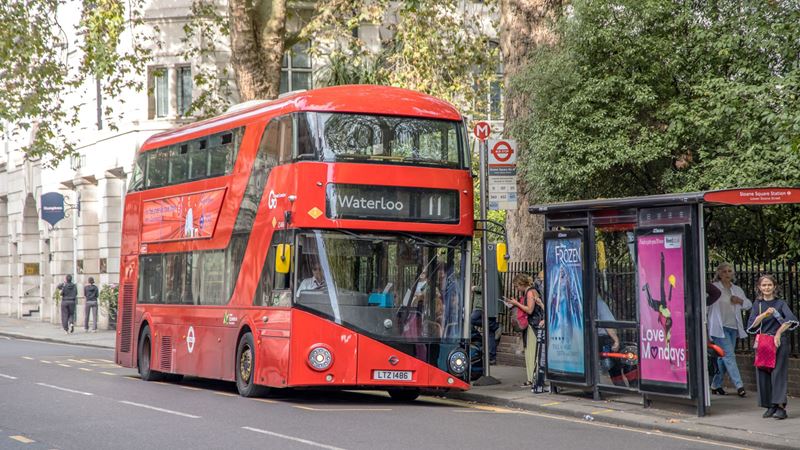
All 8,797 London buses are low-floor vehicles, and bus travel is free for wheelchair and mobility scooter users. If you have a Disabled Person's Freedom Pass, you can travel for free anytime. If you have an English National Concessionary Pass, you can use it on London buses from 9am Monday to Friday and anytime on weekends and bank holidays.
Low-floor buses are accessible to everyone including those using wheelchairs, baby buggies (prams/strollers), assistance dogs and passengers with other mobility requirements. Every bus also has a retractable ramp.
All London buses have room for one person using a wheelchair. Buses can accommodate wheelchairs up to 70cm (28 inches) wide by 120cm (47 inches) long. Wheelchair users have priority over everyone else for use of the wheelchair space. There is no limit to the number of assistance dogs allowed on the bus, as long as there is space.
See Transport for London's accessibility guide for more details.
London bus FAQs
What’s the cheapest way to travel by bus in London?
The cheapest way to travel by bus in London is to pay as you go, using a contactless card or device, an Oyster card or a Visitor Oyster card. Pay as you go is cheaper than buying single tickets and you get daily and weekly capping.
Are London buses cheaper than a Tube?
Yes, London buses are cheaper than riding the Tube. Unlike the Tube zone fare system, London bus rides cost a flat fare of £1.75 per single journey, no matter how far you go. You can also take multiple buses within one hour at no extra charge.Do you just tap once on London buses?
Yes, when using buses in London, you only need to tap in once when you board the bus.How much is a day ticket on London buses?
A day of bus-only travel in London will cost a maximum of £5.25.Can I pay a bus fare with a debit card in London?
Yes, you can pay London bus fares with any contactless payment card.What is the most popular bus route in London?
The popular bus route 9 offers a pretty scenic ride, passing through royal palaces including St James's Palace, Clarence House and Kensington Palace, as well as fascinating museums such as the London Transport Museum, the Natural History Museum and the Design Museum. The route also includes other famous London landmarks, such as Somerset House and Hyde Park.


