The History of Asian Communities in London

Settlement in London from the Indian subcontinent goes back more than 400 years to the beginnings of Britain's colonial relationship with the region.

The trade route from Britain to India, under the control of the East India Company, was firmly established by the early 17th century, and soon Indian people – as well as Indian goods – began arriving in the country. In this early period, these were mainly sailors, domestic servants and nannies.

The History of Asian Migration

From the mid-19th century, British rule over India led to increased migration from the subcontinent to Britain. White collar Indians began arriving: some as a result of political, economic or social circumstances; others in order to study, travel or seek business opportunities.

Asian Migration in the 20th Century

During the 1920s, the Asian population in London grew steadily, as did the number of Asian shops, institutions, restaurants and places of worship.

So, contrary to popular belief, settlement in London from the Indian subcontinent did not begin in the 1950s with the post-war demands of the British economy. However, the need for an expanded workforce in this period did see a further expansion of the Indian and Pakistani community in London.

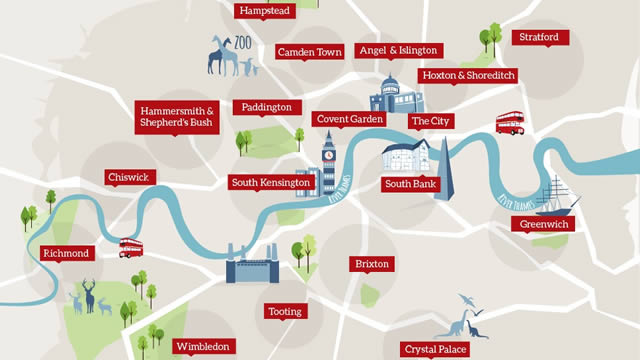
From the 1970s onwards, this was increased again through arrivals from Bangladesh – settling mainly in the East End – and Sri Lanka – settling mainly in Tooting.

More recently, the impressive growth of the Indian economy has seen a large number of Indian companies seeking to internationalise their operations through bases in London.

Asian London: Did You Know?

  • The first Indian writer to publish a book in English was Sake Dean Mahomed (1759-1851). Mahomed was an Indian-born trainee doctor who joined the East India Company Bengal Army. He immigrated to Ireland in 1786, where he wrote and published "The Travels of Dean Mahomed."

  • Sake Dean Mahomed was also the first to open an Indian restaurant and takeaway – the Hindustani Coffee House in 1809 in London's Portman Square. He went on to have an extraordinary and varied career, and became UK's first Indian celebrity.

  • The next big thing in Asian restaurants is authentic, regional Bangladeshi food, which makes abundant use of "shatkora" – a citrus fruit from the Sylhet region of Bangladesh. The shatkora looks like an oversized lime, and has a slightly bitter, tangy taste and a unique aroma. Look out for curries flavoured with shatkora in Brick Lane's Bangladeshi restaurants.
 

Questions About The History of Asian Communities in London

powered by Yedda
  • Platinum Partner
    Collins
  • Foreign Exchange
    Thomas Cook